



Mahogany Corner Armchair
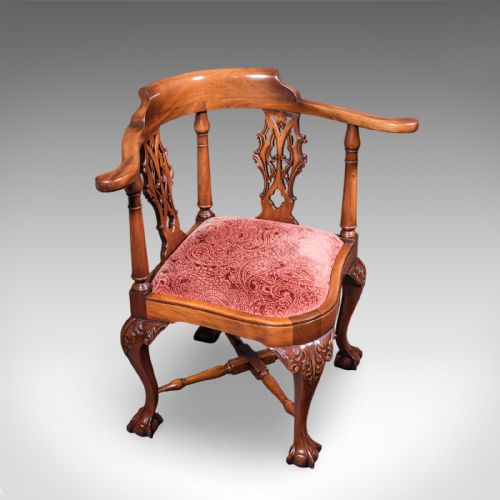
A mahogany corner armchair fits snugly into a tight space while offering a curved back rail and sturdy support.
Mahogany Corner Armchair
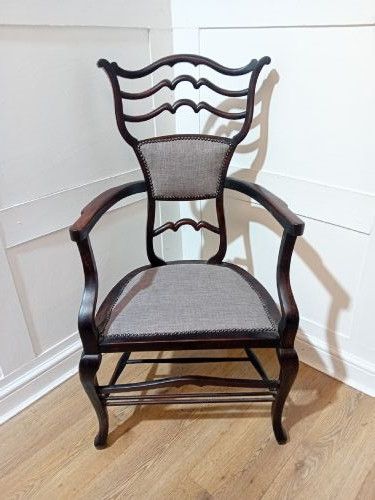
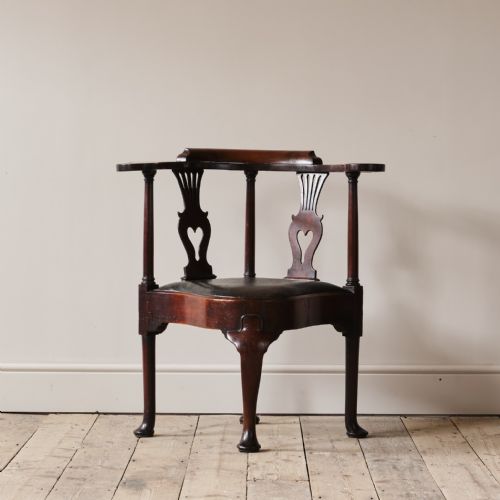
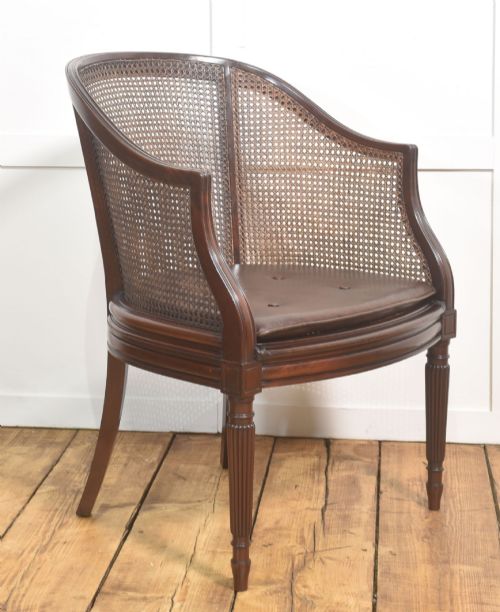
A mahogany corner armchair is a distinctive seating form designed to sit neatly in the intersection of two walls, featuring a continuous curved armrail supported by columnar posts and a central splat. This page contains numerous examples spanning from the eighteenth century through the Victorian era and into the Edwardian period.
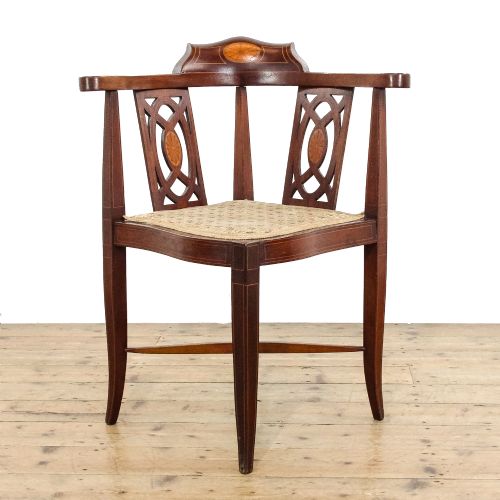
The most common version met here is the Edwardian inlaid mahogany corner armchair, frequently decorated with delicate wood inlay or marquetry. Alongside these, earlier Georgian models from the eighteenth century appear, displaying robust cabriole legs and substantial proportions suited for writing desks or reading.
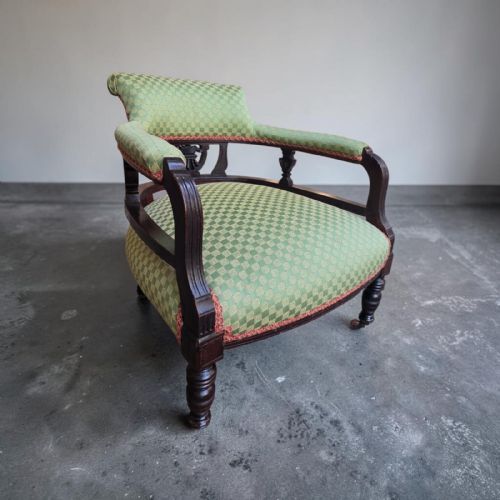
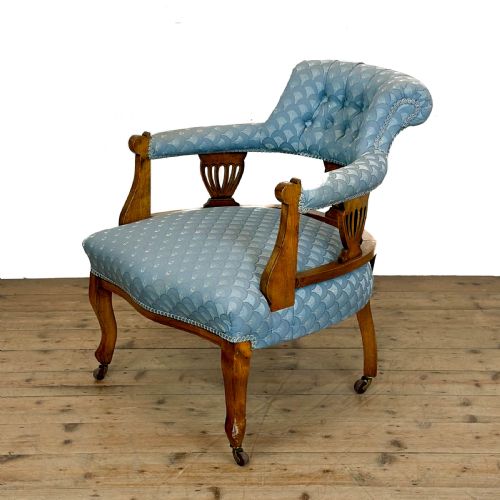
Buyers also encounter related seating forms including tub chairs, occasional chairs, and salon seats sharing the characteristic horseshoe-shaped backrest. These pieces serve practical functions in hallways, bedrooms, and drawing rooms where standard square chairs prove too cumbersome.
How they were made
Cabinetmakers constructed the frames using dense mahogany, often reinforced with secondary timbers for internal blocks and seat rails. Turning and curving the continuous armrail required skilled steaming and jointing techniques to maintain structural integrity across the sweeping span.
Surface enrichment relied heavily on contrasting timbers such as satinwood and boxwood, worked into stringing and marquetry inlay across the back splats and crest rails. Upholstered variants incorporated fabric or leather drop-in pads secured within the mahogany framework.
The listings span from eighteenth-century Georgian origins through Victorian revivals to Edwardian satinwood-inlaid variants.
What varies in quality
The distinction between ordinary and superior examples lies in the crispness of the carving, the depth of the mahogany grain, and the precision of the inlay work. Earlier eighteenth-century pieces often display heavier timber scantlings and hand-carved details, whereas Edwardian revivals showcase refined veneering and lighter proportions.
Structural stability in the complex corner joints determines everyday usability, as the continuous rail bears significant outward pressure. Original drop-in seat frames and untouched surface patination command greater attention from collectors than heavily restored or later-varnished instances.
The Mahogany Corner Armchair Glossary
- Corner chair
- A seating form designed specifically to fit into the corner of a room, featuring a diagonal seat plan with a leg at each of the four corners.
- Tub chair
- An armchair with a circular, enclosed backrest that resembles the shape of a deep wooden tub, often upholstered on the interior.
- Marquetry
- Decorative veneer work formed by fitting together thin pieces of various wood types and contrasting materials to create pictorial or geometric designs.
- Satinwood
- A durable, lustrous tropical timber with a golden-yellow sheen, frequently utilised for contrasting inlay and stringing on mahogany furniture.
- Splats
- The vertical wooden slats positioned in the centre of the chair back, connecting the seat rail to the top crest rail.
Mahogany Corner Armchair: Frequently Asked Questions
Where do you put a corner chair?
A mahogany corner armchair is traditionally placed in the junction of two walls to maximise floor space in a parlour or bedroom. It also serves effectively as a desk or reading seat due to the enclosing curve of the backrest.
Because the footprint is diagonal rather than square, the chair occupies less visual weight in a cramped corner than a standard armchair. Many examples also work well as freestanding occasional pieces in wider hallways or landings.
How do I date a corner chair?
Dating relies on observing construction methods, timber choice, and stylistic details such as cabriole legs or inlay motifs. Eighteenth-century pieces generally show heavier proportions and hand-cut joinery, while Edwardian revivals often feature lighter frames with boxwood and satinwood stringing.
Examining the underside of the seat frame reveals the type of secondary wood used and any signs of age in the fixings. Comparing the turning of the supporting columns against established period designs helps narrow the manufacturing decade.
Are these chairs comfortable for daily use?
Many examples provide sturdy support, though comfort varies depending on the original design and seat padding. Chairs with upholstered drop-in pads or leather upholstery offer a softer sit than solid wooden saddle seats.
The angled back and supportive armrail make them well-suited for reading or writing at a desk. Buyers planning regular daily use often look for models with supportive lumbar heights and stable, reinforced leg joints.