



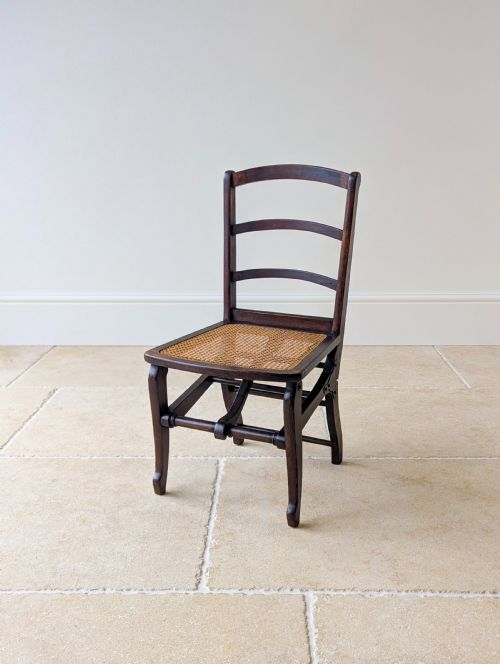

Cane Back Desk Chair
A cane back desk chair offers the ideal combination of supportive timber framing and resilient woven seating for daily writing work.
Cane Back Desk Chair
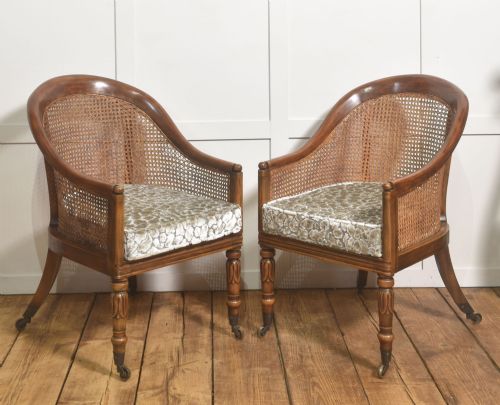
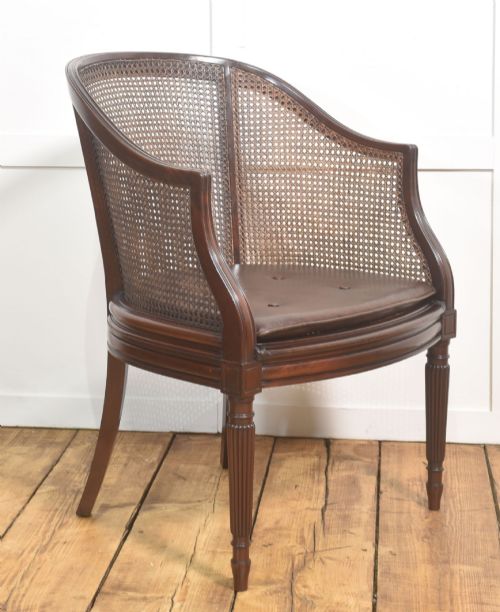
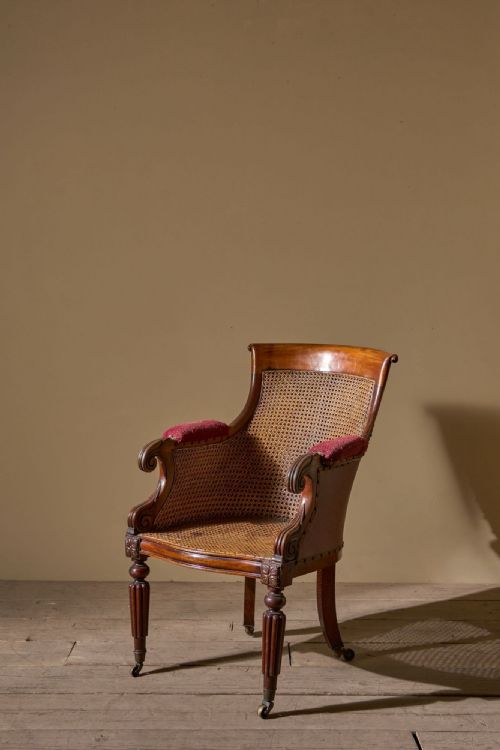
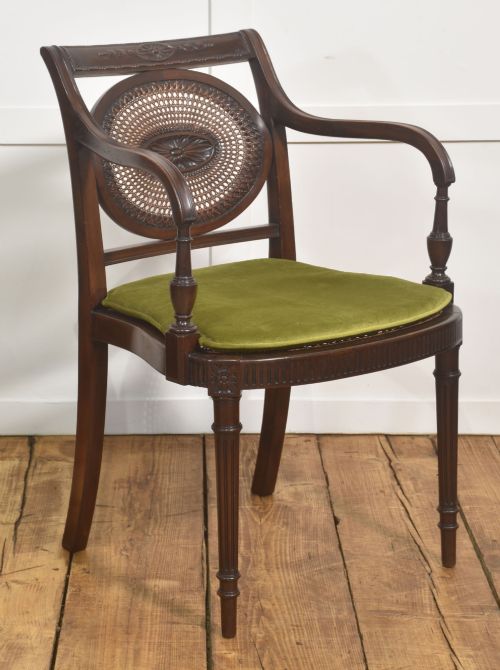
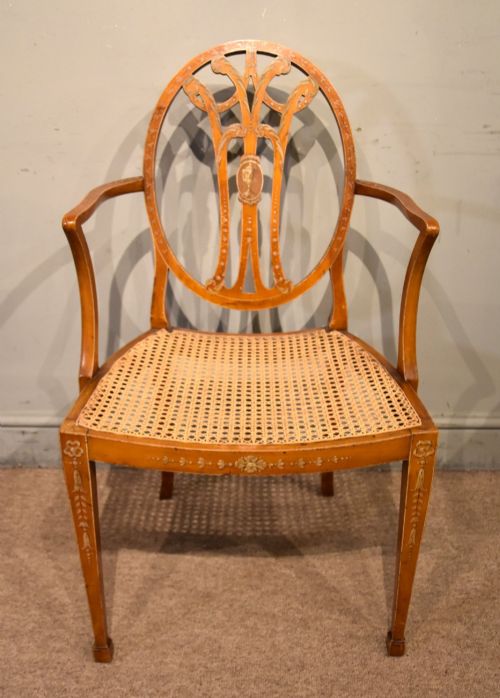
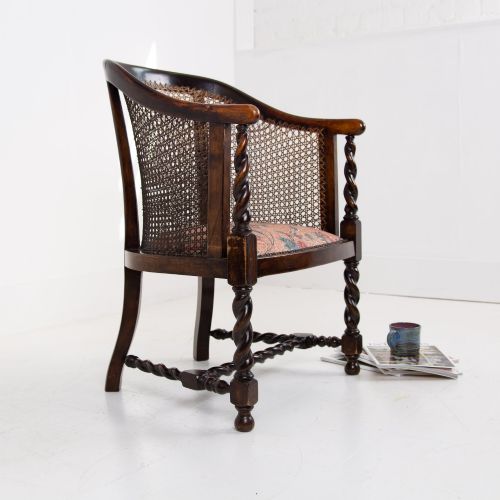
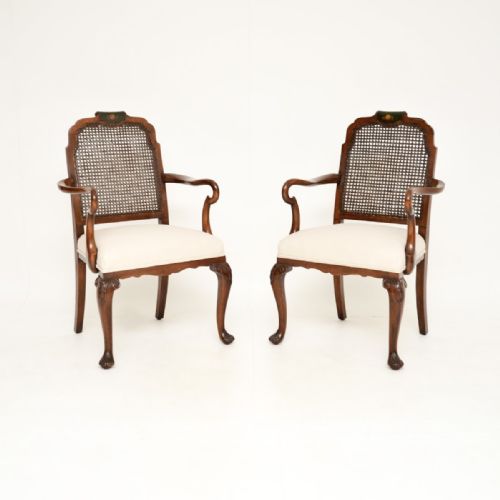
A cane back desk chair brings together periods ranging from the Regency era through to the Edwardian period, drawing on styles such as Victorian, Jacobean Revival, and Sheraton Revival. Buyers looking at this selection will find various forms including armchairs, library chairs, bergères, and tub chairs designed for seating at a desk or table.
The materials span mahogany, oak, walnut, satinwood, and beech, frequently paired with cane panels or caned seats alongside leather, velvet, and fabric upholstery. Pieces emerge from diverse origins including English workshops, French makers, and Ceylonese or Chinese export production.
The most common examples on this page are mahogany and walnut armchairs from the nineteenth and early twentieth centuries, featuring woven cane backrests or seats suited to a working study or library.
Construction and materials
Cabinetmakers constructed the frames using hardwoods like mahogany, oak, and walnut, employing traditional mortise and tenon joints to ensure stability under daily weight. Turned, carved, or ebonised woodwork often defines the structural members of these chairs.
Caning involves splitting rattan to weave intricate open patterns across frames, creating flexible yet strong panels for backs and seats. Additional detailing incorporates brass fittings, leather inserts, and hand-carved decorative motifs.
Listings feature periods from the seventeenth century through to the 1920s, with a strong representation of Victorian and Edwardian examples.
Distinctions in craftsmanship
The depth and precision of hand-carving across the wooden frame separate standard production from superior examples, where details remain sharp and well-defined. The tightness and uniformity of the cane weaving also indicate the skill involved in the original construction or subsequent restoration.
Choice of timber grain and the quality of the polished finish determine the visual weight of the chair, with denser hardwoods and richer patination marking out finer workshop output.
Gillows
The Cane Back Desk Chair Glossary
- Bergère
- An enclosed upholstered armchair with a wooden or cane back and sides. These seats often include loose squab cushions for added comfort.
- Cane
- Woven material made from the peeled bark of rattan palm stems. It provides a lightweight, breathable surface for chair backs and seats.
- Tub chair
- An armchair featuring a rounded, semi-circular back enclosing the sides in a continuous curve. This form provides a snug and supportive seat.
- Sheraton Revival
- A late nineteenth and early twentieth century style drawing on the delicate classical designs of George Sheraton. It uses light timbers, subtle painting, and refined proportions.
- Lyre back
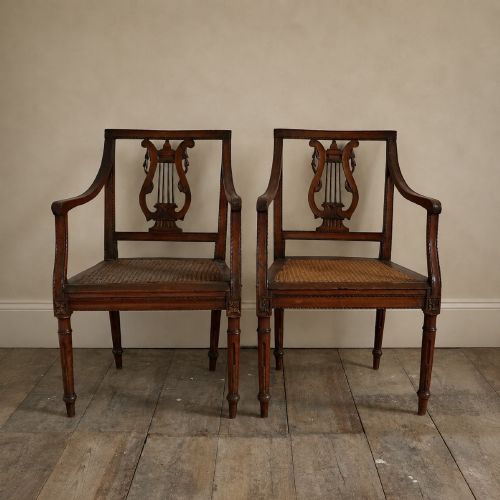
- A chair backrest shaped in the form of an ancient Greek lyre instrument. This ornamental motif appears frequently in Regency and revival seating.
Cane Back Desk Chair: Frequently Asked Questions
What is a bergere chair?
A bergère is a traditional French-style armchair characterised by an enclosed wooden frame and woven cane panels along the back and sides. These chairs typically accommodate a loose upholstered seat cushion.
They function well as reading or desk chairs, combining structural wooden support with the flexibility of cane work.
How do I care for cane seating?
Cane requires moderate humidity to prevent the natural rattan fibres from drying out and becoming brittle. Wiping the surface occasionally with a damp cloth maintains the moisture balance.
Avoid placing these chairs directly against intense heat sources or in prolonged direct sunlight.
Are these chairs comfortable for working?
Many nineteenth and early twentieth-century designs provide supportive upright postures suited to writing and reading at a desk. Tub chairs and bergères offer enclosed side support for longer sitting periods.
Some variants include leather or fabric squab cushions to increase comfort during extended tasks.
How do I identify a Regency style chair?
Regency style pieces often display classical motifs such as reeded legs, sabre legs, lyre backrests, and dark polished mahogany or ebonised finishes. These design elements reflect early nineteenth-century aesthetics inspired by classical antiquity.
Revival versions produced around the Edwardian period adopt these same characteristic silhouettes and decorative details.