


Dark Wood Barrel Chair
A dark wood barrel chair wraps you in a curved, enclosing embrace that makes every evening by the fire feel properly grounded.
Dark Wood Barrel Chair
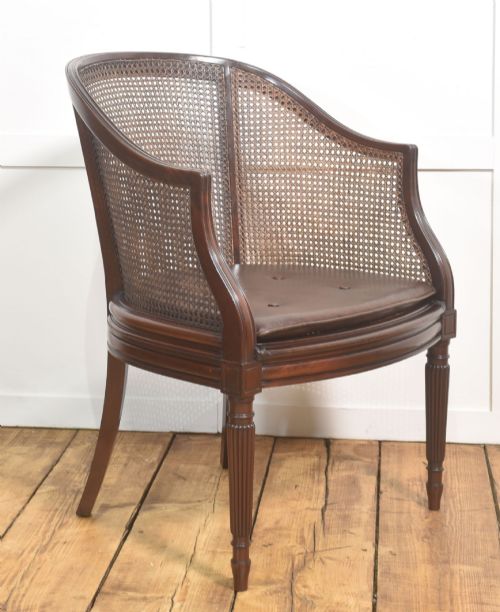
A dark wood barrel chair brings together curved backrests and deep seats designed for long hours of reading or conversation. You will frequently encounter Victorian and Edwardian examples featuring mahogany or hardwood frames that show off rich grain patterns.
The form often appears as a tub chair or library chair, borrowing shapes from the Georgian era through to the early twentieth century. These seating pieces combine substantial wooden framing with cane panels, leather upholstery, or fabric seats.
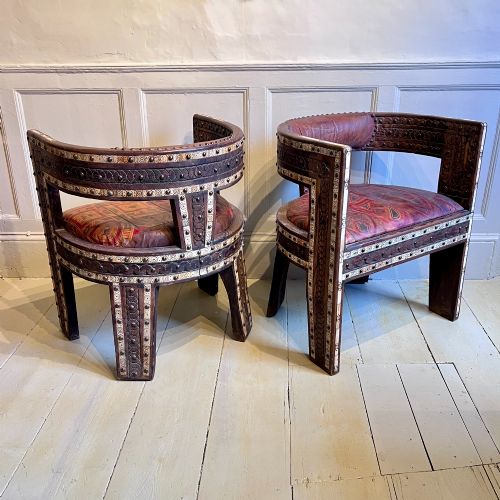
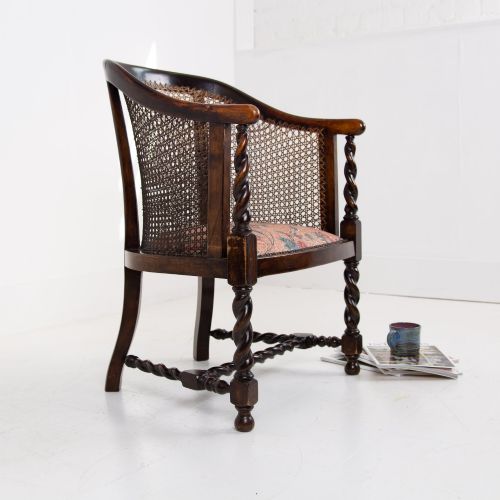
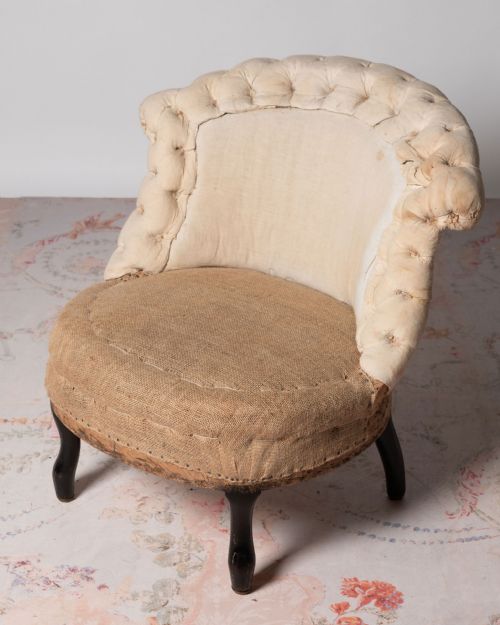
Moorish influences, Jacobean Revival details, and French Napoleon III aesthetics surface across the selection alongside simpler Arts and Crafts interpretations. Each piece retains a rounded silhouette that defines the dark wood barrel chair family.
How they were made
Cabinetmakers shaped solid timbers like mahogany, oak, and other hardwoods using steam-bending techniques to achieve the signature curved barrel back. Joinery relied on sturdy pegged or dowelled joints to support the continuous tension of the rounded frame.
Surfaces were frequently ebonised, polished, or waxed to highlight the depth of the timber while brass details or bone accents occasionally provided subtle contrast. Seats combined woven cane panels or traditional webbing beneath leather and fabric upholstery.
Listings span the nineteenth and twentieth centuries, featuring Victorian, Edwardian, and Georgian periods alongside Arts and Crafts and Art Deco styles.
What varies in quality
The distinction between standard examples and finer pieces lies in the fluidity of the timber curve and the seamless integration of the backrest into the arms. Superior frames display tight, precise joinery where the wood has been selected for consistent grain and rich natural tone.
Refinement in carving, the crispness of ebonised finishes, and the integrity of original cane or showwood structures elevate certain pieces above purely utilitarian seating. The balance of proportion between the enclosing back and the supporting legs determines the visual success of the chair.
The Dark Wood Barrel Chair Glossary
- Barrel back
- A seating design featuring a solid, semi-circular backrest that curves continuously around the user to form the arms. This shape offers distinct shelter and support.
- Tub chair
- A deep-seated armchair with a rounded, enclosing back resembling the shape of an open cask. It prioritises comfort and privacy.
- Ebonised
- Timber treated with a dark stain or finish to imitate the appearance of ebony wood. This treatment was popular in fashionable nineteenth-century seating.
- Cane
- Woven rattan material used to create light, breathable panels for seat backs and bases. It provides flexible support while showing off the frame behind it.
- Showwood
- Furniture construction where the polished wooden frame remains fully visible around the upholstered sections. It highlights the quality of the timber.
Dark Wood Barrel Chair: Frequently Asked Questions
What defines a barrel chair?
A barrel chair is characterised by its rounded, semi-circular backrest that sweeps continuously into the armrests. This enclosing shape creates a cocoon-like seat designed for comfort.
Makers adopted this silhouette across various periods from the Georgian era into the twentieth century, utilising dark timbers like mahogany and oak.
How do I date these chairs?
Dating relies on examining the timber species, construction methods, and stylistic details present in the frame. Victorian and Edwardian pieces often combine rich mahogany with specific upholstery styles.
Earlier Georgian or nineteenth-century examples show hand-finished joinery and simpler proportions compared to later revival pieces.
Where should I place one?
These armchairs suit studies, libraries, or corners where their curved backs can be appreciated from multiple angles. They function well as reading chairs due to their enclosing shape.
Pairing them with a low side table lets the rounded silhouette remain the visual centrepiece of the room.
Are tub chairs and barrel chairs the same?
Tub chairs and barrel chairs share the same fundamental enclosing, curved form that wraps around the user. The terms are frequently used interchangeably by makers and dealers.
Both styles focus on deep, supportive seating enclosed by a continuous wooden or upholstered rail.
What woods were used?
Mahogany and oak form the backbone of these seating pieces, alongside various dense hardwoods. Some pieces feature ebonised finishes to mimic expensive exotic timber.
North African hardwoods and cane also appear in specific regional or transitional twentieth-century designs.