

Vintage Study Seating
Vintage study seating brings together mahogany armchairs, swivel desks seats and framed life drawings designed to anchor a room.
Vintage Study Seating
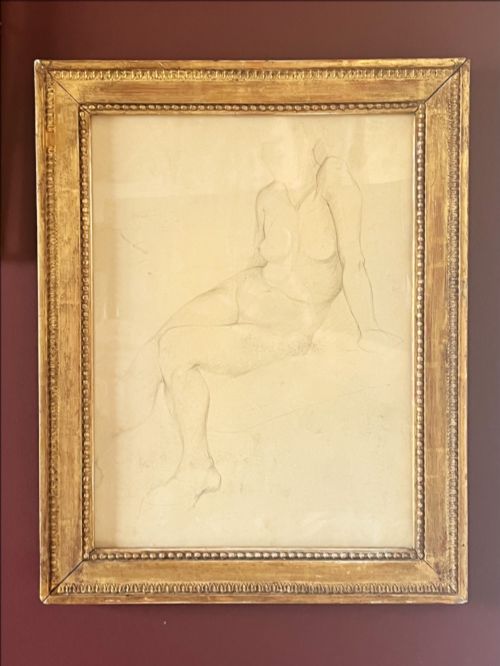
Vintage study seating covers the armchairs, library chairs and desk chairs that populate studies, libraries and offices, alongside framed portraits, paintings and sculptures depicting seated figures. Buyers seeking vintage study seating encounter solid mahogany and oak furniture alongside mid-century oil paintings and pencil life drawings.
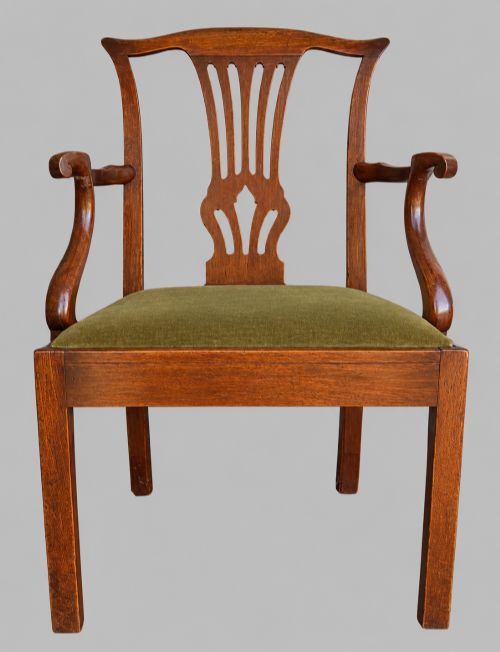
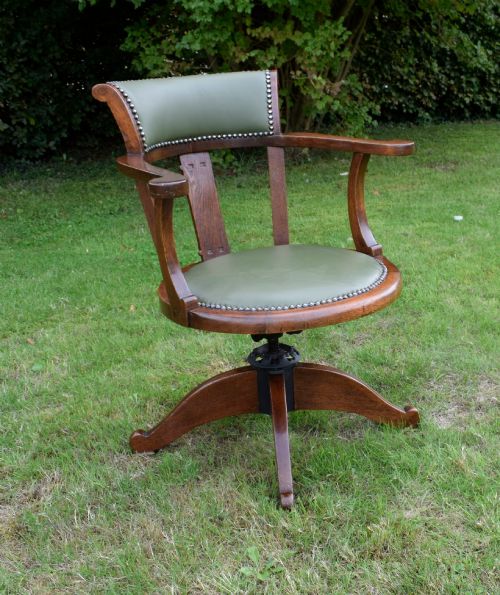
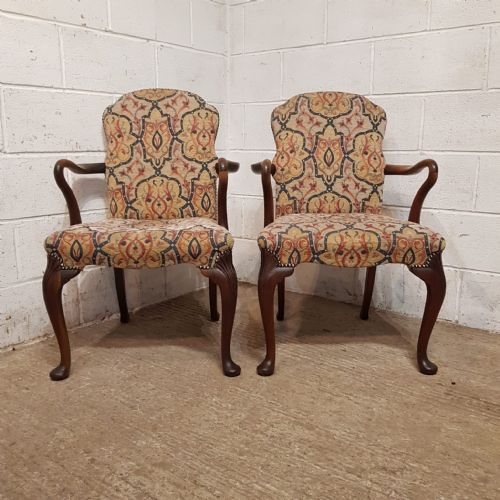
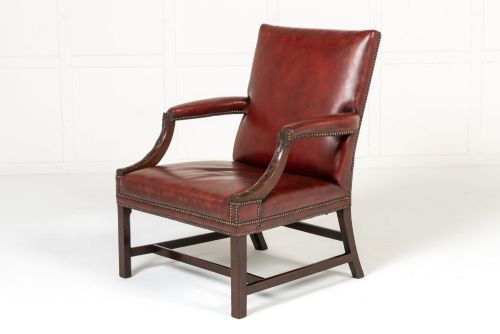
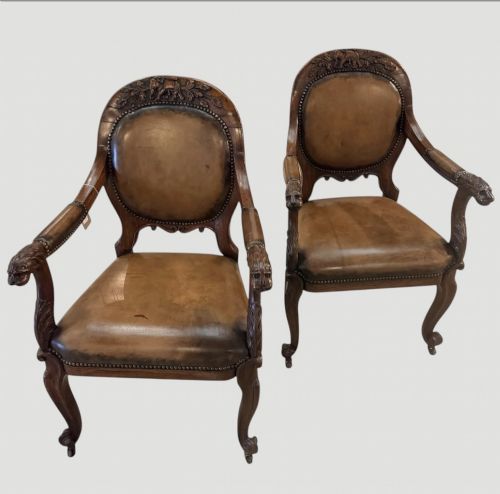
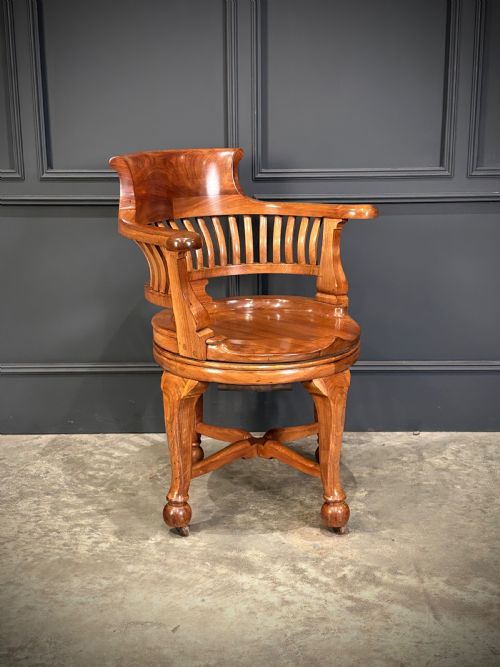
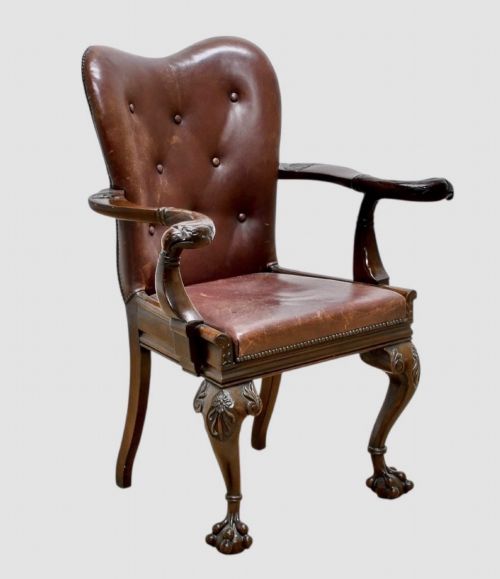
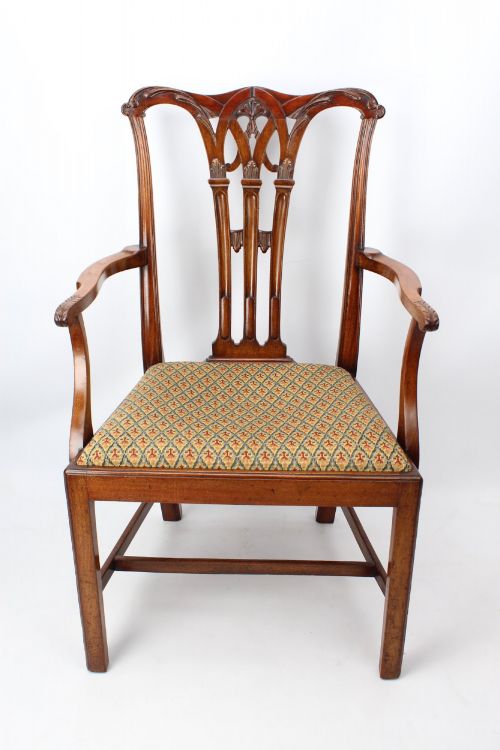
The selections span the Georgian, Victorian and Edwardian eras up to mid-century modern pieces. Heavy library armchairs upholstered in leather sit alongside swivel desk chairs and carved mahogany Chippendale style elbow chairs.
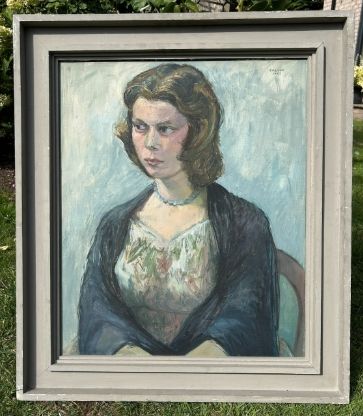
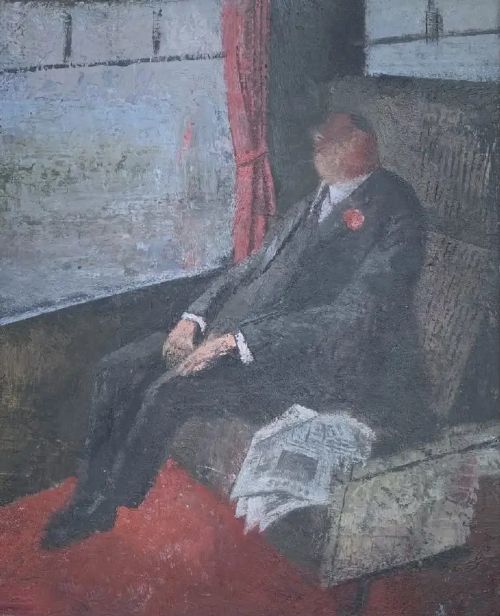
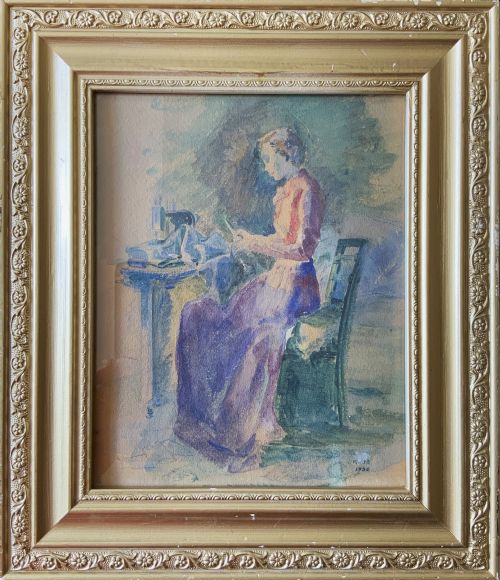
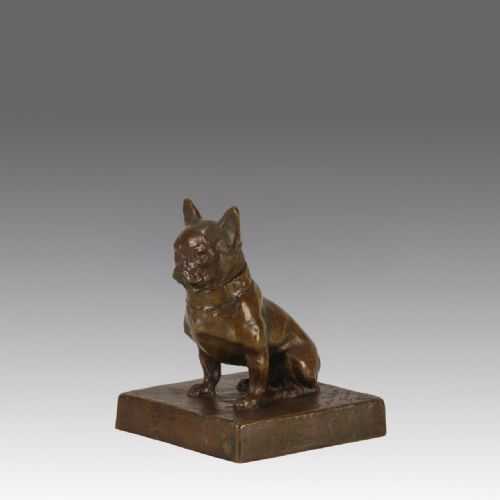
Artworks categorized under this heading include original oil paintings on canvas, watercolours and bronze sculptures. These pieces reflect academic realism and mid-century impressionism, often portraying seated figures or female studies.
Materials and construction methods
Cabinet makers constructed the seating using dense timbers such as mahogany, oak, walnut and rosewood, often carving details by hand. Swivel mechanisms incorporate brass fittings and iron hardware to permit adjustable heights and movement.
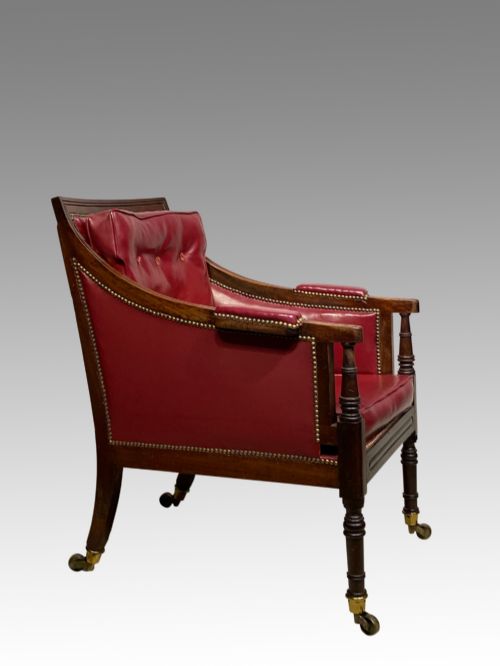
Upholstery methods involve traditional stuffing techniques finished in green or red leather, hide, and woven fabric or cane for bergère panels. Paintings utilise oil on canvas or board, watercolours on paper, and pencil for life drawings.
Listings feature study seating and artworks spanning the Georgian, Victorian, Edwardian and mid-century periods, constructed in mahogany, oak, walnut, bronze and leather.
Distinctions in quality
Quality rests in the integrity of the timber framing, the depth of hand-carved ornamentation and the retention of original upholstery materials like aged leather or hide. Pieces that maintain their structural rigidity in swivel mechanisms and joints hold greater interest.
For artworks and sculptures, quality manifests through the precision of the draughtsmanship, brushwork technique and the artist's ability to capture form in portraits or bronze castings.
Kenneth Cozens·Dora Heber·Augustus John·Allan Douglas Davidson·Peter Jackson
The Vintage Study Seating Glossary
- Bergère
- A closed-arm armchair with cane or upholstered side panels. This French seating form often appears in walnut or oak frames.
- Gainsborough chair
- A wide, open-armed mahogany armchair designed for writing desks during the eighteenth century. They typically feature padded backs and seat squabs.
- Swivel desk chair
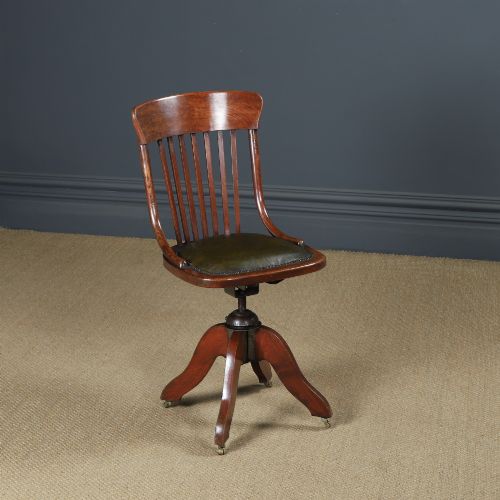
- An office seat mounted on a central rotating pivot, frequently incorporating a timber spindle back or leather upholstery.
- Life drawing
- An artwork created by observing a live model directly. These pieces appear in pencil, charcoal or oil on canvas.
- Chippendale style
- Furniture designs inspired by the aesthetic of Thomas Chippendale, characterised by carved mahogany cabriole legs and interlaced splat backs.
Vintage Study Seating: Frequently Asked Questions
What is a swivel desk chair made of?
These office chairs combine heavy hardwoods like oak, walnut or beech with functional metal and brass swivel mechanisms. Many retain their original tan hide or dark red leather upholstery fixed with brass tacks.
Adjustable height variants from the early twentieth century often employ iron spindles concealed beneath the wooden seat structure.
Can I use a library armchair at a modern desk?
Library armchairs provide deep, supportive seating intended for reading rooms, but their substantial wooden arms may restrict how far they slide under standard modern desk drawers. It helps to measure the desk clearance height against the arm height of the chair before placing one.
Many period library chairs feature leather upholstery that suits daily use in a study environment.
How do I care for antique leather upholstery?
Antique leather benefits from occasional light conditioning using specialist wax or balm to prevent the hide from drying and cracking over time. Avoiding direct sunlight and intense heat sources protects the original patina and colour.
Gentle dusting with a dry cloth keeps the surface clean without damaging historic finishes or stitching.
What defines a life drawing study?
A life drawing study is an observational artwork capturing the human form, rendered in mediums such as pencil, charcoal or ink on paper. Artists produced these works to explore anatomy and gesture.
In a study or library setting, framed life drawings offer a classical decorative element that complements period furniture.