


Antique Wooden Santos
These antique wooden santos are carved figures of saints and religious subjects, offering carved devotion and continental presence for your interior.
Antique Wooden Santos
When you search for antique wooden santos, you encounter carved religious figures and sculptures originating primarily from continental European traditions. These pieces span from the seventeenth century through the nineteenth century, encompassing Italian and Spanish baroque styles alongside simpler folk art interpretations.
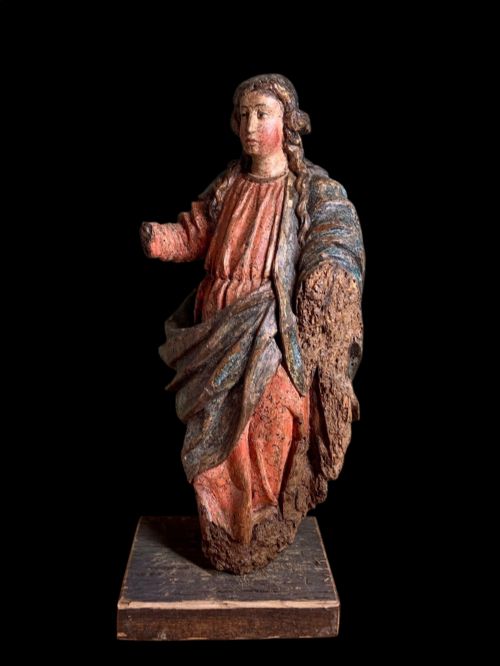
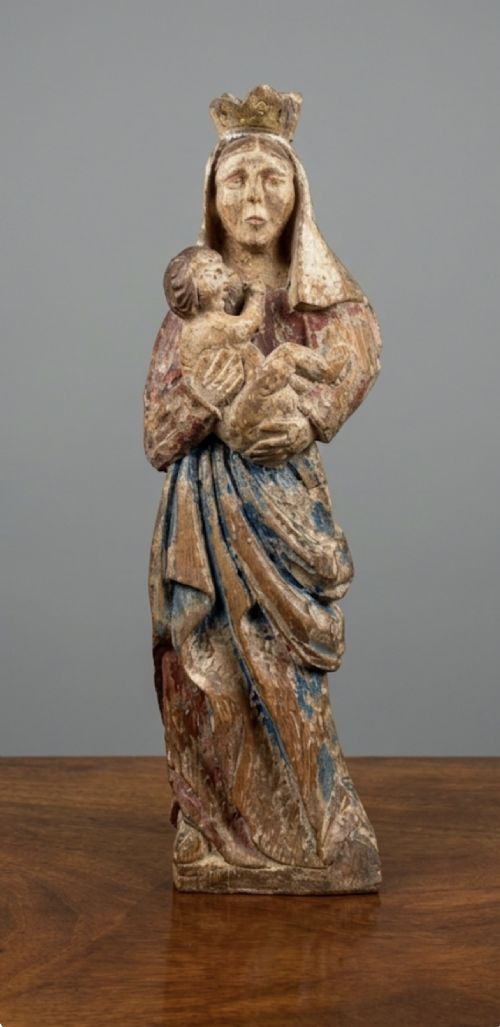
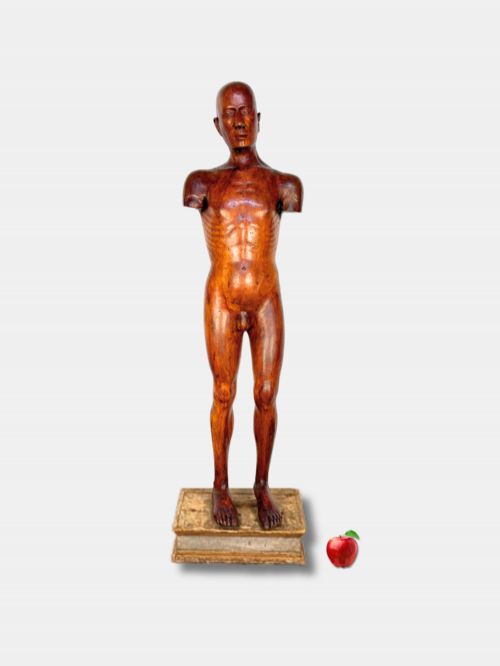
The selections you meet on this page most commonly take the form of standing saints, processional figures, and busts rendered in carved wood. They frequently display remnants of their original polychrome paint, gesso, or gold leaf finish, reflecting their devotional origins in domestic or ecclesiastical settings.
How they were made
These sculptures are primarily carved from wood, utilising native timbers such as walnut or general carved wood foundations to shape the human form. Artisans then applied layers of gesso to create a smooth preparatory surface for subsequent painting and gilding.
Surface decoration relies heavily on polychrome paint and gold leaf, capturing the rich aesthetic of the baroque period or the charming simplicity of religious folk art. Some examples additionally incorporate fabric elements to dress the carved wooden core, particularly in the case of capipote figures.
One listed figure stands ready for a parade as a processional piece, having spent centuries being carried through Italian streets.
What varies in quality
The preservation of the original surface finishes, including polychrome paint and gold leaf, significantly influences the character of each piece. Survailing traces of early pigment and gesso demonstrate the original artistic intent more completely than stripped or heavily repainted surfaces.
The Antique Wooden Santos Glossary
- Santos
- Carved wooden figures representing saints or sacred persons, traditionally used in Catholic worship and processions.
- Polychrome
- Painted in several colours, describing the decorative surface treatment found on many historical wooden sculptures.
- Capipote
- A type of santos figure featuring a carved wooden head and hands attached to a framework designed to be dressed in real fabric garments.
- Gesso
- A plaster-like mixture applied to wood surfaces to prepare them for painting and gilding.
- Baroque
- An ornate artistic style originating in the seventeenth century, characterised by dramatic movement and deep emotional tension.
Antique Wooden Santos: Frequently Asked Questions
What is a santos figure?
A santos figure is a carved wooden sculpture depicting a saint, Christ, or the Virgin Mary. These pieces were created for religious devotion, prayer, and ecclesiastical processions across Catholic Europe.
Over time, many of these sculptures have transitioned from sacred settings into decorative interiors, valued for their sculptural presence and historical patination.
How old are these wooden figures?
The pieces available range primarily from the seventeenth century through the nineteenth century. Stylistic markers and material composition help place them within specific periods like the baroque era or later folk art traditions.
Dates are typically attributed based on carvers' techniques, the wear of the wood, and the ageing of underlying gesso and paint layers.
Where did antique santos originate?
These sculptures predominantly originate from continental European traditions, with specific pieces linked to Italian and Spanish workshops. Italian folk art and Spanish baroque styles represent common regional aesthetics found among these carvings.
Regional differences appear in the carving execution, the choice of timber, and the application of polychrome or gilt finishes.
How do I display a santos figure?
Santos figures can be placed on plain surfaces, integrated into shelving, or mounted on dedicated plinths to showcase their carved details. Their neutral wood tones and weathered polychrome surfaces complement both traditional and contemporary interiors.
Placing them away from direct heat sources and strong sunlight helps preserve the fragile remains of historic paint and gold leaf.