



Religious Carved Icon
A religious carved icon brings centuries of devotion into a room, offering tactile connection through wood, gesso, and gold leaf.
Religious Carved Icon
A religious carved icon encompasses devotional figures, plaques, and framed home altars originating from European, Asian, and British traditions. Buyers searching for a religious carved icon encounter diverse forms including life-size saints, miniature martyrdom scenes, and domestic shrines.
How they were made
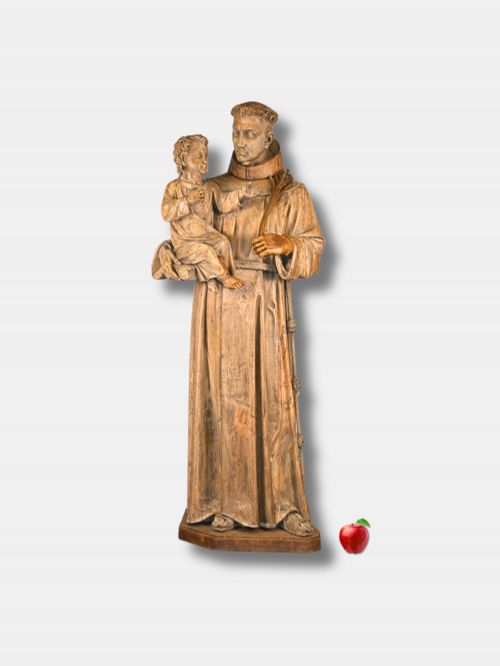
Carvers shaped these devotional objects primarily from hardwoods such as oak, applewood, and general carved wood, utilising hand-chisels to achieve intricate drapery and facial expressions. The underlying timber provided a stable support for subsequent surface treatments.
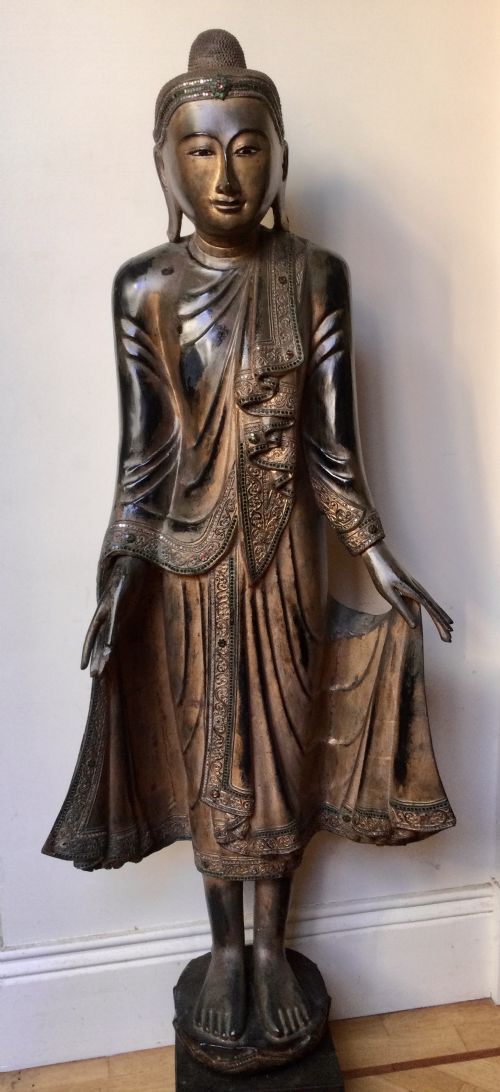
Artisans applied gesso layers over the wood to create a smooth ground for polychrome paint and gold leaf decoration. This combination of carved wood, pigment, and gilding defined the rich visual language of Spanish Baroque, Gothic Revival, and religious folk art pieces.
Some saints hold tiny sculpted babies with expressions of profound solemnity.
What varies in quality
The mastery of the carver dictates the sculptural depth and anatomical realism, distinguishing sophisticated workshop pieces from simpler folk art interpretations. Finer examples display sensitive facial detailing and fluid drapery folds that bring static timber to life.
The preservation of original surface finishes, including polychrome paint and gold leaf, significantly influences the integrity of each piece. Retained layers of historical pigment provide authentic visual character compared to later overpainting or stripped wood.
The Religious Carved Icon Glossary
- Polychrome
- Painted in several colours. This technique brought devotional figures closer to life by applying pigments directly over wood or gesso.
- Giltwood
- Wood that has been covered with gold leaf or powder. It catches candlelight in places of worship to create a luminous effect.
- Gesso
- A plaster mixture used as a smooth base for painting on wood. Artisans laid this preparation down before adding gilding or polychrome layers.
- Santos
- A carved figure of a saint used in Hispanic religious practice. These statues often served central roles in domestic or processional worship.
- Baroque
- An ornate artistic style spanning the seventeenth and eighteenth centuries. It prioritised dynamic movement and dramatic emotional intensity in sculpture.
Religious Carved Icon: Frequently Asked Questions
How do I care for a wooden icon?
Keep the piece away from direct sunlight and sudden temperature shifts to protect the underlying timber and fragile gesso.
Dust gently with a soft, dry brush and avoid applying liquid cleaners or polishes to historic surfaces.
Where were home altars displayed?
Families placed small altars and framed shadowboxes in private living quarters for daily prayer and domestic devotion.
Larger statues often stood in domestic niches or travelled during local religious processions.
How can I tell centuries apart?
Examine the tool marks left by the carver and the way stylistic conventions align with periods like sixteenth-century Gothic or seventeenth-century Baroque.
Material composition, such as the specific use of gesso and gold leaf, also points to the manufacturing era.
What is a Veils of Veronica?
It represents the miraculous cloth that bore the image of Christ's face during his walk to Calvary.
Artisans depicted this subject in framed artwork and panels for contemplation of the Passion.