


17th Century Wooden Statue
These 17th century wooden statue examples bring sacred devotion and continental artistry straight into a modern interior.
17th Century Wooden Statue
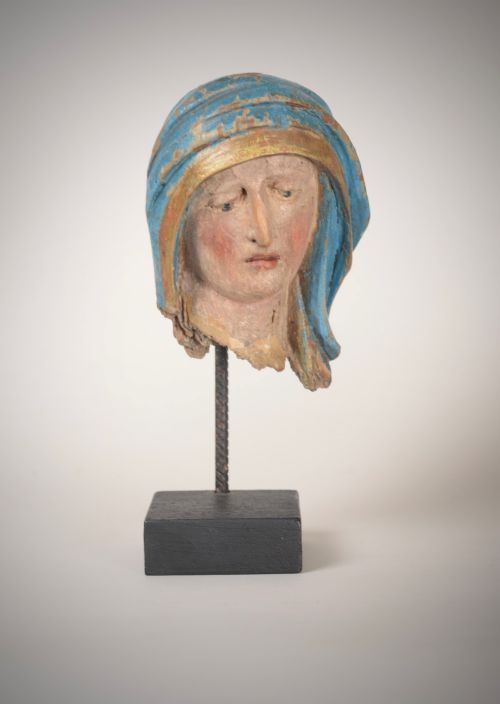
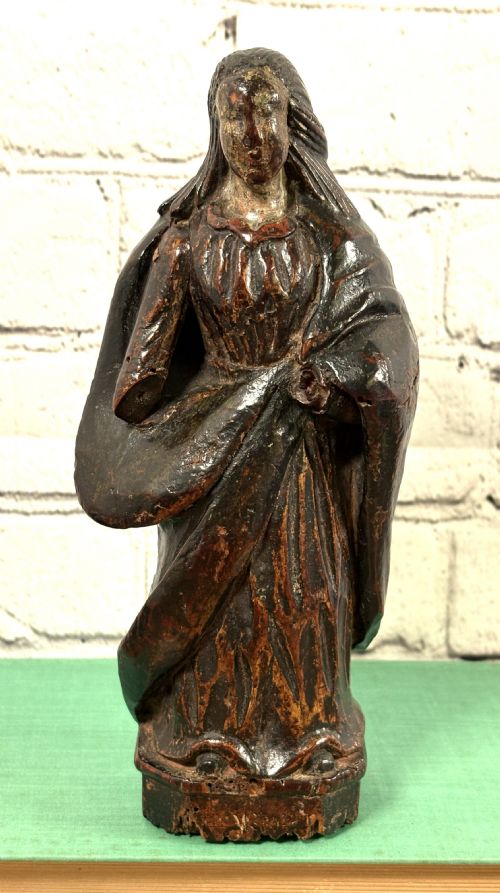
A 17th century wooden statue represents centuries of religious devotion and master craftsmanship, spanning figures of saints, angels, and deities. Collectors searching for a 17th century wooden statue will find carved depictions including figures of Saint Barbara, the Lady of Sorrow, and Christ, alongside architectural fragments and symbolic beasts. These pieces reflect diverse regional origins from continental Europe to Indian workshops, capturing the dramatic spirit of the era.
Most pieces on this page originate from the seventeenth century or around 1700, showcasing traditional Christian and secular iconography. Forms range from kneeling oak angels and architectural caryatids to solitary limewood and applewood saints. Buyers encounter both monumental devotional figures and smaller fragments that carry the deep texture of their original context.
How they were made
Carvers shaped these sculptures from dense domestic hardwoods like oak and applewood, alongside fine-grained limewood that allowed for delicate facial expressions and flowing drapery. Artisans frequently applied a preparation layer of gesso to the timber substrate before adding rich polychrome pigments, gilding them with delicate layers of gold leaf. Metal fittings occasionally secure structural elements or provide attributes for the figures.
The working methods rely entirely on hand-carving techniques developed across European and continental workshops during the Baroque period. Surface treatments combine carved relief with painted and gilded details, creating tactile contrasts between bare wood and brilliant metallic finishes.
One remarkably patient 17th century artisan carved a stone-faced Nandi bull out of wood.
What varies in quality
The survival of original surface finishes, including polychrome pigment and gold leaf, heavily influences the character of each piece. Statues retaining their early painted layers offer a more complete historic witness than those stripped down to raw wood over time.
The 17th Century Wooden Statue Glossary
- Polychrome
- Decorated in a variety of colours. This technique involved applying paint directly to the carved wood or over a gesso ground to render lifelike garments and flesh tones.
- Gesso
- A white paint mixture consisting of a binder mixed with chalk, gypsum, or pigment. It served as a smooth preparation layer for gilding and painting.
- Gold leaf
- Gold beaten into extremely thin sheets used for gilding surfaces. It brings a luminous quality to haloes, garments, and architectural details.
- Caryatid
- A sculpted female figure serving as an architectural support taking the place of a column or a pillar. These structural elements often appear carved from oak in seventeenth-century interiors.
- Continental Baroque
- A style of European art and architecture originating in the early seventeenth century. It emphasises dramatic movement, deep relief, and grand emotional intensity.
17th Century Wooden Statue: Frequently Asked Questions
How do I care for a seventeenth-century wooden sculpture?
Keep wooden statues away from direct sunlight, radiators, and rapid changes in humidity to prevent the timber from splitting. Dust them very gently with a soft, dry brush without using modern cleaning chemicals or water.
Stable indoor conditions help preserve fragile gesso and polychrome surfaces. Avoid applying wax or oils unless recommended by a professional conservator.
Were these figures originally displayed in churches?
Many of these carved figures served as devotional objects within churches, private chapels, and monastic settings during the seventeenth century. Architectural figures like caryatids also formed part of grand interior woodwork schemes.
Others held a domestic devotional role in household shrines. Their varied scale reflects these distinct original contexts.
How can I tell different seventeenth-century wood types apart?
Oak typically presents a prominent grain and a heavy, durable structure often used for architectural figures. Limewood and applewood offer a finer, tighter grain that allowed carvers to execute intricate details and smooth facial expressions.
Close inspection under good light reveals the natural grain patterns beneath paint or age patina. Different regional workshops favored particular local timbers.
What is the difference between oak and limewood carvings?
Oak provides a robust, heavy medium well suited to architectural salvage and structural elements like caryatids. Limewood is softer and more even in texture, making it the preferred choice for expressive figurative sculptures.
Carvers utilised limewood when deep undercuts and delicate drapery were required. Oak pieces often rely on bold, robust silhouettes.