


Carved Wood Christ Statue
A carved wood christ statue carries centuries of devotion in its grain, bringing contemplative presence into a room through historic artisan hands.
Carved Wood Christ Statue
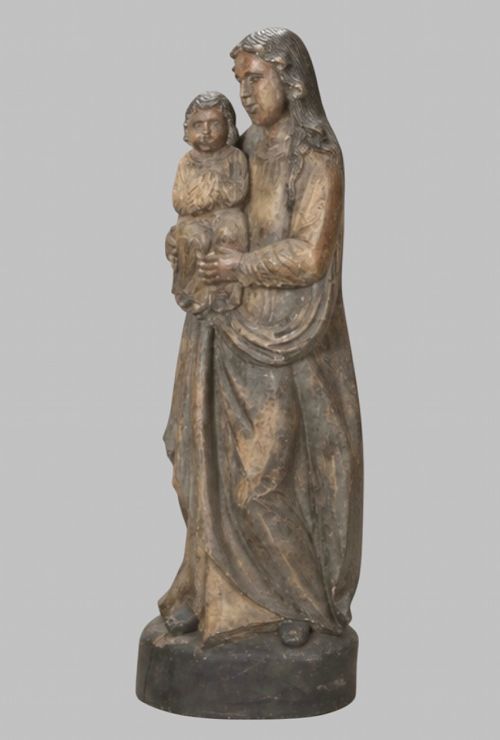
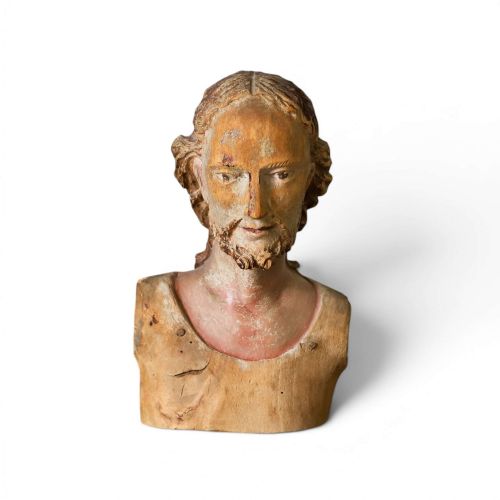
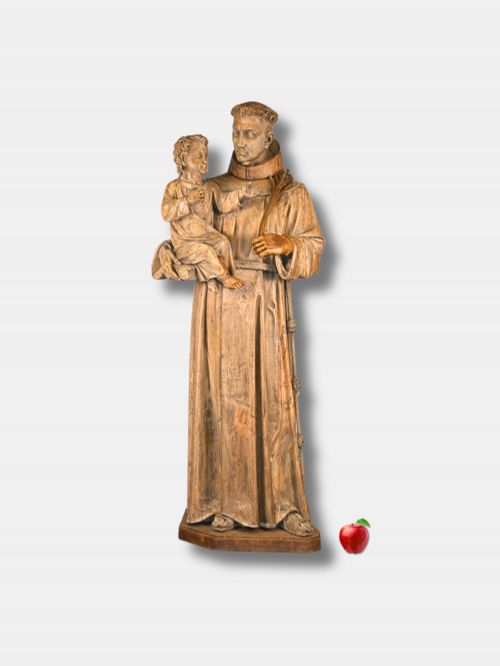
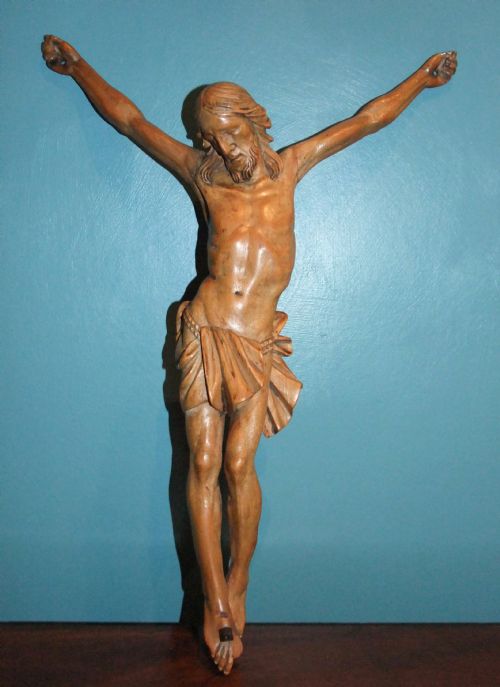
A carved wood christ statue encompasses devotional figures ranging from monumental life-size corpus Christi pieces to intimate depictions of the young Christ and the Man of Sorrow. These sculptures emerge from diverse continental traditions, spanning the rigorous forms of the fifteenth century through the expressive drama of the seventeenth and eighteenth centuries.
The version most commonly encountered in these listings is the smaller devotional bust or full-length figure, often originating from religious centres in France, Spain, Italy, or Germany. Such works reflect profound theological purpose, originally commissioned for private contemplation or ecclesiastical spaces rather than secular display.
Buyers will also find specific regional manifestations, including Sicilian olive wood busts and South German lindenwood sculptures. Each piece records the specific aesthetic priorities of its period, moving from Gothic severity towards the rich curves of the Baroque.
Materials and Carving Techniques
Many surfaces received an application of gesso as a ground layer, which was then painted or polychromed to create lifelike flesh tones and richly coloured vestments. Metal elements occasionally supplemented the wooden structure, particularly in corpus Christi configurations.
Listings feature devotional sculptures spanning from the 15th century through to 1900, employing materials such as lindenwood, olive wood, fruitwood, and gesso.
Assessing Sculptural Quality
Quality rests primarily on the anatomical precision and emotional resonance achieved by the carver's chisel, distinguishing masterworks from provincial workshop output. Superior examples demonstrate a nuanced understanding of musculature and drapery tension, whereas lesser pieces rely on rigid symmetry.
The preservation of original polychrome surfaces and gesso layers significantly elevates a piece, as later overpainting often obscures the subtlety of the original hand. Sculptures retaining their distinct tool marks and uncompromised timber integrity hold greater material honesty.
The Carved Wood Christ Statue Glossary
- Polychrome
- Decoration consisting of several colours applied to the wood surface, frequently laid over a gesso ground to simulate life. This technique defines much of continental religious art.
- Corpus Christi
- The body of Christ depicted upon a cross, typically carved from wood or cast in metal. These figures focus intensely on the anatomical and emotional reality of the crucifixion.
- Lindenwood
- A pale, close-grained timber favoured by Germanic carvers for its exceptional suitability for intricate detail. It resists splitting and holds sharp chisel lines.
- Gesso
- A plaster mixture applied to wood to create a smooth surface for gilding or painting. It provides the foundational layer for polychrome finishes.
- Man of Sorrow
- An iconic devotional representation showing Christ dwelling upon his upcoming passion, often depicted crowned with thorns. This iconography emphasises human suffering and divine empathy.
Carved Wood Christ Statue: Frequently Asked Questions
How do I clean an antique wood statue?
Dust the surface gently with a soft, dry brush to remove particulate matter without disturbing fragile wood fibres or aged finishes.
Avoid using water, commercial polish, or chemical solvents, as these substances penetrate porous timber and damage historic gesso or polychrome layers.
Where should I place a wooden religious figure?
Position the sculpture away from direct sunlight, heating vents, and damp environments to prevent the timber from drying, cracking, or warping.
Stable indoor humidity and temperature levels preserve both the structural integrity of the carved wood and the adhesion of any surface pigments.
What is the difference between a bust and a corpus?
A bust focuses exclusively on the head and shoulders of the subject, often capturing an intense devotional gaze or specific moment of suffering.
A corpus specifically depicts the full body of Christ, historically designed to be mounted upon a cross for liturgical or private prayer.