


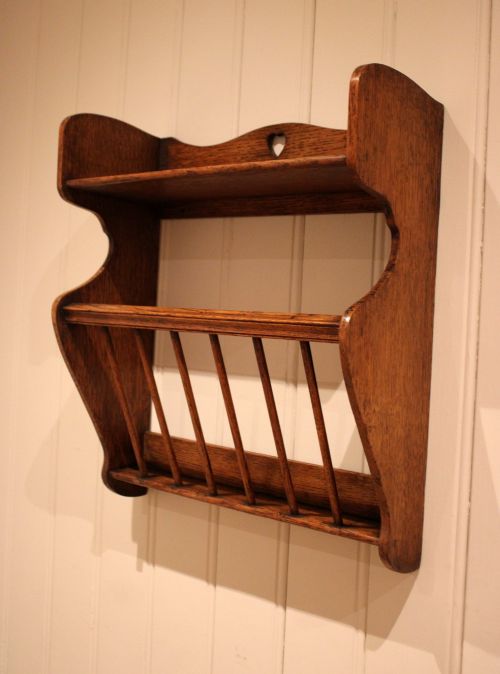


Wooden Newspaper Holder
A wooden newspaper holder keeps journals and periodicals orderly in a sitting room, bringing traditional British craftsmanship into daily service.

Wooden Newspaper Holder
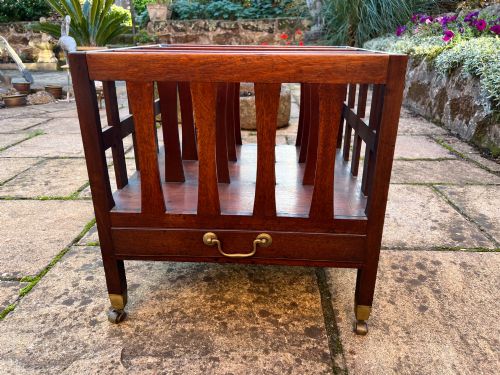
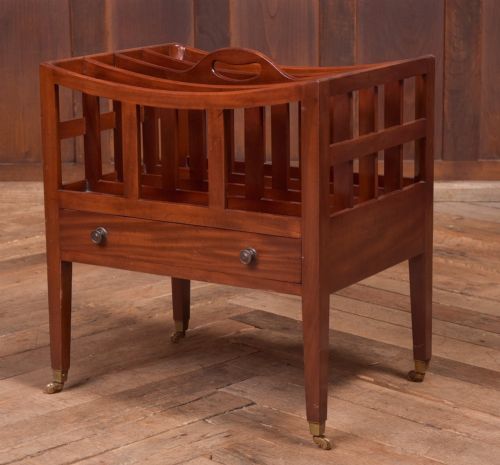
A wooden newspaper holder, frequently encountered on this page as a canterbury or magazine rack, serves to tidy periodicals and folios in domestic rooms. These pieces originate across the Georgian, Regency, Victorian, and Edwardian periods.
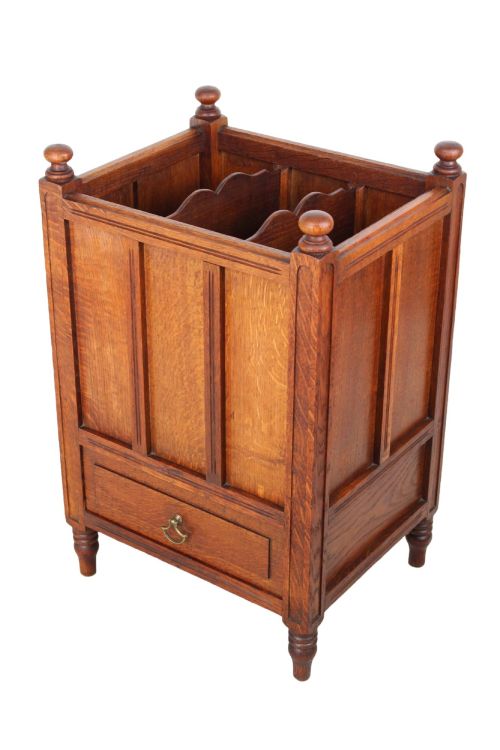
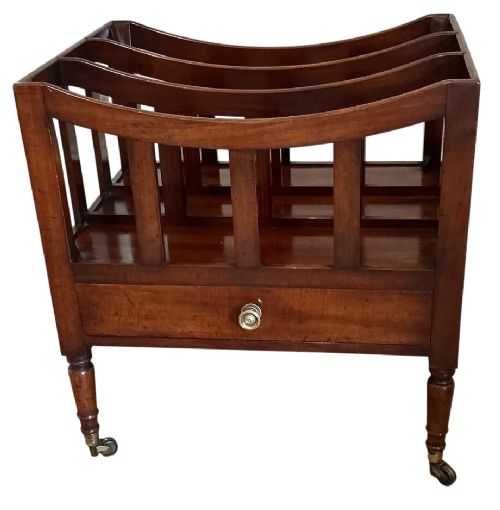
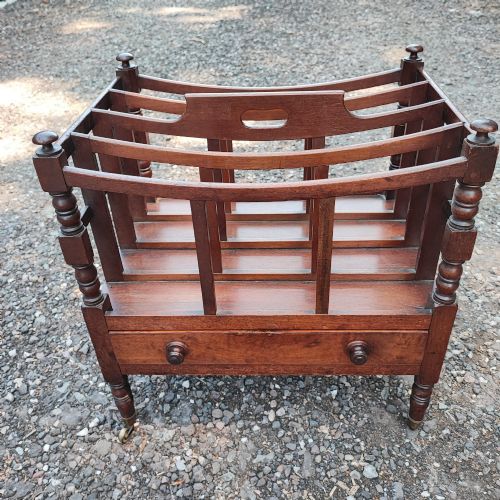
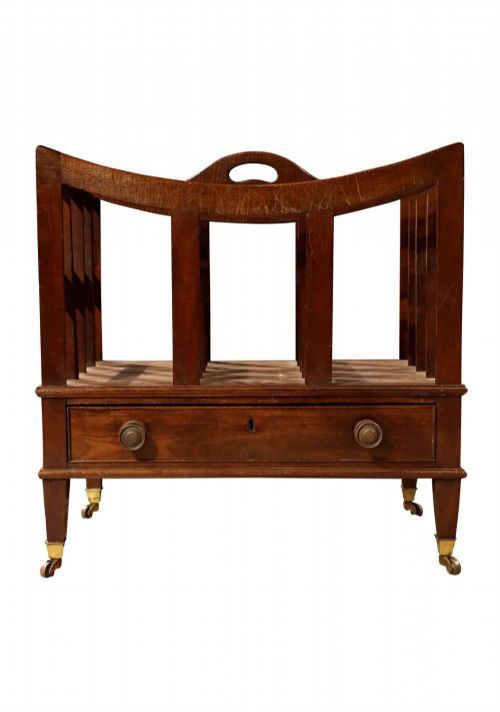
Buyers commonly meet mahogany and oak examples featuring divided compartments for reading material. Many incorporate turned legs, castors, or drawers for storage beneath the slatted racks.
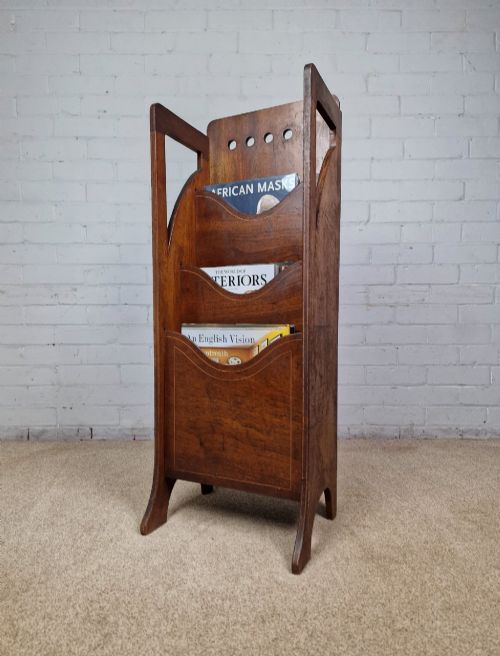
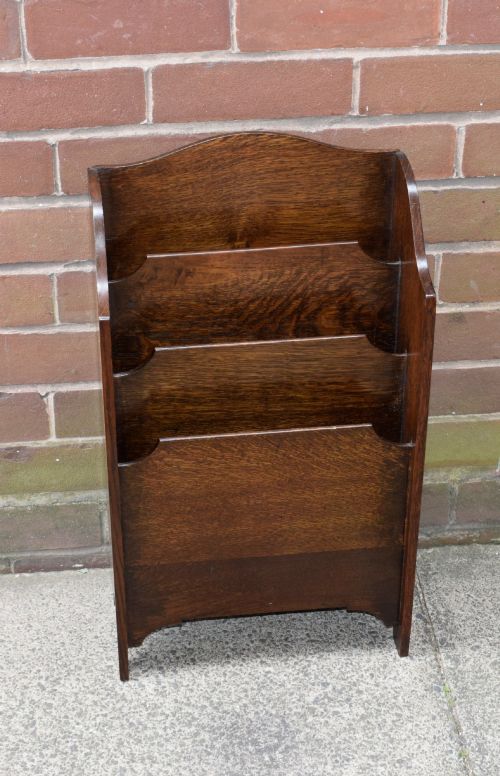
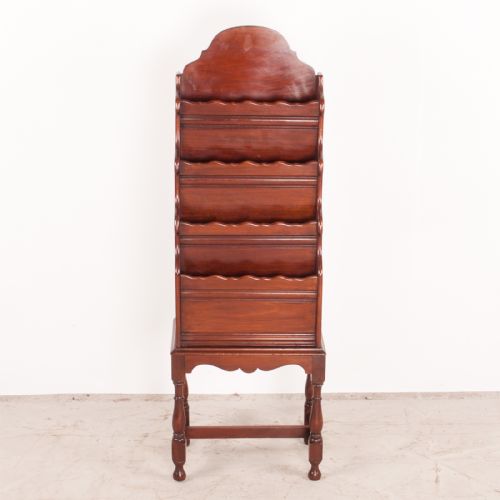
Origins range from English workshops to French makers, spanning freestanding floor models and wall-mounted shelves. The selection covers diverse styles from Arts and Crafts simplicity to formal Regency design.
How they were made
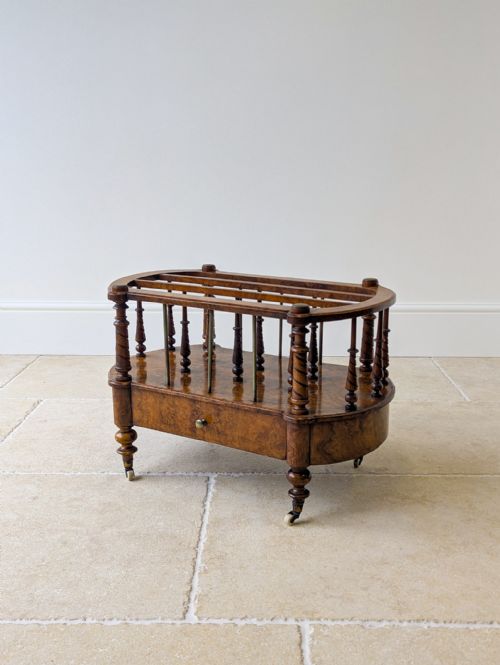
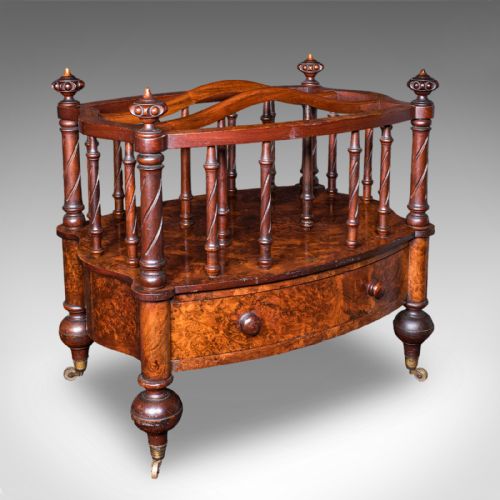
Cabinetmakers utilised hardwoods such as mahogany, oak, rosewood, walnut, and burr walnut for structural durability and rich grain patterns. Secondary timbers like fruitwood appear alongside decorative accents of boxwood and ebony banding.
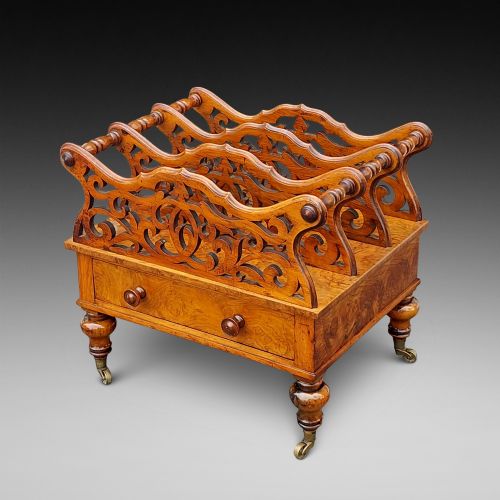
Construction techniques involve joined vertical divisions, pierced scroll work, and turned uprights. Brass details frequently form castors and handle mounts on freestanding pieces.
Wooden Newspaper Holder Retail Price Guide 2026
Typical asking prices for wooden newspaper holder among the pieces listed under this phrase on Sellingantiques today, from the lower quarter to the upper quarter. They describe what is for sale here now, not the wider market.
Early nineteenth-century furniture makers named the canterbury after an archbishop who allegedly requested a low music stand.
What varies in quality
The choice of timber grain dictates visual appeal, with highly figured burr walnut and richly polished mahogany sitting at the upper end. Finely turned legs and crisp scroll piercings demonstrate superior cabinetmaking skill.
Structural integrity depends on the rigidity of the divisions and the quality of the joints holding the rack together. Subtle additions like ebony banding or brass castors elevate the refinement of the piece.
Howard and Sons of London·Gillows of Lancaster
The Wooden Newspaper Holder Glossary
- Regency
- A style spanning the early nineteenth century characterised by classical lines and influences from ancient Greece and Rome. Pieces from this era often display elegant proportions and turned supports.
- Burr walnut
- A veneer taken from the knotted growths of the walnut tree, prized for its swirling, intricate grain patterns. Cabinetmakers utilised it on high-status furniture fronts and tops.
- Division
- An internal partition creating separate sections within the rack to keep publications upright and sorted. These partitions often feature pierced scroll designs.
- Castor
- A small wheel fitted to the legs of freestanding furniture to permit easy movement across carpets and floors. They are frequently cast in brass on nineteenth-century stands.
Wooden Newspaper Holder: Frequently Asked Questions
What is a wooden newspaper holder?
A wooden newspaper holder is a functional piece of furniture designed to store periodicals, journals, and folios upright. They appear primarily as canterburys or magazine racks with internal divisions.
These items range from compact wall shelves to substantial freestanding stands. They combine practical paper storage with decorative cabinet timber.
How were canterburys used historically?
Households used canterburys to keep daily newspapers and weekly magazines neat within the drawing room or library. The partitions prevented soft-covered folios from slumping.
Many examples also accommodated sheet music near pianos and music stands. Lower drawers held smaller writing accessories or periodicals.
How do I date a wooden newspaper holder?
Dating relies on observing timber choices, construction methods, and prevailing decorative styles. Regency pieces often show boat shapes and turned legs, while Edwardian items lean toward simpler oak forms.
Secondary clues include brass castors, ebony banding, and specific wood veneers like burr walnut. Comparing structural forms against documented period examples helps confirm the era.
Where should I place one in my home?
These holders sit well beside armchairs, sofas, or reading desks where current periodicals are frequently gathered. Freestanding variants move easily across rooms on their castors.
Wall-mounted racks suit tighter spaces such as hallways or studies. They keep reading matter accessible while displaying the grain of the wood.