



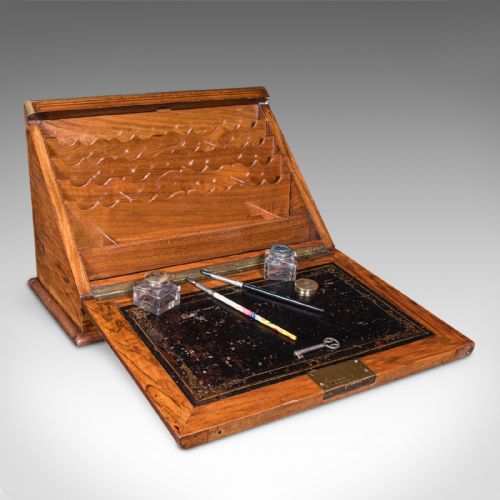


Antique Wooden Inkwell
These antique wooden inkwell pieces bring the character of nineteenth-century desk furniture into modern rooms through carved animal figures and rich timbers.
Antique Wooden Inkwell
An antique wooden inkwell serves as a desk accessory designed to hold liquid ink for writing, often expanding into larger desk stands, standishes, or stationery cabinets. These items originate predominantly from the nineteenth century, encompassing Victorian, Regency, and Edwardian periods.
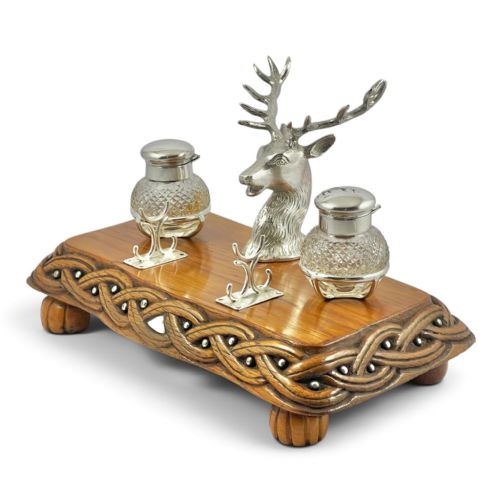
The most common formats on this page range from simple turned wooden wells to elaborate Black Forest carvings featuring animals such as bears, dogs, owls, and cats. Alongside these figural pieces, buyers frequently encounter walnut, oak, and coromandel desk tidies fitted with glass ink bottles.
Many examples incorporate practical compartments for pens, stamps, and letter racks, reflecting the domestic and administrative routines of the past. Their forms vary from compact travelling inkwells to substantial double inkstands meant for a permanent study desk.
How they were made
Cabinet makers utilised dense hardwoods such as oak, walnut, coromandel, and fruitwood, often selecting them for their rich grain and durability. These timbers were shaped through turning, joinery, and intricate hand carving, particularly evident in Swiss and German Black Forest animal studies.
Many items incorporate contrasting materials, combining carved wood with brass mounts, mother-of-pearl inlay, and bone details. Glass inserts and bottles provide the necessary reservoir for ink, while silver or metal plating frequently accents the hinged lids and collars.
Antique Wooden Inkwell Retail Price Guide 2026
Typical asking prices for wooden inkwell among the pieces listed under this phrase on Sellingantiques today, from the lower quarter to the upper quarter. They describe what is for sale here now, not the wider market.
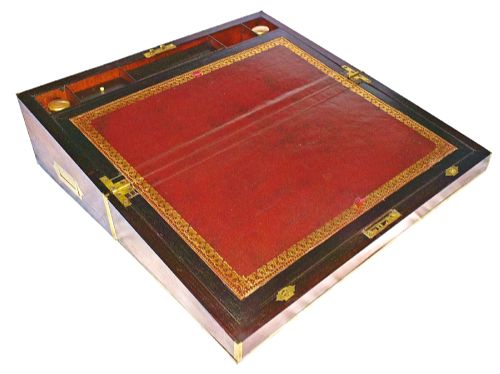
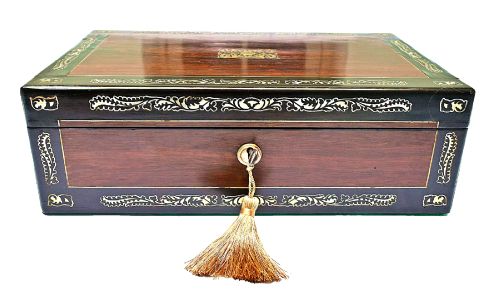
Listings feature eighteenth-century boxes with mother-of-pearl alongside nineteenth-century walnut, oak, and coromandel desk stands.
What varies in quality
The degree of detail in the hand carving dictates much of the distinction between standard and superior pieces, especially in figural Black Forest examples where lifelike anatomy and expression matter greatly. Crisp execution in foliage, animal fur, and structural mouldings separates workshop output.
Material selection and the integration of secondary elements influence overall excellence, such as the use of highly figured coromandel wood, matched brass hardware, and intact original glass ink inserts. The preservation of the timber's natural patina without excessive surface refinishing maintains the integrity of the object.
Maison F. Mack
The Antique Wooden Inkwell Glossary
- Inkstand
- A portable or stationary tray holding one or more inkwells alongside space for pens and sealing wax. It forms the central desk furniture of the nineteenth-century writer.
- Standish
- An elaborate desk stand equipped with inkwells, sanders for drying ink, and pen holders. It often incorporates a drawer or lidded compartments.
- Pounce pot
- A small perforated shaker used to sprinkle resin powder onto paper before writing to prevent ink from bleeding. They frequently accompany early inkstands.
- Tunbridgeware
- Woodworking characterised by tiny coloured mosaic tiles forming geometric or pictorial patterns. It appears on travelling walnut pieces.
- Black Forest
- A style of ornate wood carving originating from Switzerland and Germany during the nineteenth century. It is known for realistic depictions of animals and foliage.
Antique Wooden Inkwell: Frequently Asked Questions
How do I clean an old wooden inkwell?
Dust the carved surfaces gently with a soft, dry brush to remove particles without disturbing the aged patina. Avoid applying water or modern chemical polishes directly to the wood.
For the glass ink inserts, remove them carefully and wash them in lukewarm water before drying thoroughly. Ensure no moisture remains near the wooden housing to prevent warping.
Can I still use an antique inkwell for writing?
These pieces function adequately with modern dip pens provided the glass or ceramic insert remains intact and free of cracks. Testing the structural integrity of the ink reservoir prevents leaks onto the surrounding timber.
Many collectors prefer to display them as decorative desk accessories rather than active writing tools to preserve the interior components.
What is the difference between an inkstand and an inkwell?
An inkwell refers specifically to the small container that holds the liquid ink, complete with a fitted lid. It can exist as a single standalone item or sit inside a fitted housing.
An inkstand is a larger desk tray or stand that incorporates one or more inkwells alongside auxiliary compartments for stationery, pens, and stamps.
How do I identify a Black Forest inkwell?
Black Forest pieces feature deep, naturalistic hand carving depicting animals such as bears, dogs, and owls rendered in Linden wood or walnut. They often incorporate glass eyes and realistic posture, sometimes showing the animal interacting with a tree trunk or log.
These items typically date from the late nineteenth century and originate from Swiss or German carving workshops.