



Antique Wooden Crucifix Sculpture
An antique wooden crucifix sculpture brings solemn devotion and centuries of devotional craftsmanship directly into a room.
Antique Wooden Crucifix Sculpture
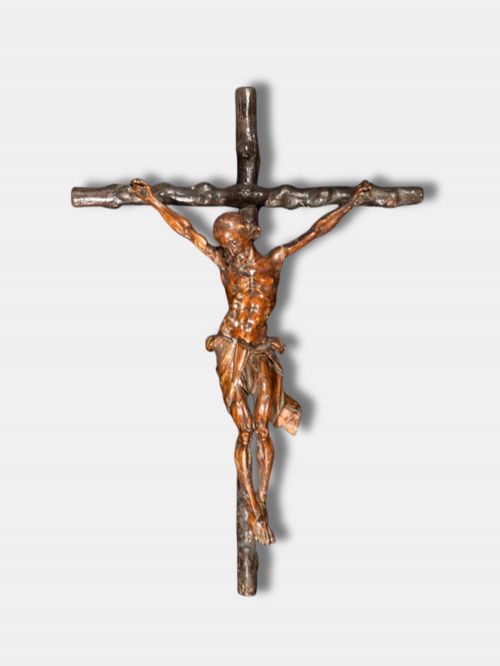
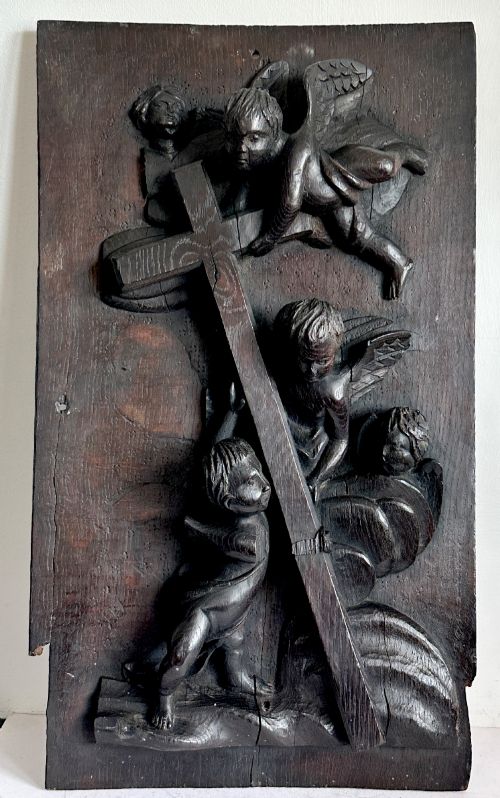
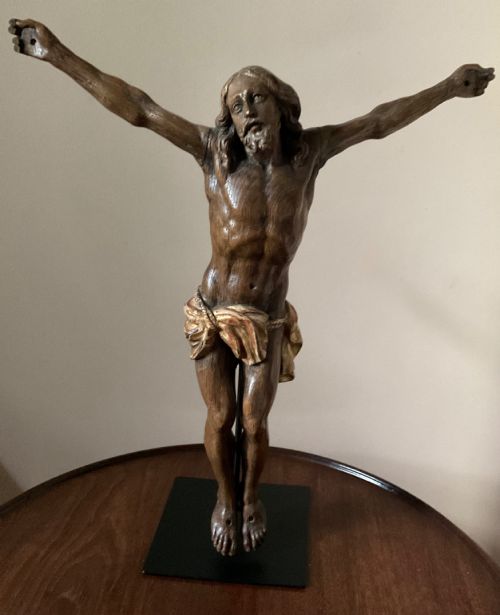
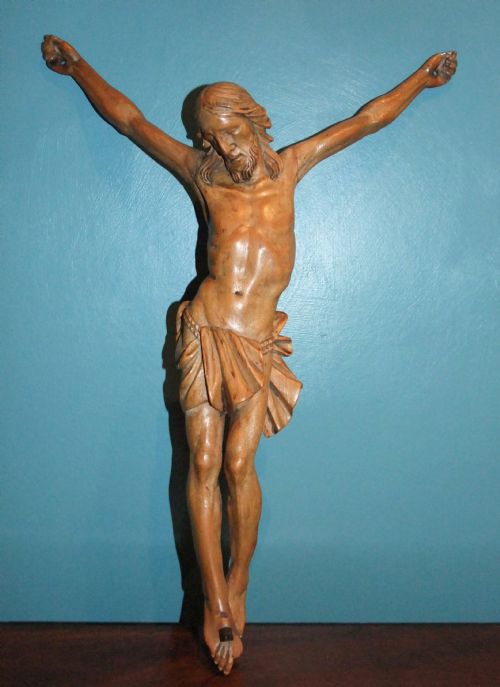
An antique wooden crucifix sculpture embodies centuries of religious devotion through carved representations of Christ on the cross. These works include standing crucifixes, wall reliefs, and standalone corpus Christi figures originating from continental workshops.
Buyers encounter pieces spanning several distinct periods, notably the sixteenth, seventeenth, and eighteenth centuries, alongside later nineteenth and twentieth-century interpretations. Spanish and French Baroque examples frequently appear, showing dramatic posture and expressive detail.
Forms range from intimate boxwood figures mounted on olive wood crosses to life-size representations and large carved oak wall panels. Many combine carved timber with parcel gilt or polychrome wood finishes to heighten their visual impact.
How they were made
Carvers shaped these sculptures from various timbers including oak, fruitwood, boxwood, lime wood, and hardy hardwoods. Artisans selected dense woods to allow for the intricate rendering of anatomical details and drapery.
Many sculptures received surface treatments such as parcel gilt accents and polychrome painted finishes to enhance realism and symbolic depth. These coatings were applied over prepared wooden substrates using traditional binding methods.
Antique Wooden Crucifix Sculpture Retail Price Guide 2026
Typical asking prices for wooden crucifix sculpture among the pieces listed under this phrase on Sellingantiques today, from the lower quarter to the upper quarter. They describe what is for sale here now, not the wider market.
Some eighteenth-century carvers included anatomical reminders like carved skulls beneath the cross to contemplate mortality.
What varies in quality
The refinement of the carving distinguishes masterworks from simpler village pieces, particularly in the rendering of facial expression and musculature. Sculptures that capture anatomical tension and emotional weight demonstrate superior artistic execution.
The preservation of original surface treatments, whether polychrome pigments or gilt highlights, strongly influences the character of a piece. Intact early finishes retain a depth that later interventions cannot replicate.
The Antique Wooden Crucifix Sculpture Glossary
- Corpus Christi
- The figure of Christ bodily represented on the cross. This element forms the sculptural focus of the crucifix.
- Polychrome
- Painted in several colours. This surface technique brings life to wooden religious sculptures.
- Parcel Gilt
- Partially gilded with gold leaf or powder. This method highlights specific details such as drapery or halos.
- Baroque
- An artistic style marked by theatricality and deep emotion. Pieces from this period emphasise dynamic movement and dramatic form.
Antique Wooden Crucifix Sculpture: Frequently Asked Questions
Where should I display an antique crucifix?
These sculptures suit quiet spaces where their historical and devotional character can be appreciated without distraction. Placing them away from direct heat sources protects the old timber from drying out.
Consider eye-level placement on plain walls to allow the carved details of the corpus to be properly seen.
How do I clean an old wooden sculpture?
Dust the timber gently with a soft, dry brush or a clean microfibre cloth. Avoid using water, polishes, or chemical cleaners that might damage fragile polychrome or gilt surfaces.
Regular, gentle maintenance prevents dust build-up in the carved crevices without harming the historic finish.
How can I tell the period of a carved corpus?
Stylistic clues such as the treatment of the hair, the fall of the loincloth, and the posture of the figure point towards specific eras like the Baroque or Renaissance. Tool marks on the reverse of the timber also offer evidence of working methods.
Comparing the anatomy and regional characteristics with dated examples helps clarify the likely century of origin.