
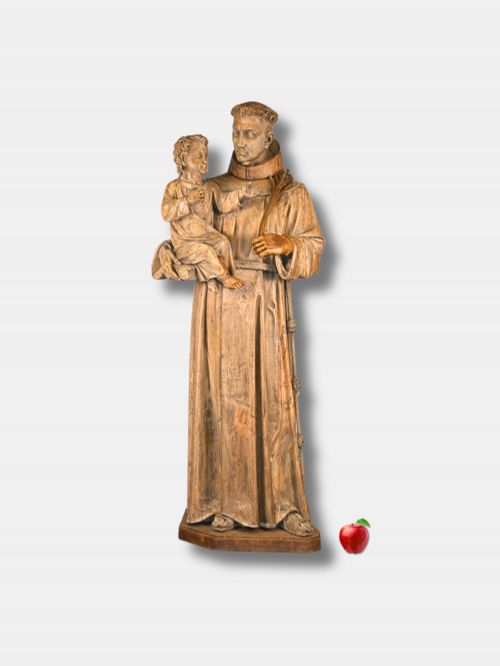
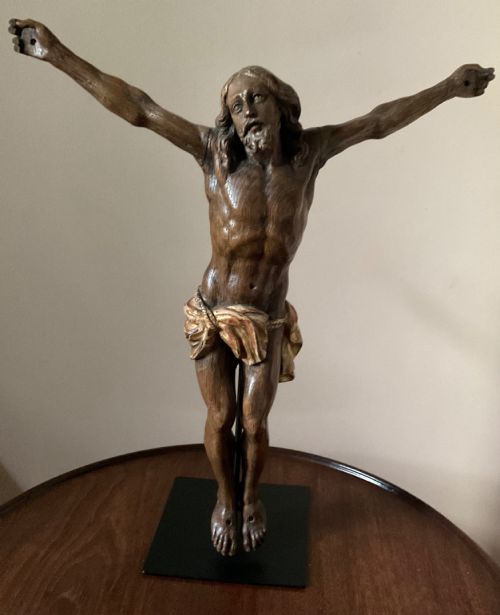


Antique Christ Sculpture
These antique christ sculpture pieces range from mediaeval oak carvings to bronze busts, embodying centuries of devotional art.
Antique Christ Sculpture
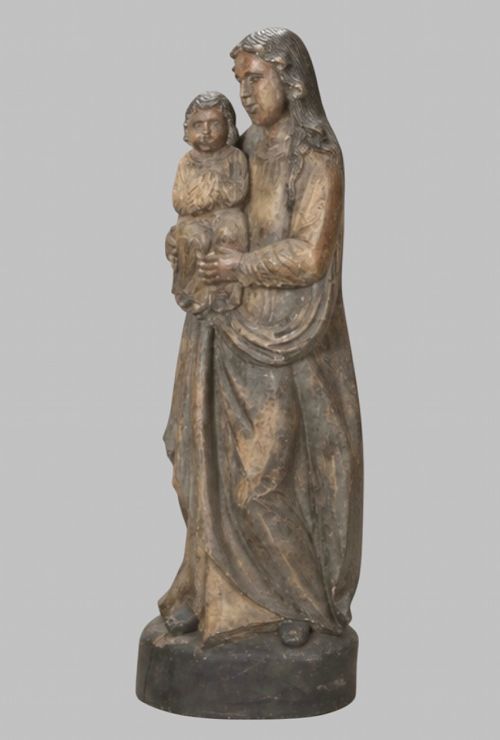
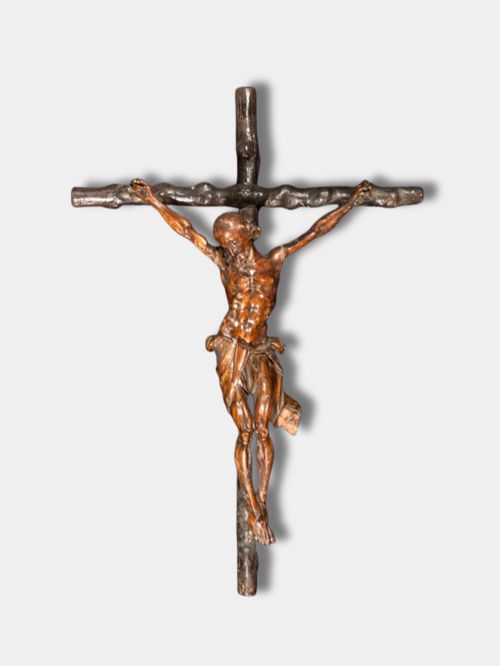
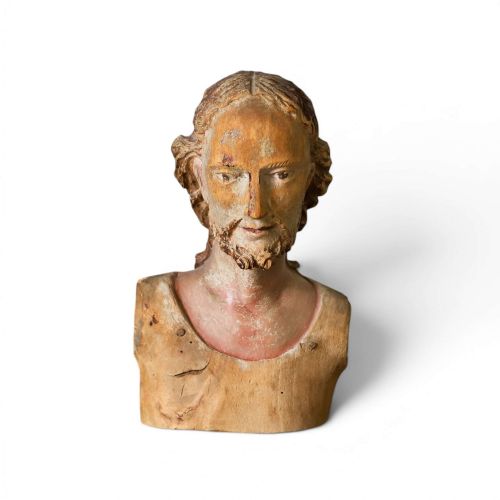
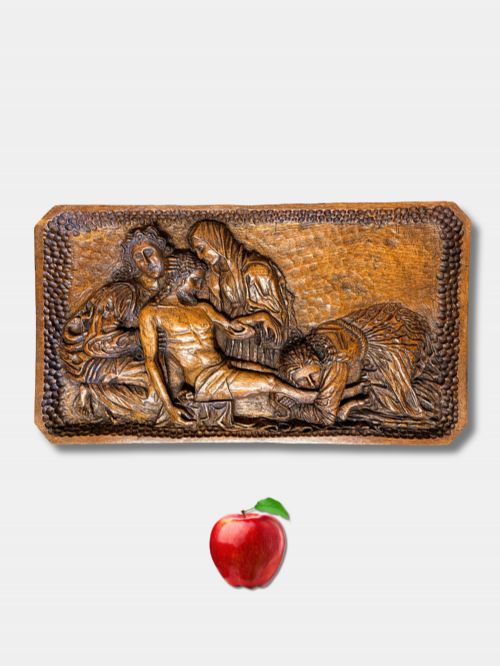
An antique christ sculpture encompasses diverse devotional forms, from free-standing figures and corpus christi crosses to relief panels and portrait busts. Buyers encounter pieces originating across continental Europe, with strong representation from French, Spanish, Italian, and German workshops.
The selections span multiple centuries, stretching from pre-sixteenth century mediaeval carvings through seventeenth-century baroque interpretations up to nineteenth-century Gothic revival and folk art pieces. Wooden statues and wall panels dominate the forms, reflecting centuries of ecclesiastical and domestic devotion.
Materials and Techniques
Carvers utilised native hardwoods such as oak, lindenwood, box wood, olive wood, fruitwood, and pine to shape these figures. Many wooden surfaces received polychrome paint, parcel gilt, or patination to enhance the visual depth of the drapery and anatomical details.
Angels occasionally appear tending to the dead figure of Christ in plaster copies.
Evaluating the Pieces
The distinction between ordinary and exceptional works lies in the sculptural ambition and the anatomical fluency of the carving. Master carvers captured tension in the musculature and deep emotion in facial expressions, whereas simpler pieces relied on stylised repetition.
Survival of original surface finishes, such as early polychrome pigments and parcel gilt, elevates a piece significantly. The crispness of chisel work and the depth of relief carving determine the visual impact of each figure.
George Kemper·George Minne·Donatello·Gian Federigo Bonzagna
The Antique Christ Sculpture Glossary
- Corpus Christi
- The figure of Jesus Christ affixed to a cross. This Latin term specifically denotes the sculptural body rather than the cross itself.
- Polychrome
- Painted in several colours. This surface treatment was applied to wood to give statues a lifelike appearance.
- Baroque
- An artistic style prevalent from the seventeenth century characterised by dramatic movement and deep emotional intensity. Sculptures from this period display dynamic drapery and expressive postures.
- Parcel Gilt
- Partially gilded with gold leaf or gold powder. Artisans used this technique to highlight specific details on wooden carvings.
- Pieta
- A subject in Christian art depicting the Virgin Mary supporting the dead body of Christ. These sculptures often appear in carved wood from mediaeval and later periods.
Antique Christ Sculpture: Frequently Asked Questions
What is a corpus christi?
A corpus christi is the physical figure of Jesus Christ mounted on a cross. These figures were carved from various woods or cast in metal.
They appear as standalone sculptures or attached to dedicated wooden crosses for devotional purposes.
How do I identify a baroque sculpture?
Baroque sculptures show dramatic movement, dynamic drapery, and intense emotional expressions. The style emphasises theatricality and physical tension.
Look for deep undercutting in the carved wood and twisting postures typical of seventeenth-century European workshops.
Were these pieces painted originally?
Many wooden religious sculptures received layers of gesso and polychrome paint to heighten realism. Pigments often depicted flesh tones and coloured garments.
Trace amounts of these original finishes frequently survive beneath later layers or bare wood.
How should I care for wooden carvings?
Display wooden sculptures away from direct heat sources and rapid humidity fluctuations to prevent cracking. Stable indoor environments preserve the integrity of the material.
Dust the surfaces gently with a dry, soft brush rather than using liquid cleaning products.