


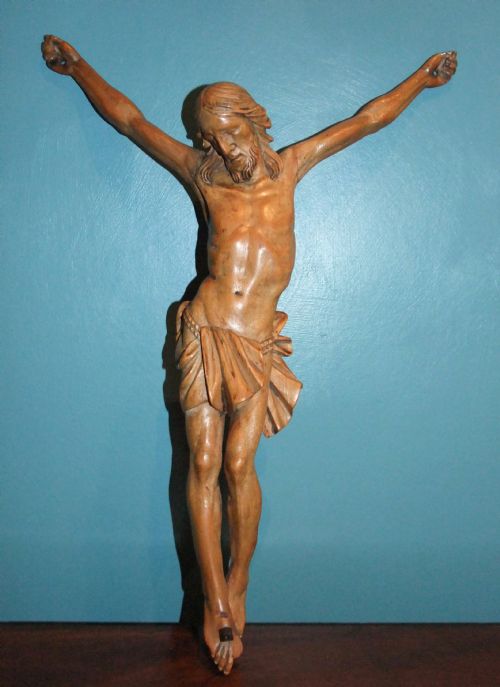
Carved Jesus Figure
A carved jesus figure brings centuries of devotion into a room, drawing the eye with the quiet weight of timber and pigment.
Carved Jesus Figure
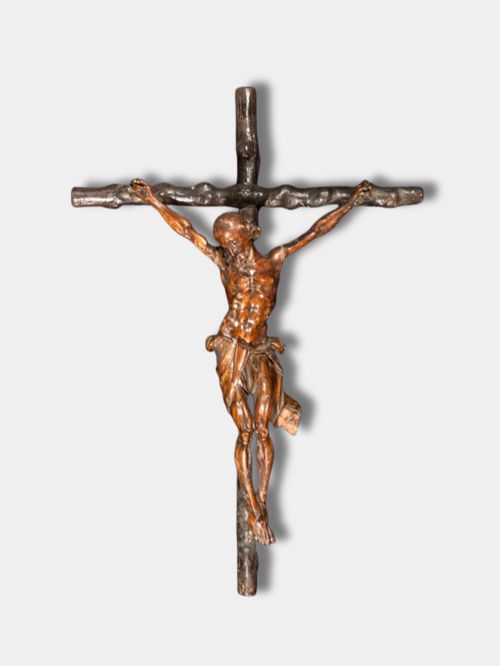
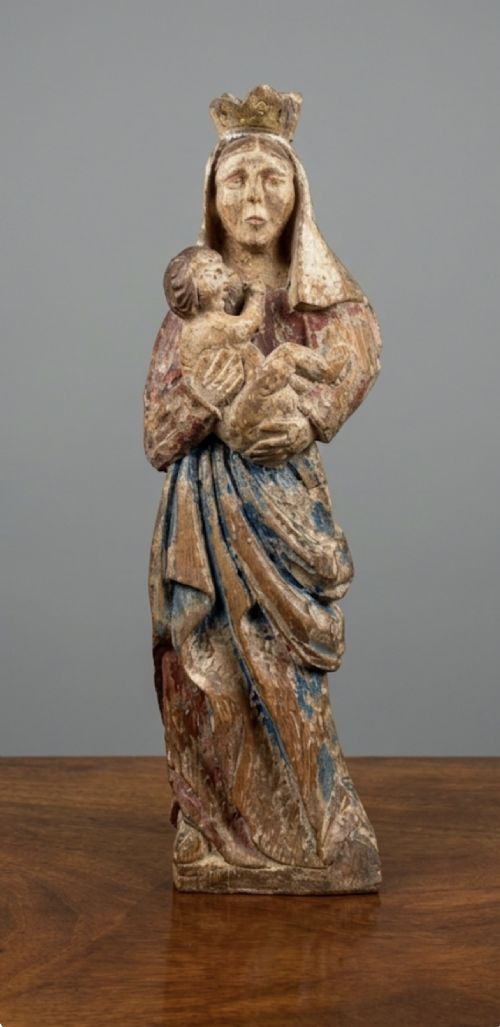
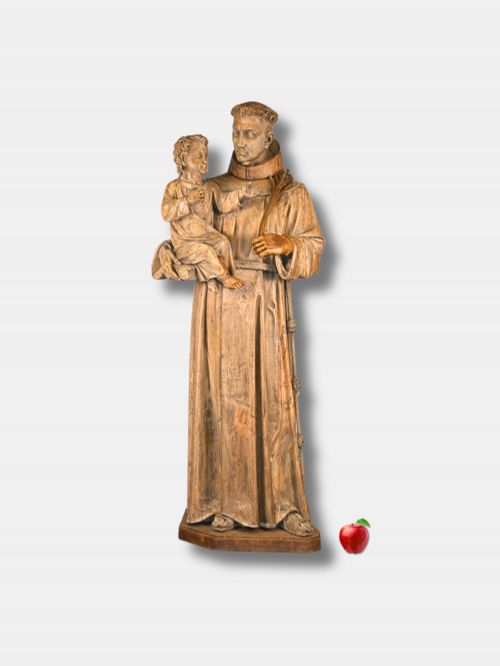
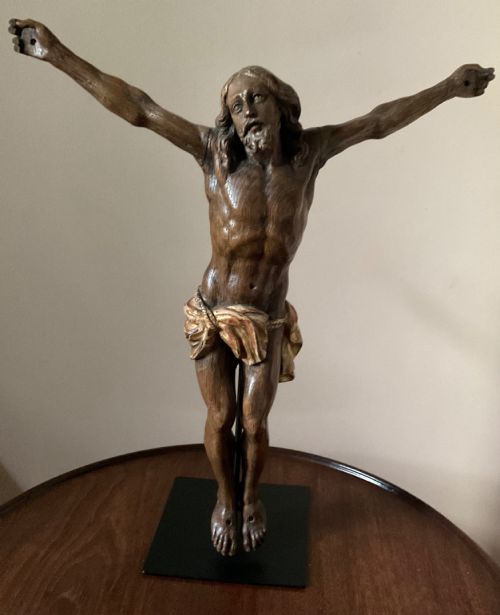
When you search for a carved jesus figure, you encounter devotional wooden sculptures spanning the seventeenth to the twentieth centuries. These pieces take several distinct forms, ranging from isolated depictions of the head and individual figures of the Christ child holding the orb to larger crucifixes and multi-figure family groups.
The selections on this page lean heavily toward European ecclesiastical traditions. You will frequently find Spanish Baroque Corpus Christi figures alongside South German Lindenwood carvings and French works from the nineteenth century.
The function of these objects was primarily devotional, serving as focal points for prayer within churches, domestic shrines or monastic settings. Today, they appeal to collectors who appreciate religious art and the tactile history held in aged timber.
How they were made
Makers shaped these sculptures from various woods including lindenwood, olive wood, oak, fruitwood and general hardwoods. Artisans selected timber for its grain and workability before shaping the form with gouges and chisels.
Many surfaces received layers of gesso to prepare the ground for polychrome paint and gold leaf decoration. Pigments brought realism to the flesh tones and garments, while application methods varied from simple washes to complex layered finishes.
Several pieces capture the Christ child holding an orb, miniature sovereign worlds carved entirely from timber by hands long forgotten.
What varies in quality
The preservation of original surface treatments also determines desirability. Pieces retaining undisturbed polychrome paint and gold leaf carry greater historical integrity than those stripped down or heavily repainted over the generations.
Bohumil Kafka
The Carved Jesus Figure Glossary
- Corpus Christi
- A representation of Jesus Christ on the cross. This Latin term specifically designates sculptures of the crucified figure.
- Polychrome
- Decorated in multiple colours. This technique involved applying various paints to the carved wooden surface.
- Gesso
- A plaster mixture used as a smooth base for painting on wood. It created an even ground for subsequent layers of pigment or gold leaf.
- Lindenwood
- A pale timber favoured by European woodcarvers. Its fine, even grain allowed for intricate detail without splitting.
- Devotional art
- Works created to foster religious prayer and contemplation. These objects were made for both public ecclesiastical spaces and private domestic use.
Carved Jesus Figure: Frequently Asked Questions
How old are these wooden sculptures?
The pieces available span several hundred years, with significant representation from the seventeenth and eighteenth centuries. Later nineteenth-century and early twentieth-century examples also appear.
Dating relies on stylistic markers from periods such as Spanish Baroque, South German Baroque, and Gothic Revival.
Where were these carvings made?
Origins are predominantly European, reflecting the Catholic and Christian ecclesiastical traditions of regions like Spain, France, Italy, and Germany. Workshops in these areas produced works for local churches and private patrons.
Materials often reflect regional availability, such as South German Lindenwood or Italian olive wood.
How should I display a carved figure?
These sculptures require stable indoor environments away from direct sunlight and dramatic humidity fluctuations. Timber and painted gesso surfaces respond to moisture changes, so keeping them in a temperature-controlled room preserves the material.
Many collectors mount wall-going crucifixes securely or place smaller freestanding figures on dedicated shelves and cabinets.