



Carved Oak Cross
A carved oak cross carries centuries of devotion and craftsmanship, offering any interior a profound focal point rooted in historic timber.
Carved Oak Cross
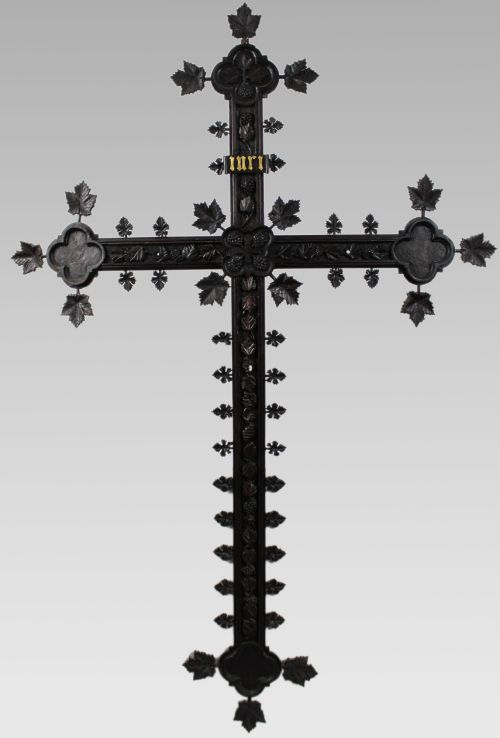
A carved oak cross brings together centuries of religious devotion and vernacular craftsmanship, appearing in forms ranging from wall panels to crucifixes. When examining a carved oak cross on this page, one most frequently meets nineteenth-century interpretations alongside earlier religious panels and folk art pieces.
The objects span multiple stylistic traditions, encompassing Gothic Revival, Northern Renaissance, and German Folk Art influences. These pieces emerge from diverse periods, stretching from sixteenth-century devotional carvings right through to twentieth-century religious art.
Materials and construction methods
Makers utilised solid oak as the primary substrate, carving the dense timber directly to achieve deep relief and intricate figural detail. Certain examples integrate supplementary elements such as brass, gilding, and fabric upholstery to enhance their visual impact.
Construction techniques vary from architectural wall panels assembled with traditional joinery to freestanding devotional sculptures. Surface finishes range from natural honey tones to darkened patinations accumulated over generations of handling.
Several items originate from prisoner of war workshops during the twentieth century, combining resilience with intricate devotional carving.
Distinctions in craftsmanship and origin
The depth and clarity of the chisel work separate ordinary items from superior sculptural examples, particularly in facial expressions and drapery folds. Pieces featuring documentary historical context or specific regional folk traditions carry greater sculptural authority.
Proportion and the integrity of the original timber define the lasting stability of each piece, distinguishing master-carved panels from simpler vernacular productions.
The Carved Oak Cross Glossary
- Gothic Revival
- An architectural and decorative style drawing inspiration from medieval forms. It heavily influences nineteenth-century ecclesiastical furnishings.
- Relief Sculpture
- A sculptural technique where figures project from a flat background. This method dominates church panels and devotional wall art.
- Crucifix
- A cross bearing the figure of Jesus Christ. These devotional objects appear across several European folk traditions.
- Pierced Panel
- Woodwork cut completely through to create an openwork design. This technique adds depth and shadow to church architectural elements.
Carved Oak Cross: Frequently Asked Questions
What periods do these crosses come from?
The pieces span several centuries, with examples originating from the sixteenth century up to the twentieth century. Earlier works often display ecclesiastical and devotional functions.
Later interpretations frequently reflect nineteenth-century Gothic Revival tastes or regional folk art traditions.
How were these wooden pieces used?
Many served as focal points for private devotion or formed part of larger church architectural schemes.
Others functioned as stations of the cross within religious settings or as decorative wall panels in domestic interiors.
How do I care for carved oak?
Keep the timber away from direct heat sources and sudden temperature fluctuations to prevent the wood from splitting.
Dust gently with a dry, soft cloth and avoid applying modern chemical polishes that might alter the patina.
How do I identify Gothic Revival work?
Look for characteristic architectural motifs such as pointed arches, tracery, and trefoils integrated into the woodwork.
This nineteenth-century style consciously emulates medieval church architecture and craftsmanship.