




Religious Wall Hanging
A religious wall hanging brings centuries of devotion into a room, offering carved wood, painted cloth or woven textile made for prayer and contemplation.
Religious Wall Hanging
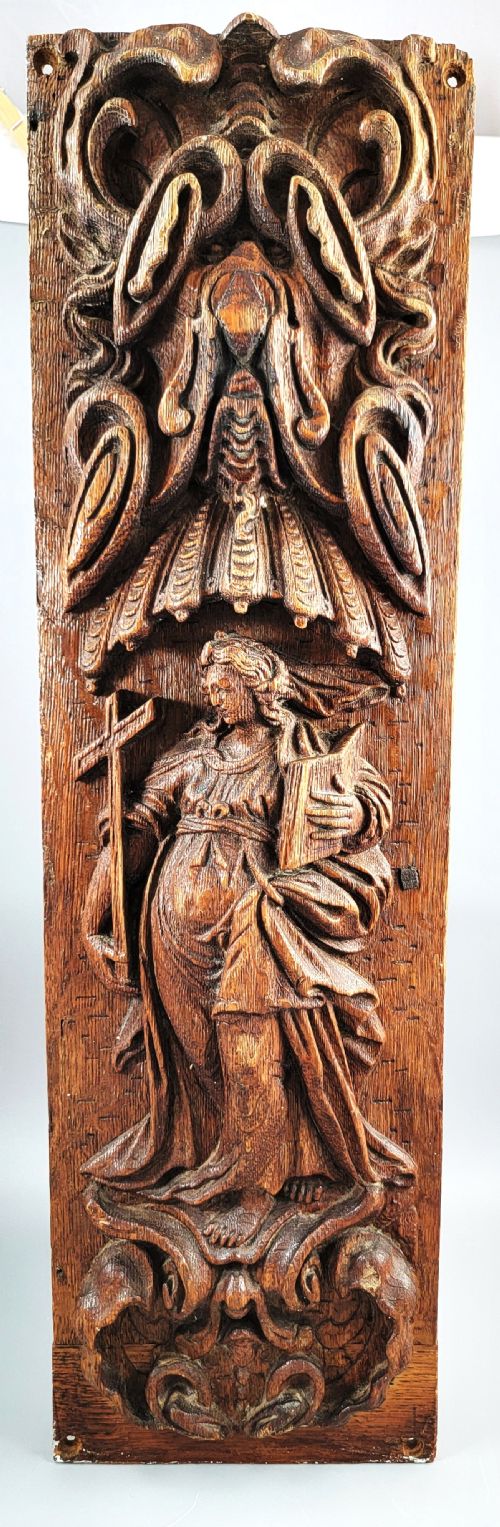
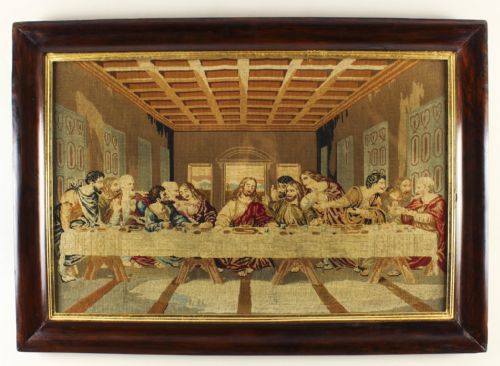
A religious wall hanging spans diverse faiths, cultures and centuries, uniting sacred art under a single banner. Buyers searching for a religious wall hanging encounter carved wooden panels, framed texts, brass crosses and woven textiles from various periods.
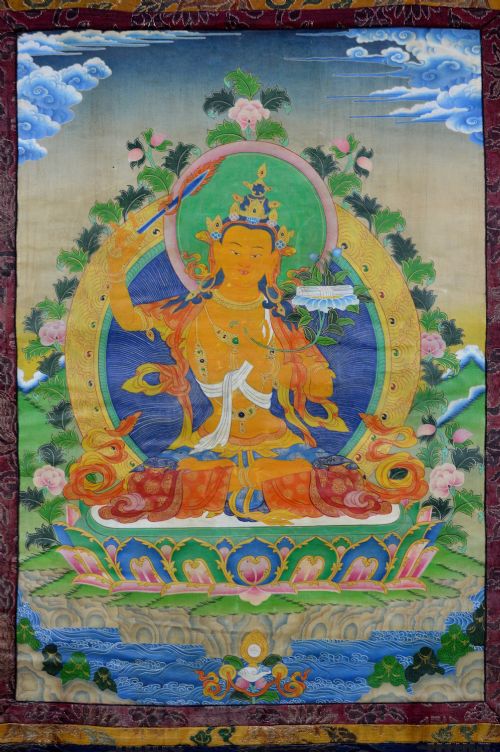
The selection ranges from naive pine panels and Flemish tapestries to Tibetan paintings and Chinese scroll art. Pieces from the nineteenth century predominate, alongside examples stretching back to the seventeenth century and forward into the art deco era.
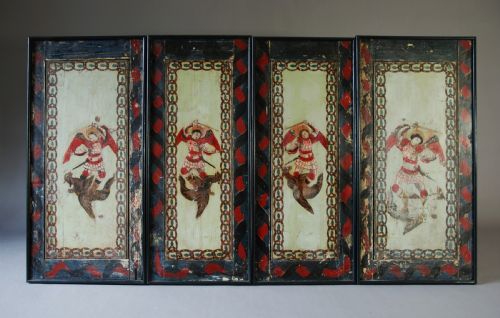
Forms include wall plaques, crucifixes, scrolls, mounted icons and large painted cloths depicting deities, saints and scriptural scenes. Each object served a devotional or liturgical purpose before finding its way to the marketplace.
How they were made
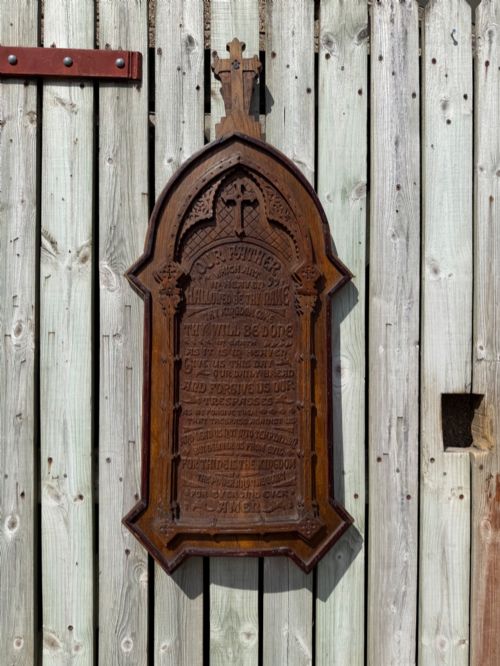
Textiles rely on wool, cotton and woven threads, seen in Flemish tapestries and French wall hangings designed to be hung directly from walls. Paper appears in framed signs and illuminated religious texts produced for tin tabernacles.
Someone once transcribed the entire Christian Clock of Time onto paper just to keep everyone properly aligned.
What varies in quality
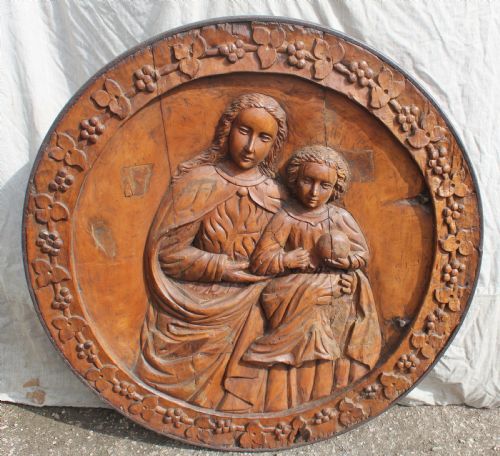
Quality rests on the depth of carving, the fineness of the pigment work and the complexity of the textile weave. Master carvers render drapery and expression with precision on oak panels, whereas naive folk pieces rely on simpler, more direct charm.
The integrity of the materials and the preservation of original surfaces dictate distinction across the range. Intact pigments on cloth, clear detailing on brass crosses and well-preserved fibres in tapestries separate standard items from finer works.
The Religious Wall Hanging Glossary
- Icon
- A religious work of art, typically painted on wood panels in the Eastern Orthodox tradition. These depict saints, angels or sacred figures for veneration.
- Tapestry
- A form of textile art woven on a vertical loom using coloured threads. Historic examples often portray narrative scenes from scripture or history.
- Relief carving
- Sculpture where figures project from a background plane rather than standing free. Oak panels often utilise this technique to depict allegorical subjects.
- Scroll painting
- Artwork executed on flexible material such as paper or silk, designed to be rolled up when not displayed. East Asian traditions utilise this format for deities and immortals.
- Illuminated text
- Manuscript or printed writing decorated with silver, gold or brilliant colours. These hung in places of worship to display scripture.
Religious Wall Hanging: Frequently Asked Questions
How do I hang a heavy wooden panel safely?
Heavy carved oak panels and large plaques require robust wall anchors fixed directly into masonry or timber studs. Distribute the weight evenly using appropriate brackets.
Avoid hanging delicate textiles or paper signs in direct sunlight or damp spaces to preserve the pigments and fibres.
What is a tin tabernacle?
A tin tabernacle is a prefabricated corrugated iron church popular in the nineteenth century for rapidly growing communities. They often housed illuminated religious texts and simple furnishings.
Pieces originating from these buildings carry a specific vernacular history distinct from established parish churches.
How should I clean an antique textile?
Antique tapestries and painted wall cloths require gentle dusting with a soft brush rather than water or chemical cleaners. Professional textile conservators should handle major interventions.
Keeping humidity stable prevents mould and protects fragile cotton and wool fibres from degradation.
How do I tell a nineteenth-century icon from a modern reproduction?
Nineteenth-century icons show natural ageing on the wood panel, gesso and pigment layers, along with hand-mixed colours. Pigments often display subtle craquelure.
Modern copies typically lack the depth of hand-applied pigment and show artificial distress rather than genuine wear.