


Carved Corpus Christi
These carved corpus christi figures are devotional sculptures that bring centuries of European ecclesiastical history and woodworking skill straight into a room.
Carved Corpus Christi
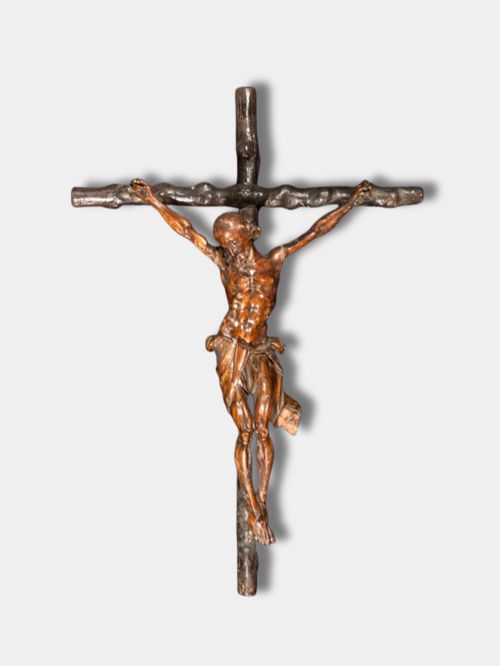
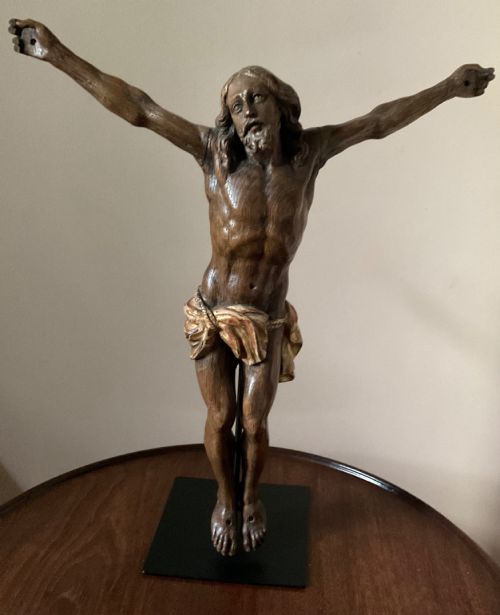
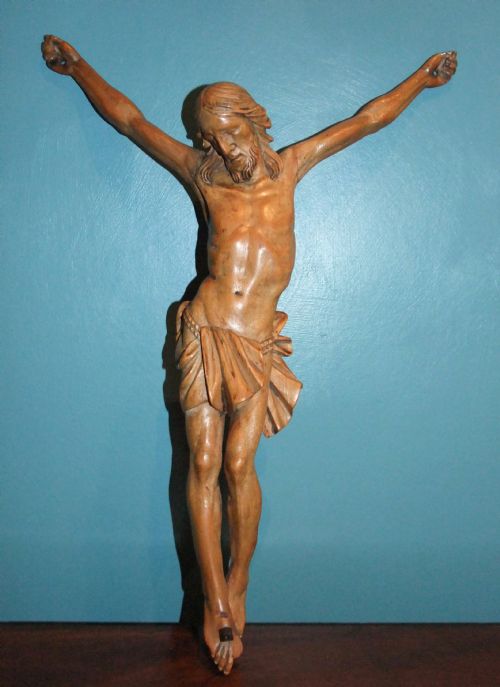
When you search for carved corpus christi, you are looking at figural representations of Christ on the cross spanning several centuries of European craftsmanship. The pieces available range from intimate domestic devotional objects to large church sculptures carved with solemn gravity.
Most examples you will encounter date from the sixteenth, seventeenth, and eighteenth centuries, originating primarily from workshops in France, Spain, and the Low Countries. These figures appear mounted on contemporary or later wooden crosses, frequently fashioned from native timbers such as oak, walnut, box wood, and fruitwood.
A carved corpus christi serves as both a historical artefact of religious devotion and an exceptional example of historical wood sculpture. Collectors encounter variations from small, finely articulated box wood figures to monumental life-sized sculptures.
How they were made
Many historical figures received surface treatments including parcel gilding, polychrome paint layers, or simple oil finishes to enhance the warmth of the grain. Original paint and gesso remnants frequently survive in the recesses of the carving, revealing the layered polychromy typical of European ecclesiastical art.
Materials recorded across current and past items include parcel gilt surfaces, polychrome pigments, and dense hardwoods like walnut and lime wood.
What varies in quality
The distinction between ordinary and exceptional work lies in the anatomical precision and the sculptor's command over the timber. Master carvers captured tension in the musculature and subtle emotion in the facial expression, whereas lesser pieces rely on stiff, formulaic cutting.
Proportion and depth of relief separate fine devotional sculpture from mass workshop production. Pieces retaining original surface finishes like polychrome or parcel gilt display greater historical integrity than those stripped to bare wood.
The Carved Corpus Christi Glossary
- Corpus Christi
- The Latin phrase for the body of Christ, specifically used to denote sculptural representations of Christ on the cross. These figures form the focal point of a crucifix.
- Polychrome
- Painted in several colours. In ecclesiastical sculpture, this refers to the traditional application of pigments over a gesso ground to simulate life-like flesh tones and textiles.
- Perizoma
- The loincloth worn by Christ on the cross. Sculptural treatment of the folds and drapery often helps date the piece and identify regional carving styles.
- Parcel Gilt
- Partially gilded with gold leaf or powder. This technique highlights specific areas of a carved wooden sculpture, such as the hair or the edges of garments.
- Box Wood
- A dense, pale yellow hardwood prized by carvers for its fine, even grain. It allows for extremely minute and crisp detail in small-scale sculptures.
Carved Corpus Christi: Frequently Asked Questions
How do I date a carved corpus christi?
Dating relies heavily on stylistic cues in the carving of the hair, facial expression, and the drape of the perizoma. Renaissance and Baroque periods each brought distinct conventions to ecclesiastical sculpture.
Material choice and tool marks also offer clues. Earlier pieces often utilise native European hardwoods finished with traditional gesso and polychrome layers.
Where were these sculptures made?
The majority originate from European workshops, particularly in France, Spain, and the Low Countries. Regional preferences determined whether carvers used local oak, walnut, box wood, or fruitwood.
Many figures were commissioned for domestic chapels, parish churches, or monastic settings. Travel and trade over the centuries mean pieces frequently surface far from their original locations.
How should I display a wooden corpus christi?
These sculptures require stable indoor environments away from direct sunlight and rapid humidity fluctuations. Extreme changes in temperature can cause historic timber to split.
Most figures mount securely onto a dedicated wooden cross or backing board. Ensure the mounting hardware supports the weight safely without putting stress on the carved arms.
What is the difference between a crucifix and a corpus?
A corpus refers strictly to the sculptural figure of Christ itself. A crucifix consists of the corpus mounted upon a cross.
Many listings feature the figure detached from its original cross or mounted on a replacement base. Understanding this distinction helps when assessing whether the cross and figure share the same period.