
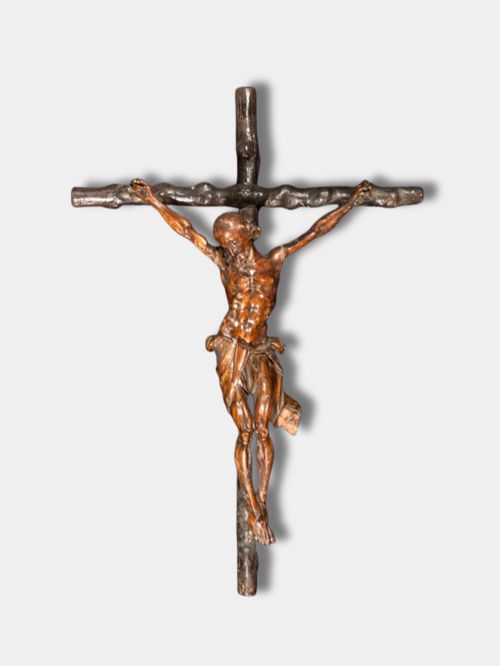
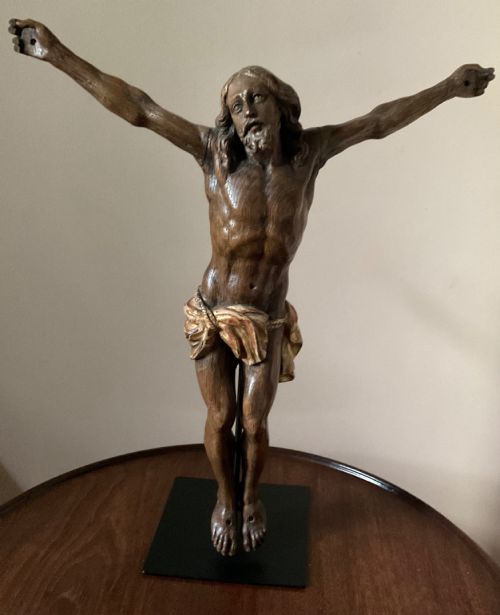


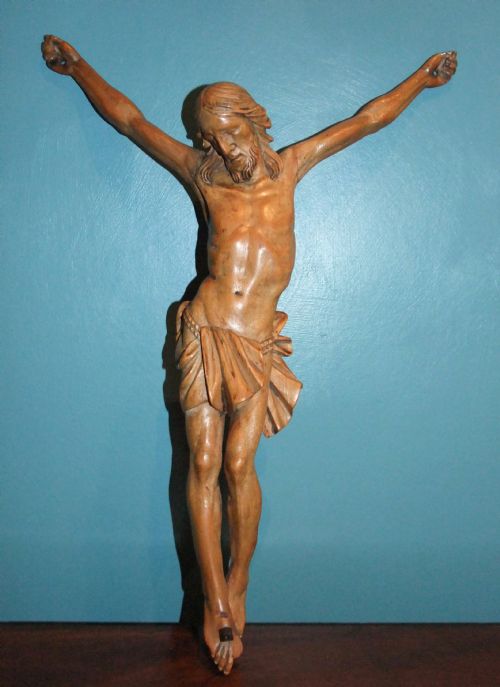
Brown Wooden Crucifix
A brown wooden crucifix carries centuries of devotional weight, offering tangible presence to any room through carved timber and metal detail.
Brown Wooden Crucifix
A brown wooden crucifix brings together centuries of devotional craft, spanning the seventeenth century through to the art deco period. These pieces take the form of standing crucifixes and religious sculpture, often pairing a carved corpus christi with a distinct wooden cross and base.
The aesthetic vocabulary encompasses Spanish baroque, French provincial, and eighteenth-century ecclesiastical styles. A brown wooden crucifix thus serves as both a historic liturgical object and a striking example of period woodcarving.
Materials and technique
Makers utilised dense timbers such as boxwood and fruitwood to achieve intricate detail in the carved corpus christi figures. Oak and general hardwoods provided sturdy foundations for the crosses and heavy bases required for standing display.
Secondary elements include metal fittings and parcel gilt highlights applied to accentuate specific details of the carving. These combined materials reflect traditional workshop methods employed across continental Europe during the baroque era.
Some seventeenth-century examples occasionally feature hidden skulls carved beneath the feet of the corpus christi.
Distinguishing quality
Depth and precision in the carving of the corpus christi separate sophisticated devotional figures from simpler vernacular works. The handling of anatomical detail and facial expression reveals the skill of the original hand.
The integration between the figure, the wooden cross, and any supporting base indicates the thought behind the piece. Selection of figured hardwoods and the preservation of original parcel gilt surfaces further distinguish the upper tier of objects.
The Brown Wooden Crucifix Glossary
- Corpus Christi
- The representation of Jesus Christ on the cross. This sculpted figure forms the central focus of any crucifix.
- Boxwood
- A dense, pale hardwood prized by carvers for its fine grain. It permits minute detail without splintering.
- Baroque
- An artistic style prevalent from the seventeenth century characterised by dramatic movement and emotional intensity. Pieces from this period display dynamic drapery and expressive forms.
Brown Wooden Crucifix: Frequently Asked Questions
What is a brown wooden crucifix?
A brown wooden crucifix is a devotional sculpture featuring a carved figure of Christ mounted on a wooden cross. These objects date from various historical periods including the seventeenth and eighteenth centuries.
They function as both religious focal points and examples of historic woodwork originating primarily from continental European workshops.
How were these crucifixes used?
These pieces served devotional purposes in domestic settings, chapels, and monastic environments. Standing versions were placed upon altars or tables for private prayer.
They provided a physical aid to contemplation, grounding spiritual practice in tangible material craft.
How do I care for wooden religious items?
Keep wooden religious items away from direct sunlight and sudden shifts in temperature to prevent timber from drying out or splitting. Gentle dusting with a dry cloth maintains the surface.
Avoid using liquid cleaners or polishes that might alter historic patinas or damage exposed metal and parcel gilt details.
How are different periods identified?
Periods are identified through stylistic cues such as the flowing drapery and dramatic postures associated with baroque design, or cleaner lines found in later twentieth-century pieces. Tool marks and timber choices also offer clues to age.
Comparing regional characteristics from French, Spanish, and Low Country traditions helps narrow down the origin and likely century of manufacture.