
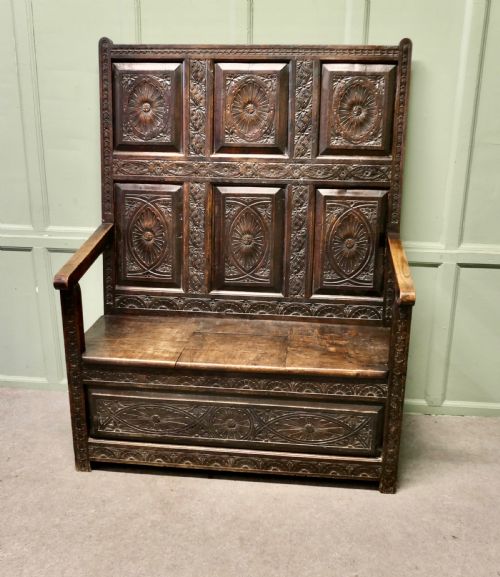
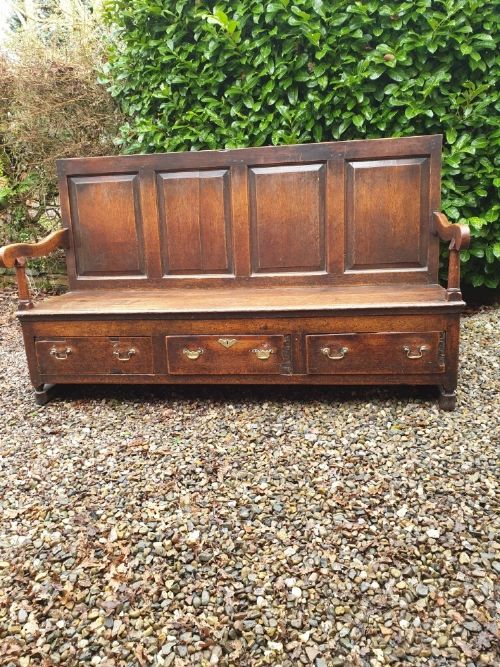
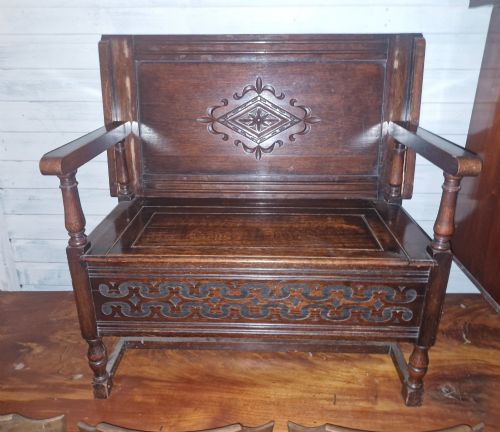
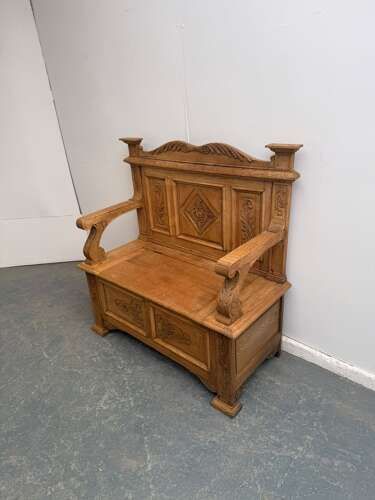
Antique Wooden Box Bench
An antique wooden box bench provides dual seating and concealed storage, anchoring a hallway or kitchen with centuries of utilitarian craft.
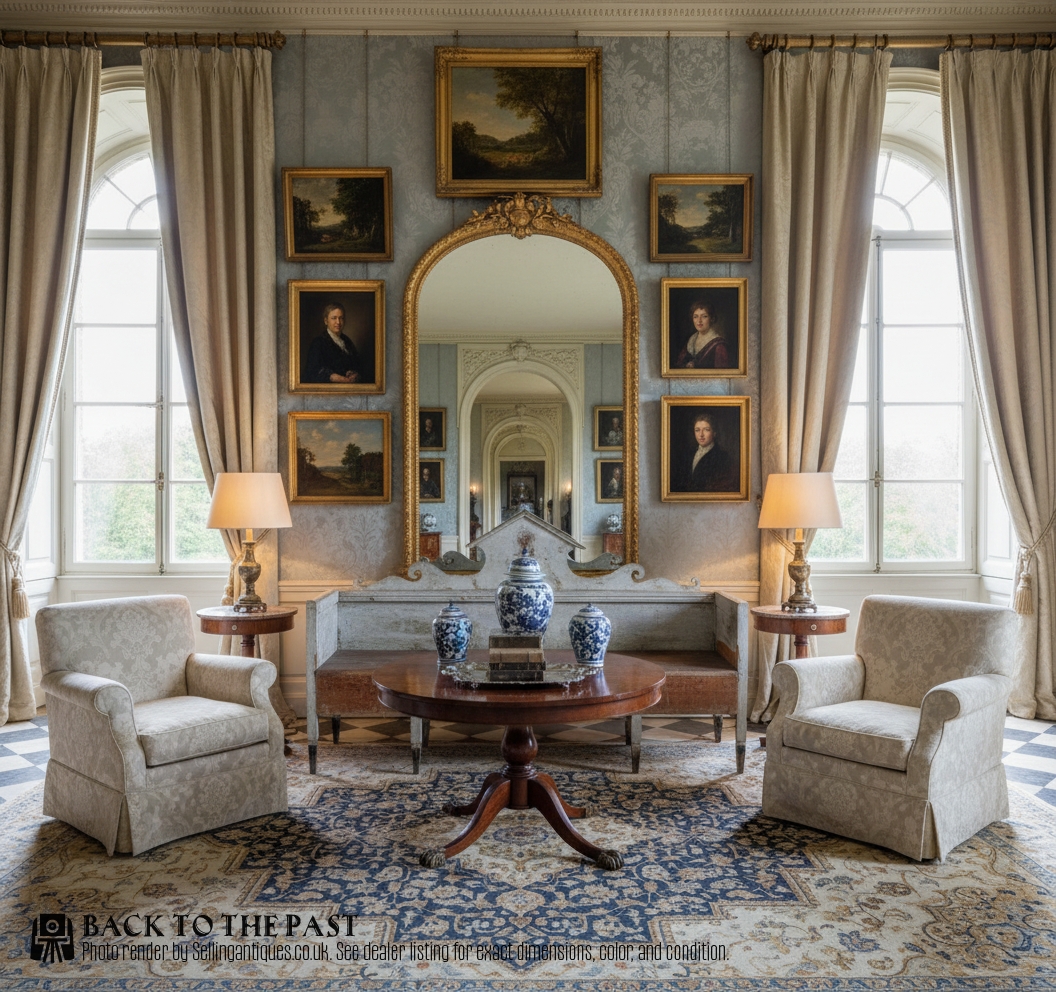
Antique Wooden Box Bench
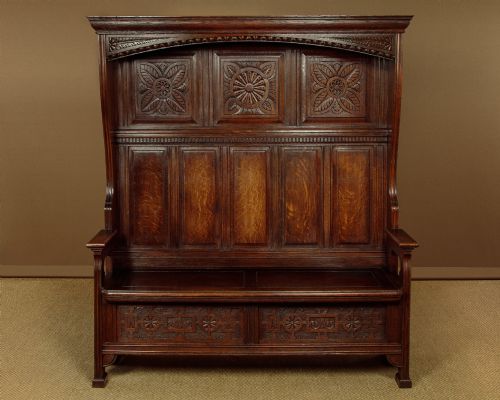
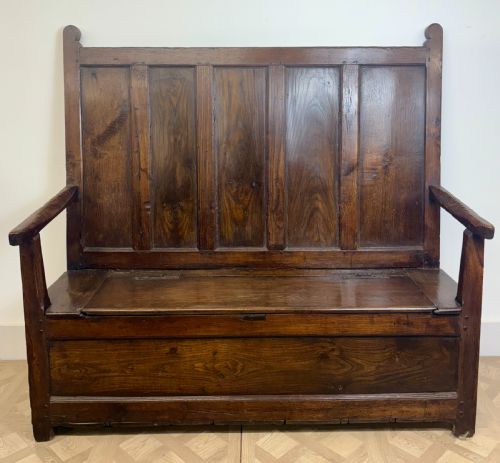
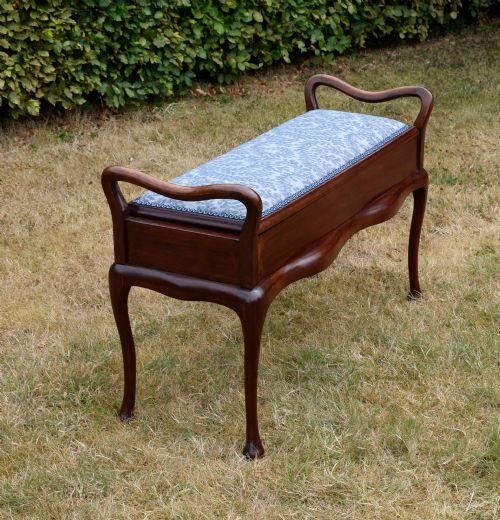
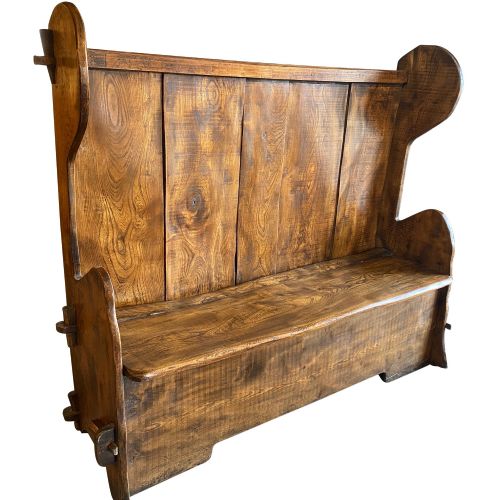
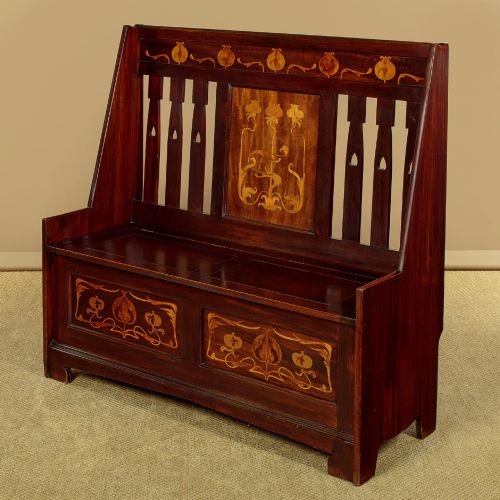
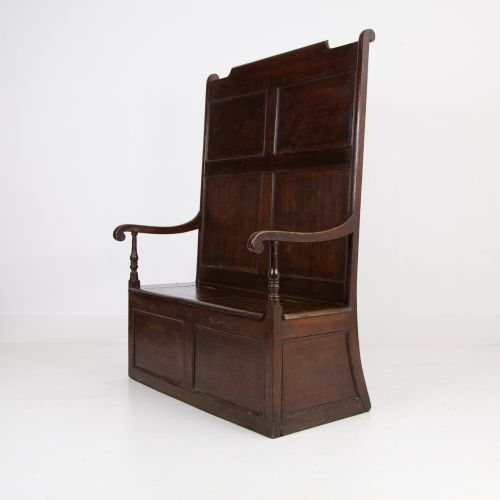
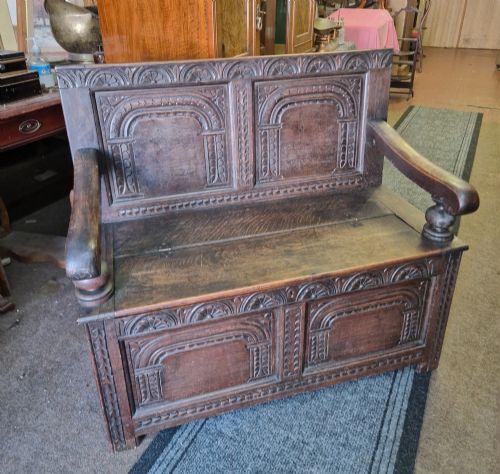
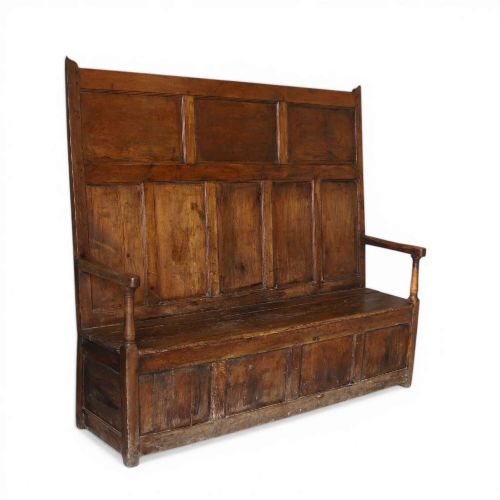
Buyers seeking an antique wooden box bench encounter sturdy seating forms that double as trunks, coffers, or storage chests beneath lift-up lids. These seating solutions range from high-backed farmhouse settles to compact hall benches designed for tight passageways.
The selection on this page draws heavily from Georgian and Victorian periods, alongside country interpretations in pine, oak, elm, and walnut. Pieces hail from British workshops as well as continental sources, including Hungarian and Scandinavian country traditions.
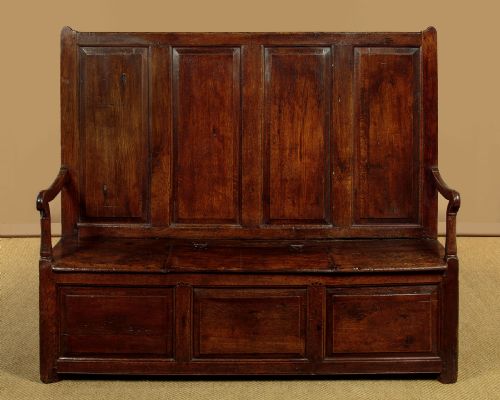
Formations vary from simple panel-backed examples to canopy-top designs and multi-seater painted variants. Many incorporate hinged seats giving access to deep cavities originally utilised for blankets, boots, or household stores.
Materials and construction methods
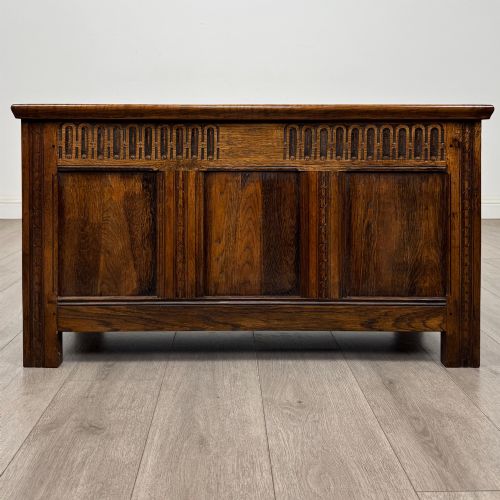
Carpenters relied predominantly on domestic hardwoods like oak, elm, and ash for early examples, while later Victorian and continental makers frequently utilised pine or walnut. Surfaces show standard period treatments including natural wax finishes, historical paint layers, and carved decorative details.
Joinery techniques involve traditional framing methods, panel construction, and pegged joints designed to withstand heavy daily use in domestic settings. Iron and brass hinges, brackets, or fastenings reinforce lids and structural joints on storage compartments.
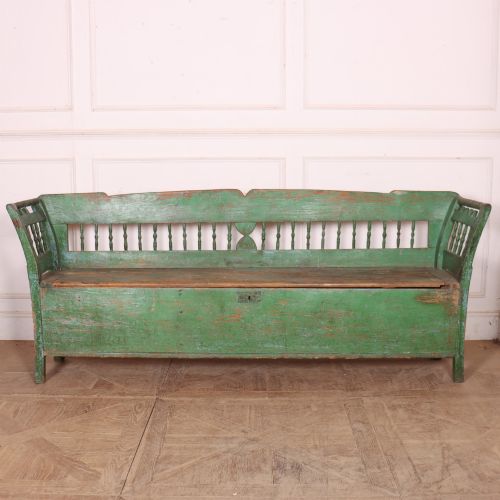
Several imported pine benches retain their original vibrant Hungarian coats of paint, offering a splash of historical colour.
Factors influencing quality
Superior examples display crisp hand-carving, well-proportioned back panels, and sound structural timber that retains original surface patination. Original hinges, uncompromised storage bottoms, and untouched painted or waxed finishes elevate a piece above heavily restored or altered equivalents.
Construction integrity distinguishes refined cabinet work from rougher country utilitarian items, though simple vernacular pieces possess charm derived from honest utility. The preservation of original backboards, arm supports, and lifting mechanisms dictates the overall integrity of the build.
James Shoolbred & Co.
The Antique Wooden Box Bench Glossary
- Settle
- A wooden bench featuring a high back to block draughts, solid arms, and a box seat compartment beneath. This form served domestic halls and farmhouses before central heating became common.
- Cassapanca
- An Italian wooden bench combining a chest base with a backrest and arms. It functions similarly to northern European box settles.
- Box Settle
- A seat fitted with a hinged lid revealing a storage cavity underneath. It serves dual purposes for sitting and storing bulky items.
- Panelling
- Wooden boards fitted within a framework to form walls or backrests. Raised or flat panels provide rigidity and decoration to older furniture.
- Patina
- The surface sheen and colour developed through age, wear, and polishing. It indicates genuine historical use.
Antique Wooden Box Bench: Frequently Asked Questions
Where should I place a box bench?
These benches suit hallways, entryways, and kitchens where seating and concealed storage prove useful. Their high backs make them effective as draught barriers in open-plan spaces.
Ensure adequate clearance for the seat lid to open fully without striking walls or adjacent furniture.
How do I clean a waxed wooden bench?
Dust regularly with a soft, dry cloth to prevent dirt accumulation on carved or panelled surfaces. Apply a quality beeswax periodically to nourish the wood and maintain its sheen.
Avoid using modern liquid polishes containing silicone, which can damage historic finishes over time.
How do I tell an 18th-century settle from a Victorian copy?
Examine the construction marks, timber shrinkage, and hand-cut joinery typical of earlier periods. Eighteenth-century examples usually show pegged joints, hand-planed boards, and deeper patination.
Victorian revival pieces often display machine-sawn timber elements and different fastening methods inside the storage box.
Are painted finishes on these benches original?
Many continental pieces feature historical painted surfaces in blue, grey, or cream that developed character through decades of domestic use. Inspect the paint layers under natural light to check for signs of age and wear consistent with the stated period.
Professional conservation or later re-decoration can sometimes be distinguished from untouched historical layers by examining surface crackle and pigment depth.