

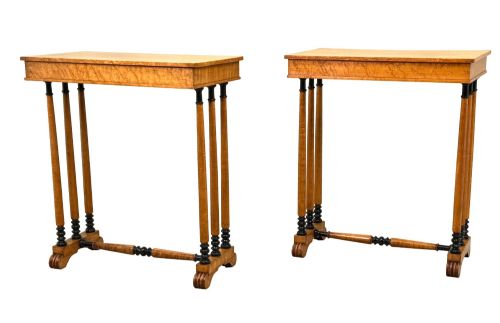
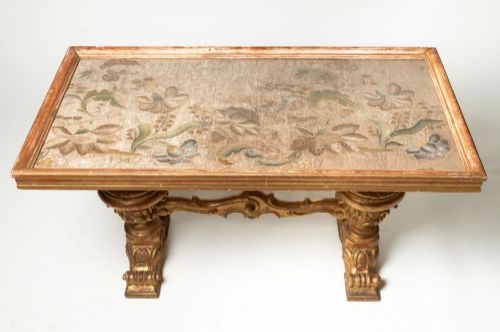
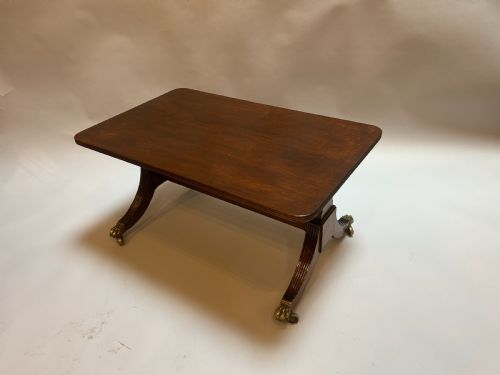
Antique Wood Sofa Table
When you search for an antique wood sofa table, you look for a versatile 19th-century drop-leaf piece designed to sit behind a sofa.
Antique Wood Sofa Table
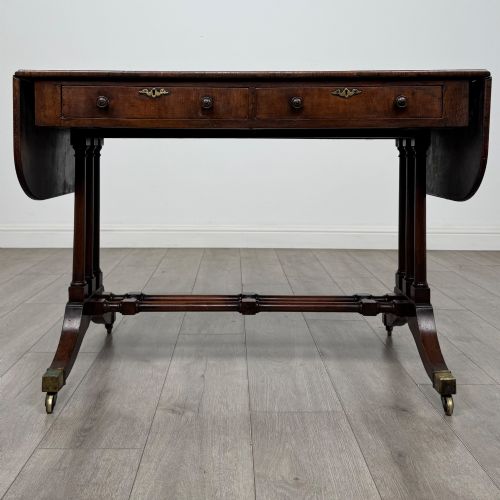
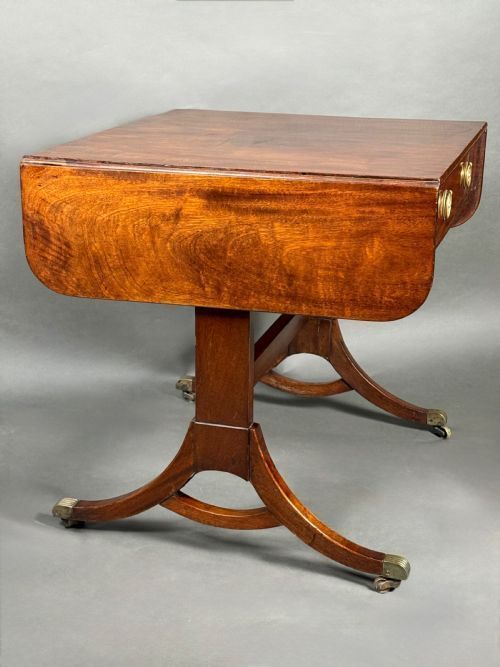
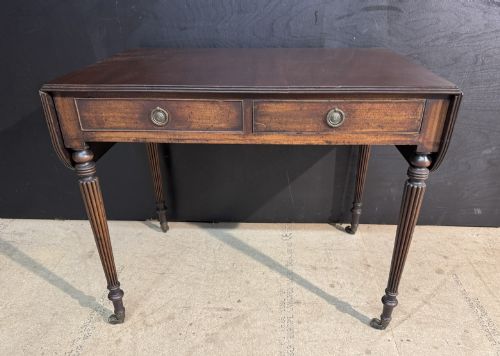
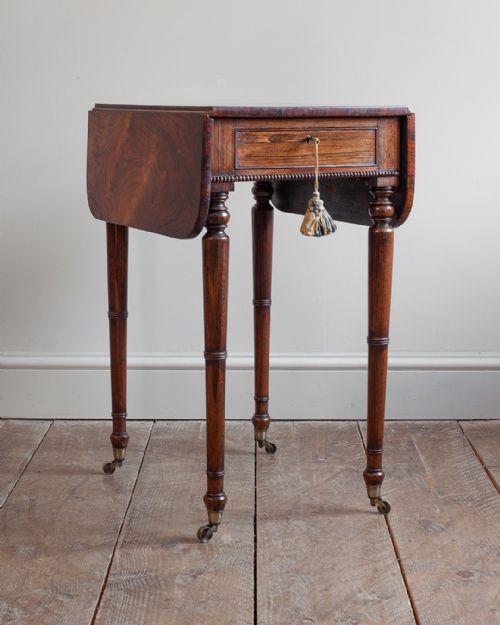
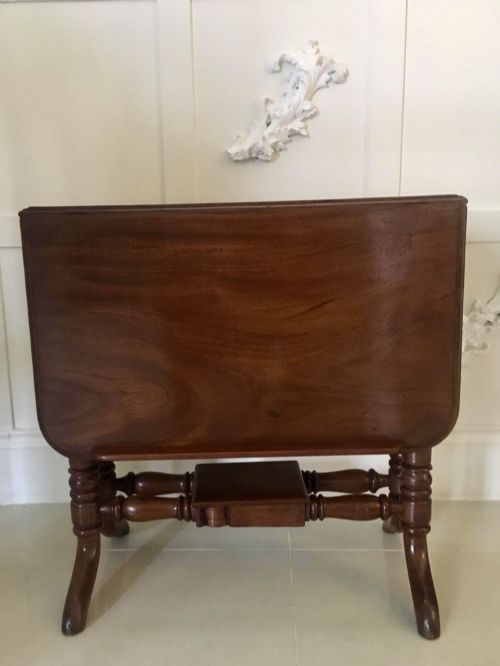
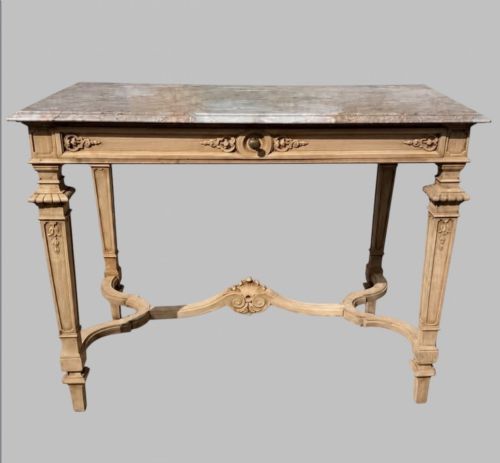
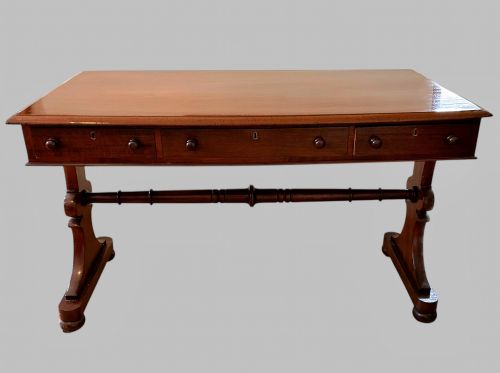
An antique wood sofa table is a specific form of drop-leaf table originating in the Georgian and Regency periods, designed originally to stand behind a sofa in the middle of a room rather than against a wall. These pieces typically feature two drop leaves supported by flap brackets or swing legs, and often incorporate drawers fitted into the frieze.
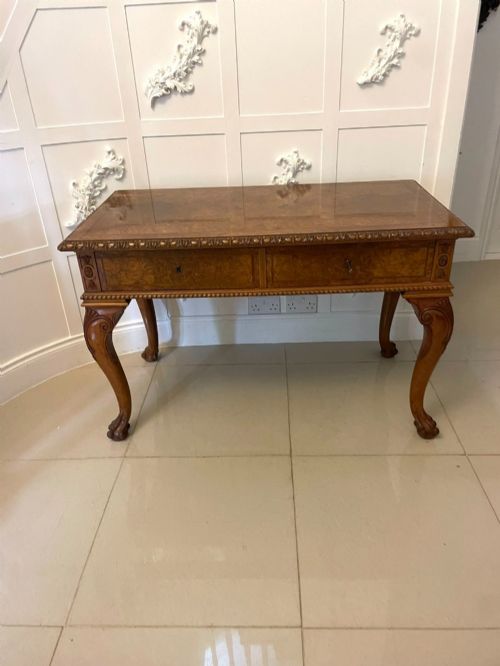
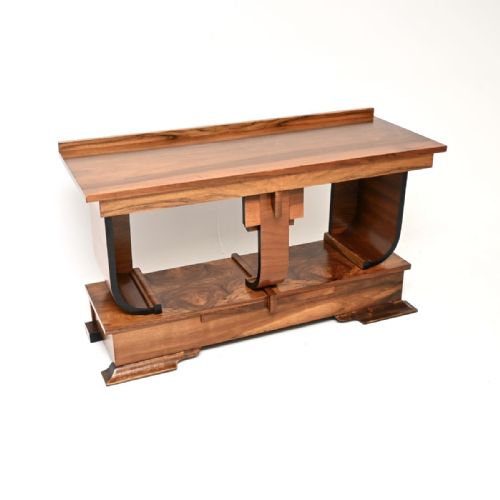
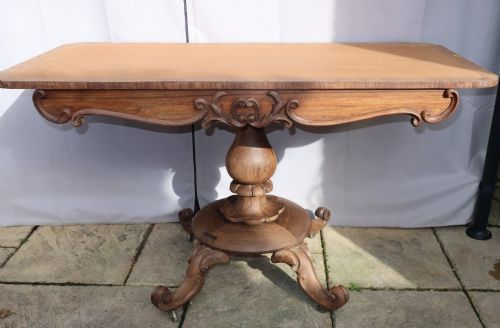
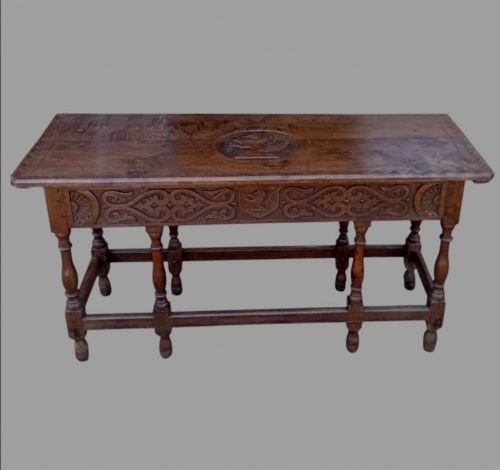
While true sofa tables are predominantly Regency and Georgian, the selections here also span the 18th century, Victorian era, and Edwardian period, occasionally crossing paths with related forms like Pembroke tables, library tables, and console tables. Mahogany and rosewood dominate the earlier examples, while later decades introduce walnut, burr walnut, and oak.
The pieces on this page reflect a rich variety of styles including George IV, William IV, and occasional Edwardian reinterpretations. Buyers meet everything from brass-inlaid Regency showpieces to simpler Victorian drop-leaf tables intended for domestic utility and writing.
How They Were Made
Cabinet makers constructed these tables using dense hardwoods such as mahogany and rosewood, frequently employing flame mahogany, burr walnut, and satinwood for veneered surfaces. Timber selection governed both the visual impact of the top and the structural stability of the frieze and legs.
Inlay and stringing in brass, boxwood, and ebony formed a defining decorative technique, particularly on Regency examples. Drop leaves required precise hinge placement and sturdy pivoting wooden or brass-hinged supports to bear weight when extended.
Listings include 19th-century, Georgian, Edwardian, and Regency periods, utilising mahogany, rosewood, walnut, oak, and brass.
What Varies in Quality
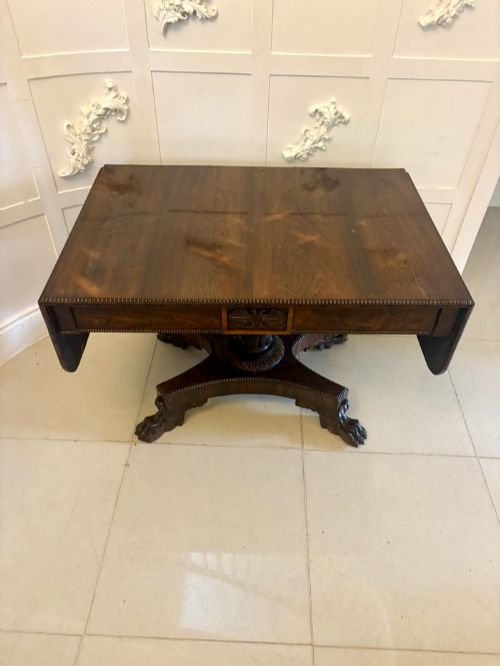
Quality rests significantly on the choice and figure of the timber, where heavily figured flame mahogany or richly grained rosewood elevates a piece far above plain utility boards. The crispness of carved details, such as pedestal bases or lion's paw feet, distinguishes superior cabinet work from simpler production.
Freestanding capability dictates design ambition; finer examples feature finished grain and polished backs on the drawers so the table looks complete from every angle in an open room. The subtlety of brass stringing and the neatness of dovetailing in the drawers further separate standard workshop output from exceptional pieces.
Mein of Kelso·Gillows
The Antique Wood Sofa Table Glossary
- Sofa table
- A rectangular drop-leaf table with two short leaves, traditionally placed behind a sofa. These pieces usually feature two small drawers and stand on twin pillars or trestle ends.
- Drop leaf
- A hinged flap attached to the fixed top of a table that can be raised to increase surface area. When lowered, it reduces the footprint of the furniture.
- Frieze
- The horizontal band beneath the table top that commonly houses one or more drawers. Cabinet makers often decorated this area with fine veneers or inlay.
- Brass inlay
- Technique of embedding thin brass strips or motifs into the wood surface to create geometric or floral patterns. This ornamentation is characteristic of Regency pieces.
- Figured wood
- Timber showing distinctive, decorative grain patterns such as flame, curl, or burr. Highly prized by makers for creating visual depth on table tops.
Antique Wood Sofa Table: Frequently Asked Questions
What is a sofa table used for?
Originally designed to stand behind a sofa for holding candles, books, or writing materials, these tables function well today as slim console desks or freestanding hall tables.
With both leaves dropped, they occupy minimal space against a wall, making them adaptable for modern rooms.
How do I tell a Regency sofa table apart?
Regency examples frequently showcase dark rosewood timbers enhanced by delicate brass inlay, sabre legs, or double-pillar trestle bases with stretcher rails.
They emphasise classical symmetry and precise architectural proportions compared to later Victorian iterations.
Are sofa tables finished on all sides?
Because they were intended to sit in the middle of a room behind a sofa, quality pieces are finished on the back as well as the front.
Drawers often appear on both sides, or the reverse side is dummy-fronted with matching veneer and polished timber.
What is the difference between a sofa table and a Pembroke table?
While both use drop leaves, sofa tables are traditionally wider than they are deep and were built to sit in open spaces behind seating.
Pembroke tables tend to have squarer proportions with smaller leaves and were historically used for breakfast, tea, or writing.