
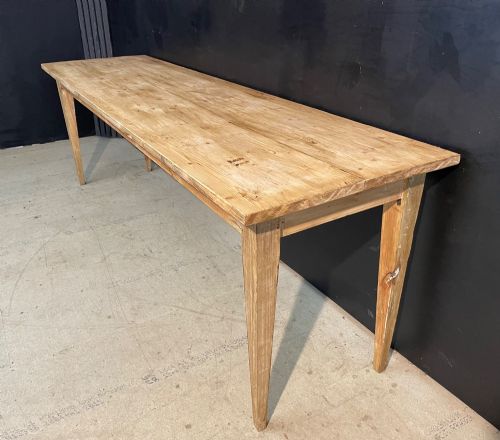
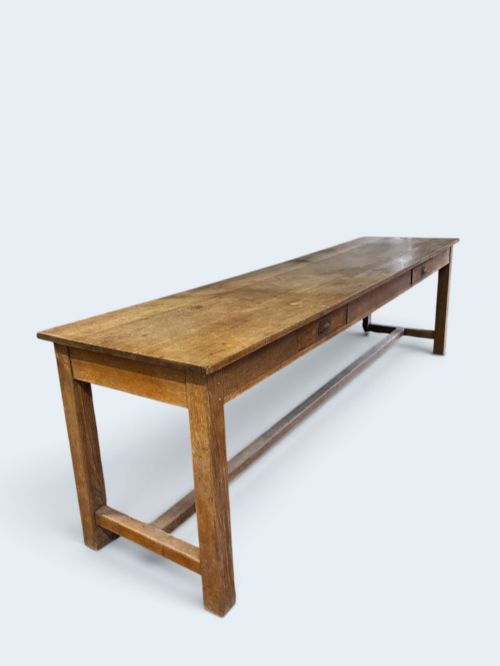

Antique Wood Serving Table
An antique wood serving table anchors a dining room or hall with solid proportions, bringing timber surfaces and functional hospitality into everyday use.
Antique Wood Serving Table
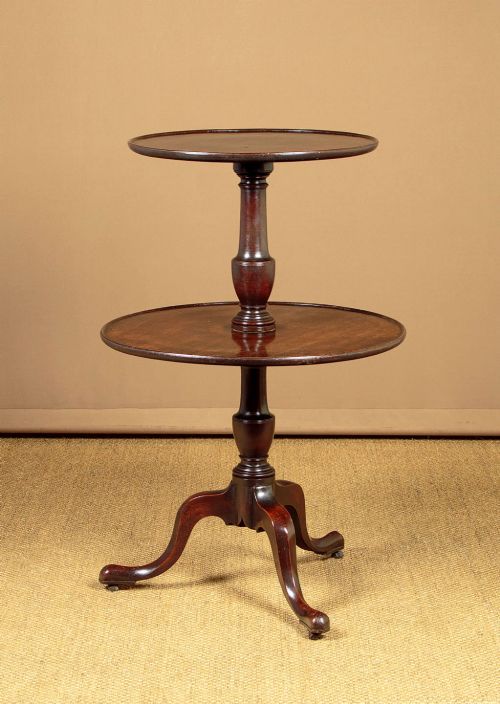
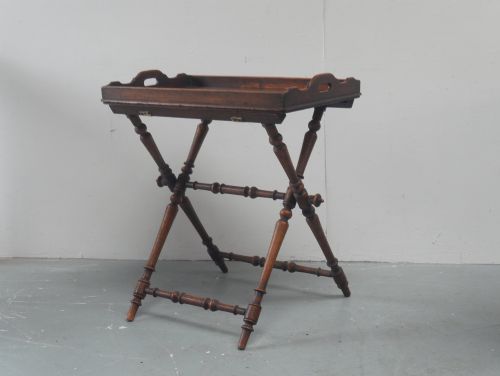
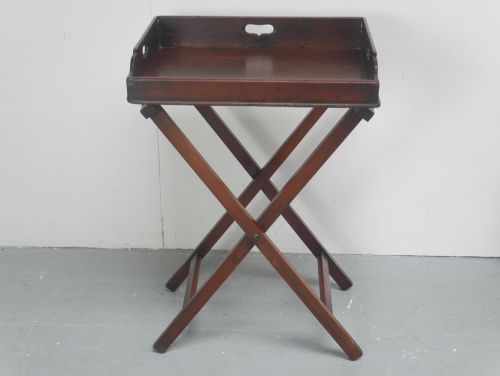
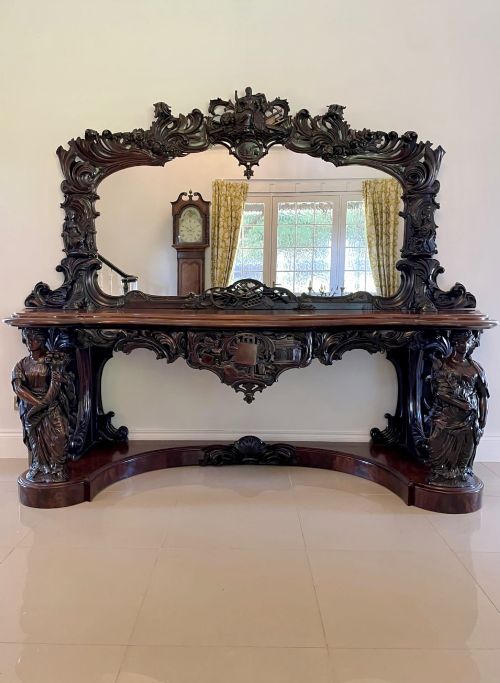
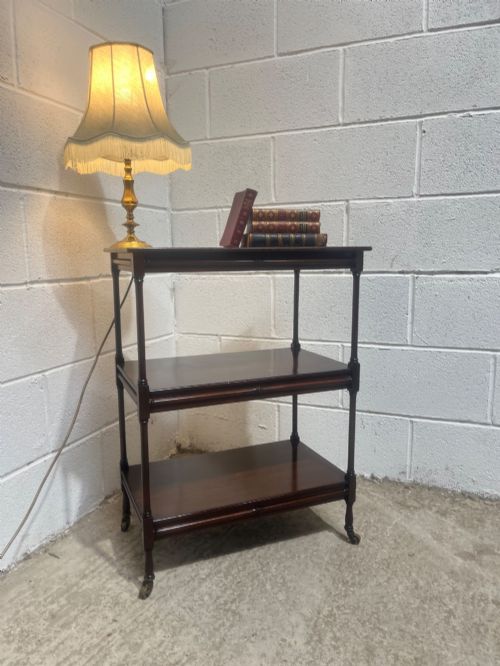
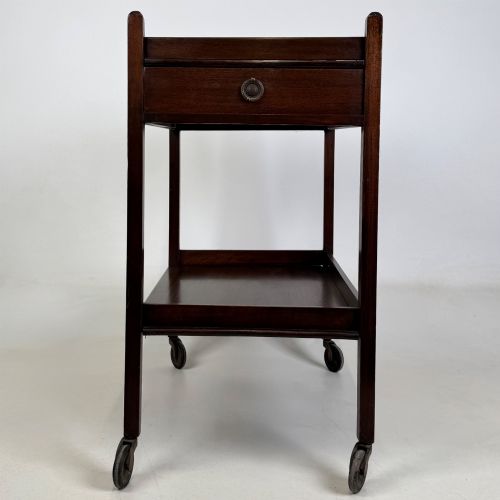
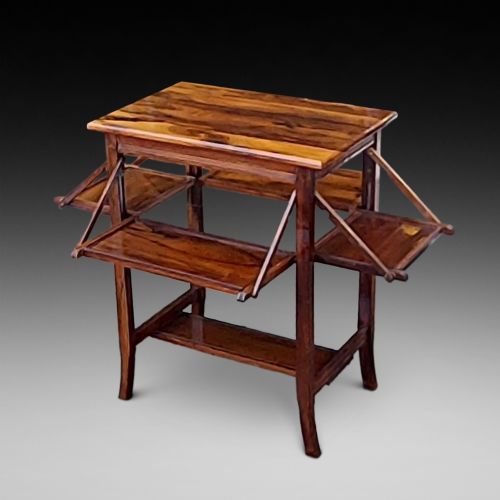
An antique wood serving table encompasses formats ranging from substantial Georgian and Regency sideboards to tiered dumb waiters and folding butler trays on stands. These pieces emerge across the eighteenth, nineteenth, and early twentieth centuries, constructed to assist with hospitality, dining, and food service in domestic interiors.
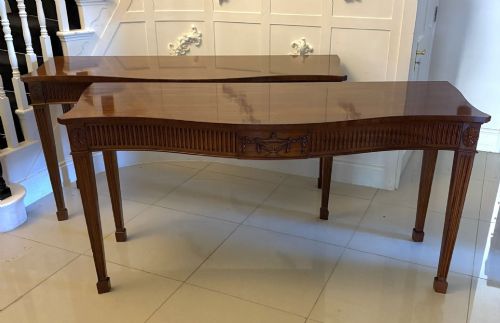
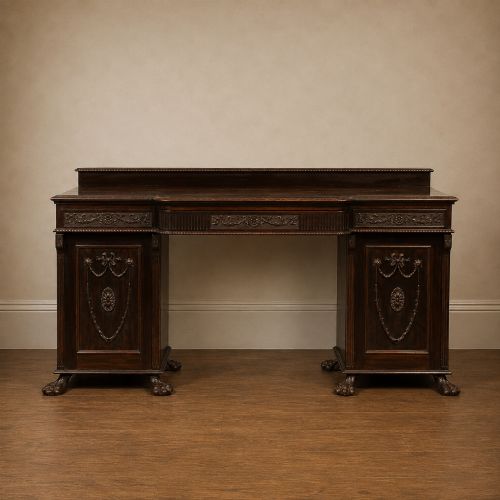
The selection here draws heavily on mahogany, oak, and pine, moving from formal George III demi-lune servers to rustic farmhouse tables and Edwardian variants. Buyers meet everything from large breakfront sideboards with paw feet to compact occasional console formats designed for practical display.
Materials and construction
Cabinetmakers relied primarily on solid mahogany, oak, pine, and walnut, often applying veneers and intricate inlay work for decorative effect. Brass fittings, glass components, and painted finishes appear alongside carved wooden details such as Neoclassical motifs.
Joinery techniques span traditional framing for heavy multi-tiered dumb waiters and sturdy turned legs for butler trays on stands. Bleached oak and cherrywood variants demonstrate regional timber choices used to build durable furniture for daily dining.
Listings feature mahogany, oak, pine, walnut, and cherrywood spanning the Georgian, Victorian, and Edwardian periods.
Judging the work
Quality rests upon the selection of timber grain and the precision of structural carving, separating standard utility pieces from exhibition items. Refined joinery in multi-tiered tables and crisp execution of neoclassical or Sheraton details indicate superior workshop output.
The integrity of original brass hardware, stable tiered surfaces, and balanced proportions dictate the standing of a server. Finer pieces demonstrate careful attention to timber matching across large tops and drawers, maintaining structural strength alongside decorative refinement.
Gillows·Fortnum and Mason·George Hepplewhite
The Antique Wood Serving Table Glossary
- Dumb waiter
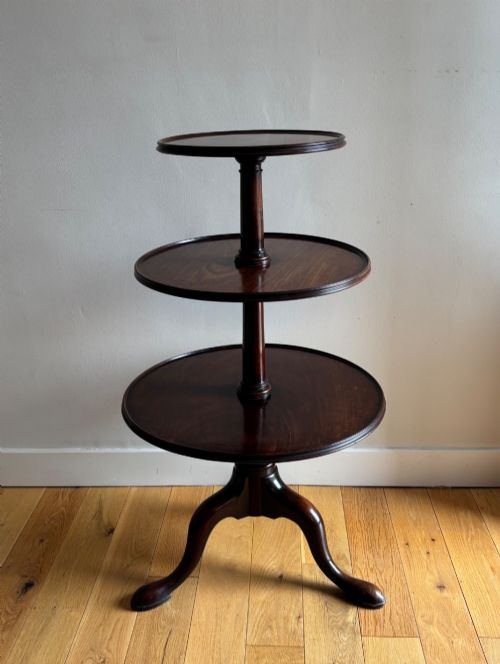
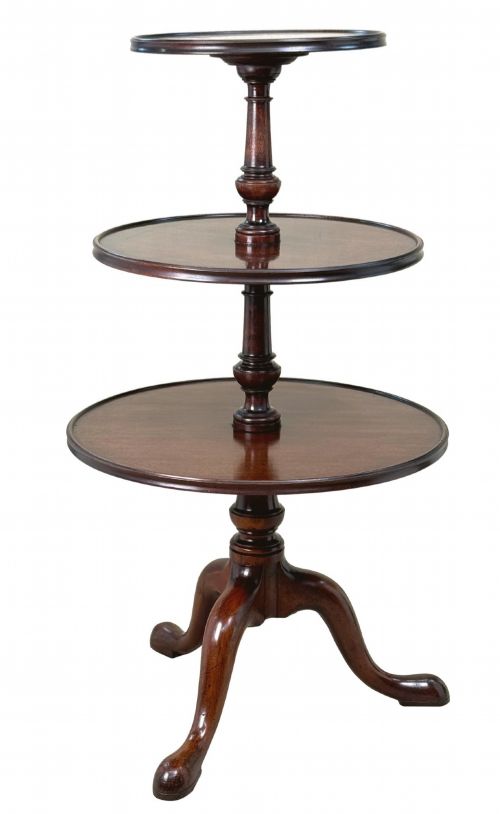
- A tiered stand with revolving or fixed circular trays used for serving food and drink without servants present. These multi-level pieces allow discrete organisation of plates and dishes beside a dining table.
- Butler tray
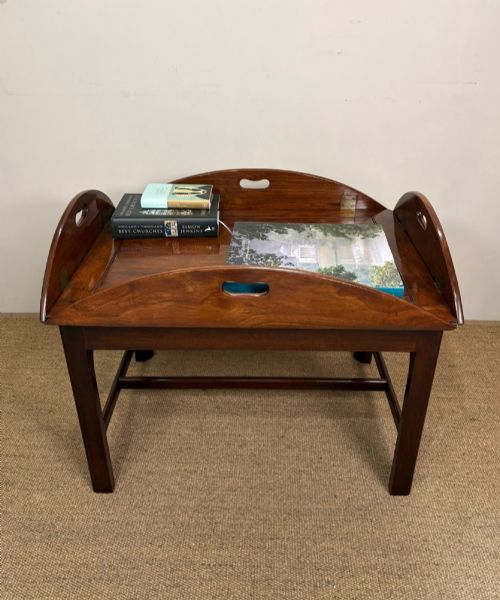
- A shallow wooden tray with hinged or cutout sides, designed to be lifted off its folding stand for carrying items. They provide portable surface space originating from domestic service quarters.
- Demi-lune
- A half-moon shape used for console and serving tables designed to sit flush against a wall. This profile saves floor space while offering a decorative surface in entrance halls and dining rooms.
- Breakfront
- A cabinet or sideboard whose central section projects forward from the flanking outer sections. This architectural arrangement creates visual depth and varied storage capacities.
- Serpentine
- A front edge or surface curving gently outward at the centre and inward at the sides. This fluid line demands advanced woodworking skill to shape solid timber accurately.
Antique Wood Serving Table: Frequently Asked Questions
How were dumb waiters used?
Dumb waiters stood beside the dining table to hold extra courses, wine bottles, and tableware during meals. This allowed diners to help themselves without servants listening to their conversations.
Over the eighteenth and nineteenth centuries, multiple tiers provided stacking space for plates and glasses in smaller dining rooms.
Can I use a butler tray as a side table?
A butler tray on a folding stand functions well as a portable side table or drinks station in a living room. The removable tray offers easy transport of glassware and bottles when entertaining guests.
These pieces adapt readily to modern spaces because their folding stands allow flexible placement and simple storage.
What is the difference between a sideboard and a serving table?
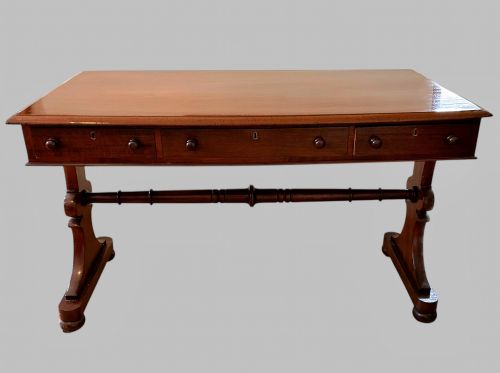
Serving tables generally present an open frame with legs and occasionally shallow drawers beneath the top surface. Sideboards often incorporate enclosed cupboards and extensive drawer banks for heavier dining storage.
Both forms served dining rooms, but the serving table offers a lighter visual profile against a wall.
How do I spot a George III serving table?
George III pieces typically feature dense mahogany timber, crisp hand-carved details, and restrained classical proportions. Look for straight tapered legs, spade feet, or subtle inlay work characteristic of eighteenth-century design.
Construction methods inside drawers and underneath the top boards will show hand-cut dovetails and pegged joints.