


Brass Handle Mahogany Server
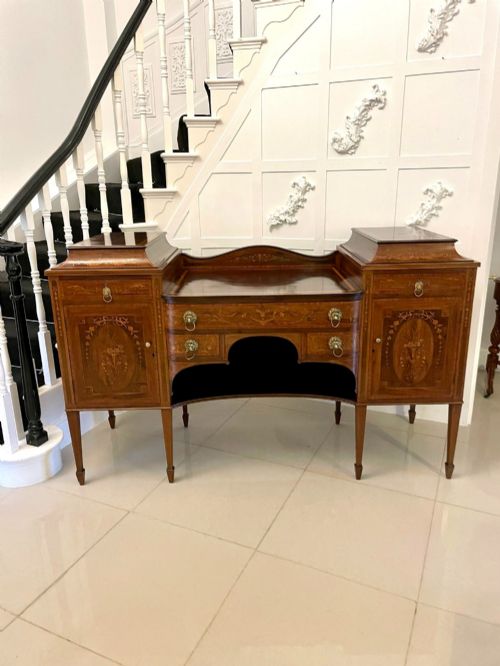
A brass handle mahogany server brings practical dining room storage and rich timber grain to an interior.
Brass Handle Mahogany Server
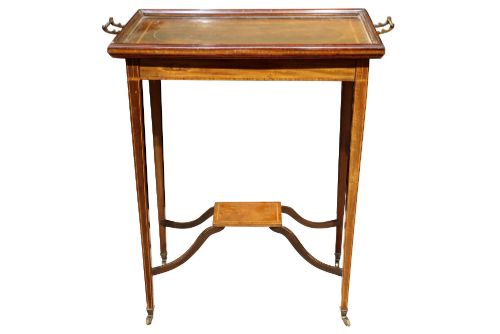
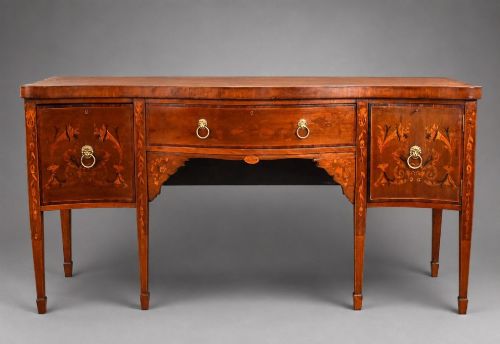
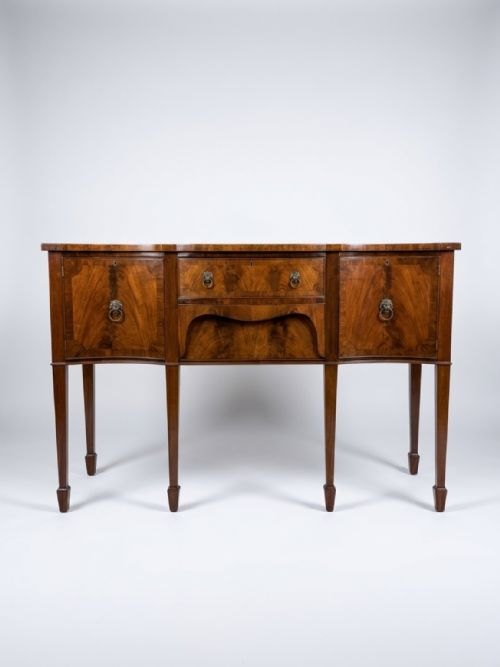
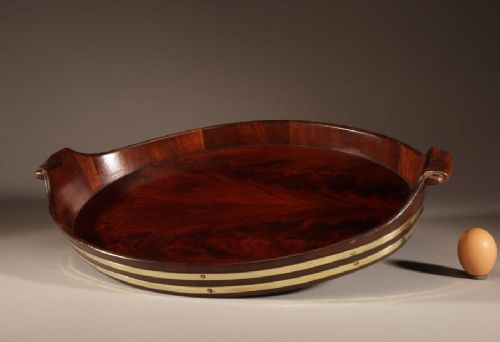
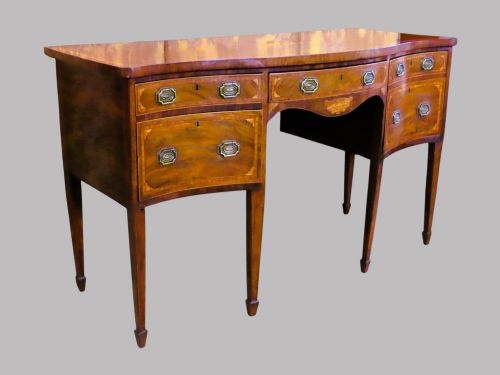
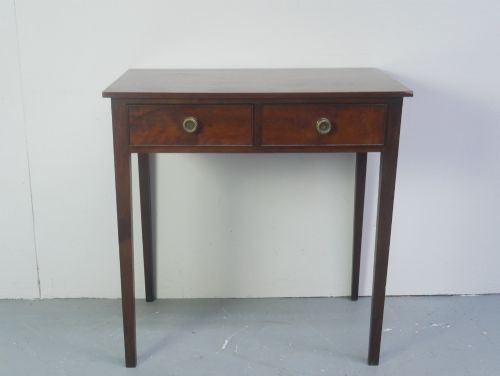
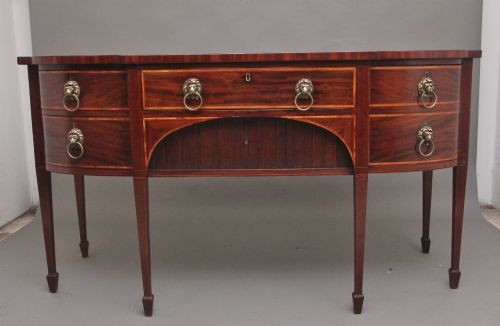
The most common examples on this page are sideboards and side tables from the Georgian and Regency periods, featuring serpentine or bow fronts and fitted with functional brass hardware. Alongside these large dining pieces, occasional tables and serving trays appear with similar mahogany construction and brass mounts.
How they were made
Cabinet makers utilised solid mahogany and flame mahogany veneers over secondary timbers, often applying boxwood and satinwood stringing alongside marquetry inlay for decorative contrast. Timber surfaces were planed, polished, and finished to highlight the natural grain patterns of the wood.
Hardware such as drop handles, ring pulls, and galleries were cast in brass and secured to drawers and serving surfaces with threaded posts or pins. Construction techniques included hand-cut dovetails for drawer boxes and mortise and tenon joints for frames.
Listings feature Georgian, Regency, and Edwardian periods, constructed from mahogany, satinwood, and boxwood with brass hardware.
What varies in quality
The distinction between standard examples and finer pieces rests on the choice of timber and the precision of the cabinet work. Figured mahogany veneers and crisp boxwood inlay reflect greater workshop skill than plain timber boards.
Hardware weight and design also separate grades of manufacture, as heavy cast brass handles with detailed chasing indicate a higher standard of production than thin stamped metal.
Hewetsons London·H Mower Stephenson
The Brass Handle Mahogany Server Glossary
- Serpentine
- A curved furniture front featuring a convex centre flanked by concave ends. This contour requires skilled carpentry to shape timber accurately.
- Bow front
- A convex, outwardly curving furniture front popular during the Georgian and Regency periods. It softens the linear profile of a sideboard or serving table.
- Lowboy
- A small side table with drawers, typically raised on four tall legs. They functioned as dressing tables or serving surfaces in eighteenth-century homes.
- Marquetry
- Decorative veneer work forming pictorial or geometric patterns using various coloured woods. Craftsmen cut thin sheets of timber to fit flush within a background veneer.
- Stringing
- Thin lines of contrasting wood inlay used to outline drawers, legs, and tabletops. Boxwood and satinwood provide a pale contrast against dark mahogany.
Brass Handle Mahogany Server: Frequently Asked Questions
How do I date a mahogany sideboard?
Dating relies on architectural styling, leg shapes, and construction methods visible in the drawers and carcass. Georgian and Regency pieces show hand-cut dovetails and specific bracket or tapered leg designs.
Later Edwardian revivals often incorporate machine tooling alongside older stylistic cues. Examining the timber shrinkage and secondary woods helps confirm the period of manufacture.
Where were these servers used?
These pieces belonged in formal dining rooms, parlours, and entrance halls of large houses and town residences. Servants placed dishes, cutlery, and serving trays upon them during meals.
Today, they function well in modern dining spaces or living rooms as console tables and storage units. Their drawers accommodate linens, flatware, and household items.
What is the difference between a sideboard and a serving table?
Sideboards incorporate built-in drawers and cupboards designed for storing dining room accessories. They provide enclosed space alongside the top surface.
Serving tables lack cupboards and generally feature an open frame with one or more shallow drawers beneath the top board. They offer a lighter visual profile within a room.
How should I care for mahogany furniture?
Maintenance involves dusting with a soft, dry cloth and avoiding placement near direct heat sources or strong sunlight. Excessive warmth dries out the timber and causes veneers to lift.
Applying a traditional beeswax polish periodically helps nourish the wood surface and maintain its sheen. Avoid using silicone-based sprays which can damage old polishes.