
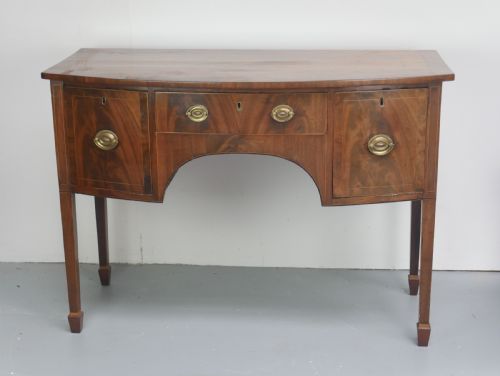


Warm Brown Dining Credenza
A warm brown dining credenza brings rich timber tones and practical storage to a room, anchoring a dining space with period character.
Warm Brown Dining Credenza
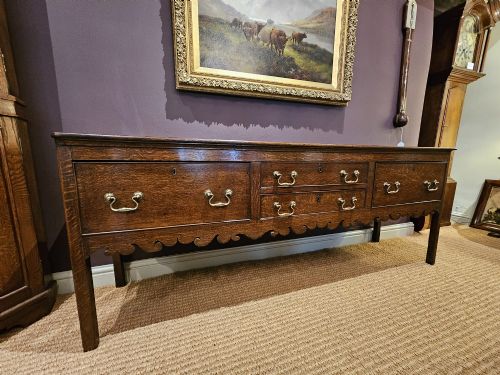
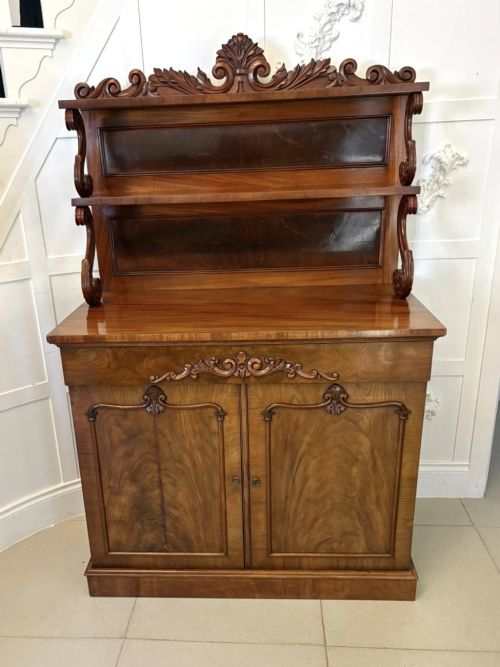
When you search for a warm brown dining credenza, you are looking at substantial storage furniture designed for dining rooms and living spaces, encompassing sideboards, cabinets, servers, and chiffoniers from the eighteenth, nineteenth, and early twentieth centuries. These forms offer deep cupboards and drawers framed in classic silhouettes.
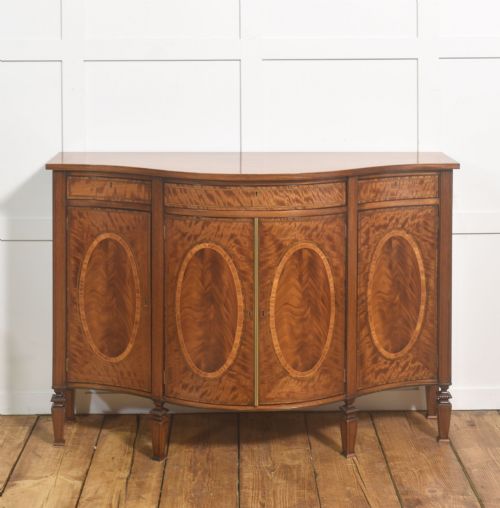
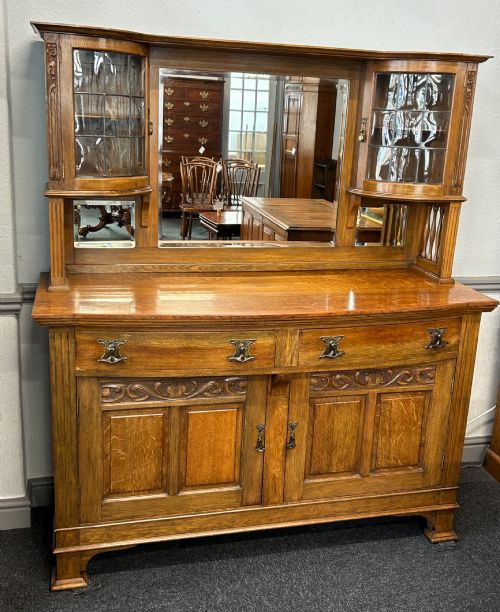
You are most likely to meet mahogany, oak, and walnut examples on this page, reflecting the dominant timbers of the Georgian, Victorian, Edwardian, and Art Deco periods. These pieces range from restrained provincial oak dresser bases to finely inlaid satinwood and mahogany servers bearing brass galleries or mirror backs.
Construction and materials
Cabinet makers utilised solid and veneered timbers including mahogany, oak, burr walnut, and satinwood, often accentuating the warm brown grain with contrasting boxwood stringing and marquetry details.
Structural embellishments relied on traditional hand carving, curved bow-front or serpentine shaping, and fitted hardware such as brass handles and galleries.
French provincial sacristy cabinets quietly cross over from ecclesiastical storage to serve as low sideboards in modern dining spaces.
Evaluating quality and execution
The standard of a piece depends upon the selection of timber figures, such as highly grained burr walnut or figured mahogany, matched carefully across doors and drawer fronts rather than relying on uniform plain boards.
Refinement of detail distinguishes finer work, seen in crisp hand-carved ornamentation, precise marquetry inlay, and robust internal construction that ensures smooth operation of drawers and heavy doors.
Hamptons of Pall Mall London·Maple and Co·T Simpson and Son
The Warm Brown Dining Credenza Glossary
- Serpentine
- A curved front shape with a convex centre flanked by concave curves. This contour requires skilled carpentry to shape timber accurately.
- Marquetry
- Decorative patterns formed by fitting together thin veneers of different coloured woods. It creates intricate pictorial or geometric designs on cabinet doors.
- Chiffonier
- A compact sideboard or low cabinet featuring cupboards below and often a shelf tier above. It originated in the nineteenth century as convenient dining room storage.
- Dresser base
- A solid wooden storage unit with drawers and cupboards, lacking the upper plate rack of a traditional kitchen dresser. These provide deep foundational storage.
Warm Brown Dining Credenza: Frequently Asked Questions
What rooms suit a credenza?
These pieces fit naturally into dining rooms, large hallways, and living spaces where generous surface area and enclosed storage are required for tableware or linens.
Their substantial timber presence also allows them to function as display surfaces for lamps, ceramics, or serving platters during meals.
How do I identify Georgian pieces?
Georgian items typically display restrained proportions, straight or bow fronts, and quality mahogany or oak construction without heavy applied Victorian carving.
They rely on subtle mahogany figuring, bracket feet, and occasionally delicate stringing rather than elaborate mirror backs or heavy cornices.
What is a mirror back sideboard?
A mirror back sideboard incorporates an upright wooden frame holding a glass mirror above the main storage surface, popular during the Edwardian and late Victorian eras.
This design reflects light into the room and provides an integrated display ledge for small decorative objects or glassware.
How do I care for antique wood?
Maintain timber surfaces by keeping them away from direct heat sources and strong sunlight, which can dry out old polish and fade rich brown tones.
Regular application of suitable furniture wax helps nourish the grain and protects the polished surface from daily wear.