




Antique Westminster Clock
An antique westminster clock brings resonant quarter-hour chimes into a room, joining precise mechanical movements with traditional cabinet-making.
Antique Westminster Clock
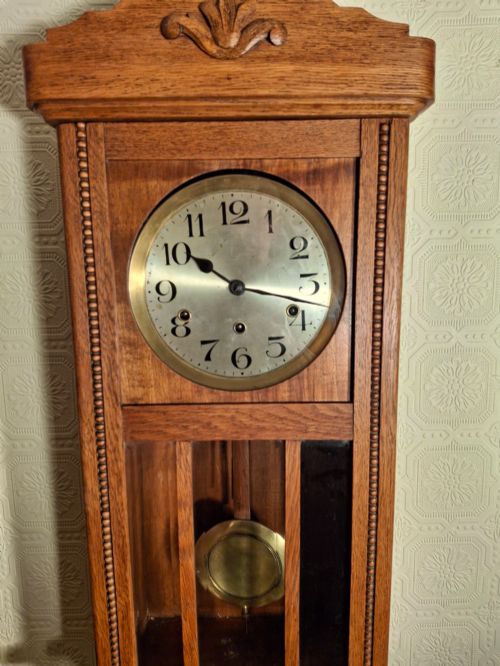
An antique westminster clock combines timekeeping with a four-note melody played on gongs, bells or tubes every fifteen minutes. You encounter mantel clocks, bracket clocks, wall clocks and taller longcase or grandmother clocks across this selection.
The periods span the Victorian and Edwardian eras through to the Art Deco years of the 1930s and 1940s. Mantel and bracket varieties appear frequently alongside oak and mahogany longcase pieces.
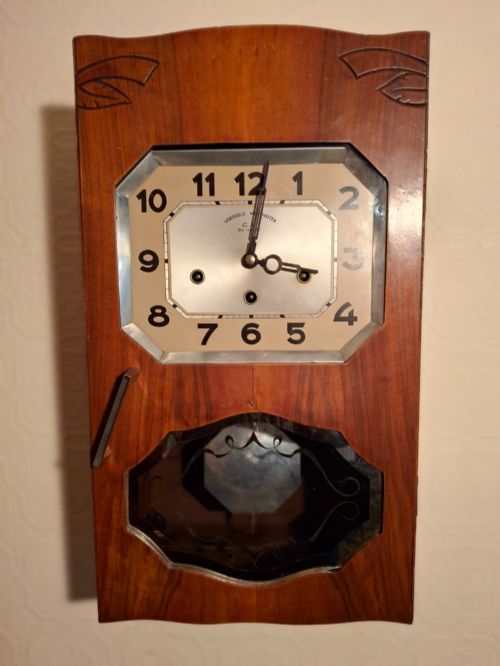
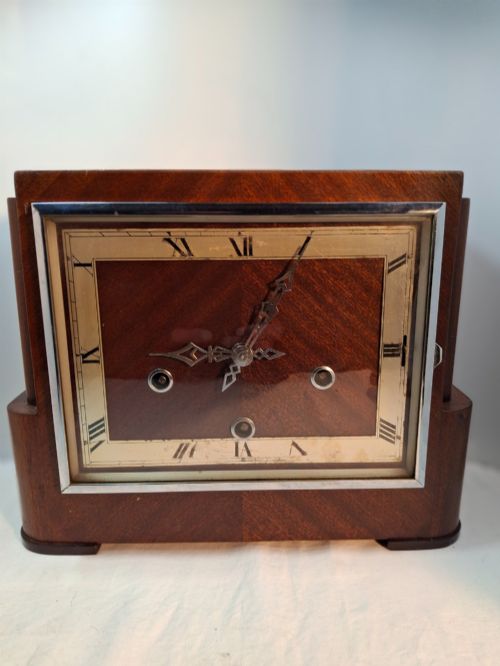
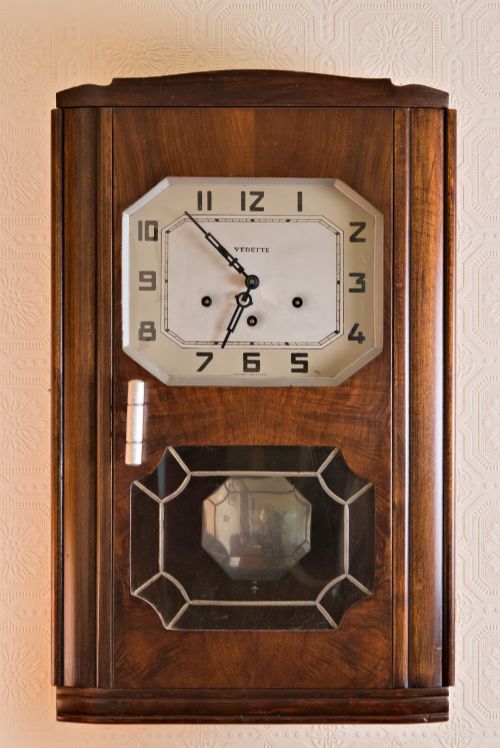
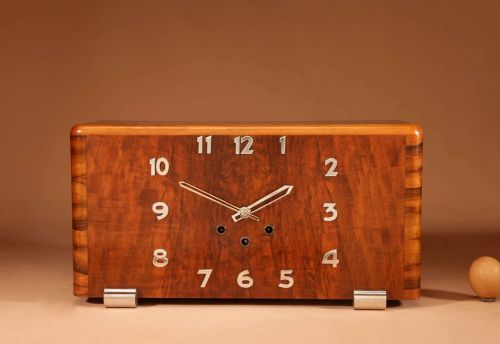
Styles range from traditional British designs and Victorian Gothic to French Art Deco wall and mantel versions. Cabinet timbers include walnut, ebonised wood, oak and mahogany.
Materials and construction
Cabinet makers constructed the cases using solid and veneered hardwoods like mahogany, oak, burr walnut and ebonised wood. Some examples incorporate glass panels, chrome details or ormolu mounts to accent the dial and movement.
Clockmakers fitted complex mechanical movements, including fusee, three-train and tubular bell systems, to drive the chime and hour strike. Dials and bezels typically utilise brass, gilt bronze and enamel.
Antique Westminster Clock Retail Price Guide 2026
Typical asking prices for westminster clock among the pieces listed under this phrase on Sellingantiques today, from the lower quarter to the upper quarter. They describe what is for sale here now, not the wider market.
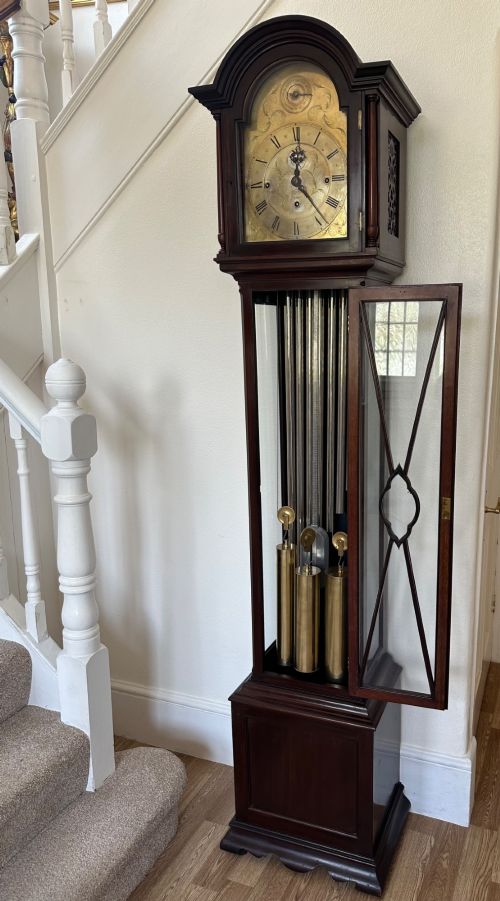
Several clocks hide their complex musical bells inside remarkably slender grandmother cases designed for tight Victorian hallways.
Quality differences
The sophistication of the chiming mechanism and the complexity of the movement separate standard examples from finer pieces. Triple fusee trains and multi-bell or tubular setups represent higher mechanical ambition.
Cabinet craftsmanship dictates overall distinction, seen in figured burr walnut veneers, carved ormolu mounts, specialised chinoiserie decoration and substantial architectural proportions.
Mappin & Webb·Vedette·Girod·Gillett & Johnston·Winterhalder W & H·Camerer Cuss & Co·Geo Tarratt·JJ Elliot
The Antique Westminster Clock Glossary
- Bracket clock
- A portable timepiece originally designed to sit on a wall bracket but later placed on shelves or mantels.
- Grandmother clock
- A slender, scaled-down version of the traditional longcase clock, standing shorter than a standard grandfather.
- Fusee
- A conical pulley mechanism designed to equalise the pull of the mainspring as it winds down, ensuring even timekeeping.
- Three-train movement
- A clock movement with three separate gear trains for timekeeping, striking the hour and playing the chime melody.
Antique Westminster Clock: Frequently Asked Questions
How do westminster chimes work?
The movement uses a pinned cylinder or comb that strikes four distinct notes in varying sequences every quarter hour. This mechanical arrangement builds up to the full melody before the hour strike.
Most examples allow you to select between chime and silent modes using a small lever on the dial face.
Where should I place a longcase clock?
Tall longcase and grandmother clocks require a stable, level floor away from direct sunlight and heating vents. Securing the tall wooden case to a wall prevents accidental tipping.
Placement in a hallway or principal room allows the acoustic chime to resonate properly through the space.
How do I wind a mechanical chiming clock?
You use a dedicated winding key to turn the arbors located on the dial face, corresponding to the time train, strike train and chime train. Winding should proceed smoothly without forcing the springs.
Most traditional movements require winding every week to maintain steady tension on the gears.
How do I identify the period of a clock?
Cabinet style and decorative details provide the primary clues to age, shifting from heavy Victorian and Edwardian carvings to streamlined Art Deco walnut and chrome shapes. Movement signatures and dial materials also help narrow down the decade of manufacture.
Maker plaques and internal stampings often confirm the workshop or retail house responsible for the piece.