




Antique Welsh Armchair
An antique welsh armchair offers a direct connection to centuries of rural domestic life through robust regional joinery and native timbers.
Antique Welsh Armchair
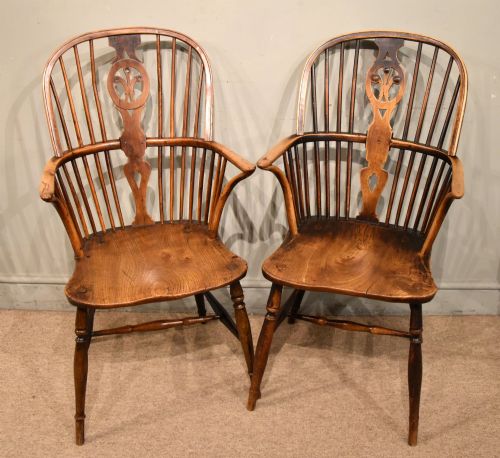
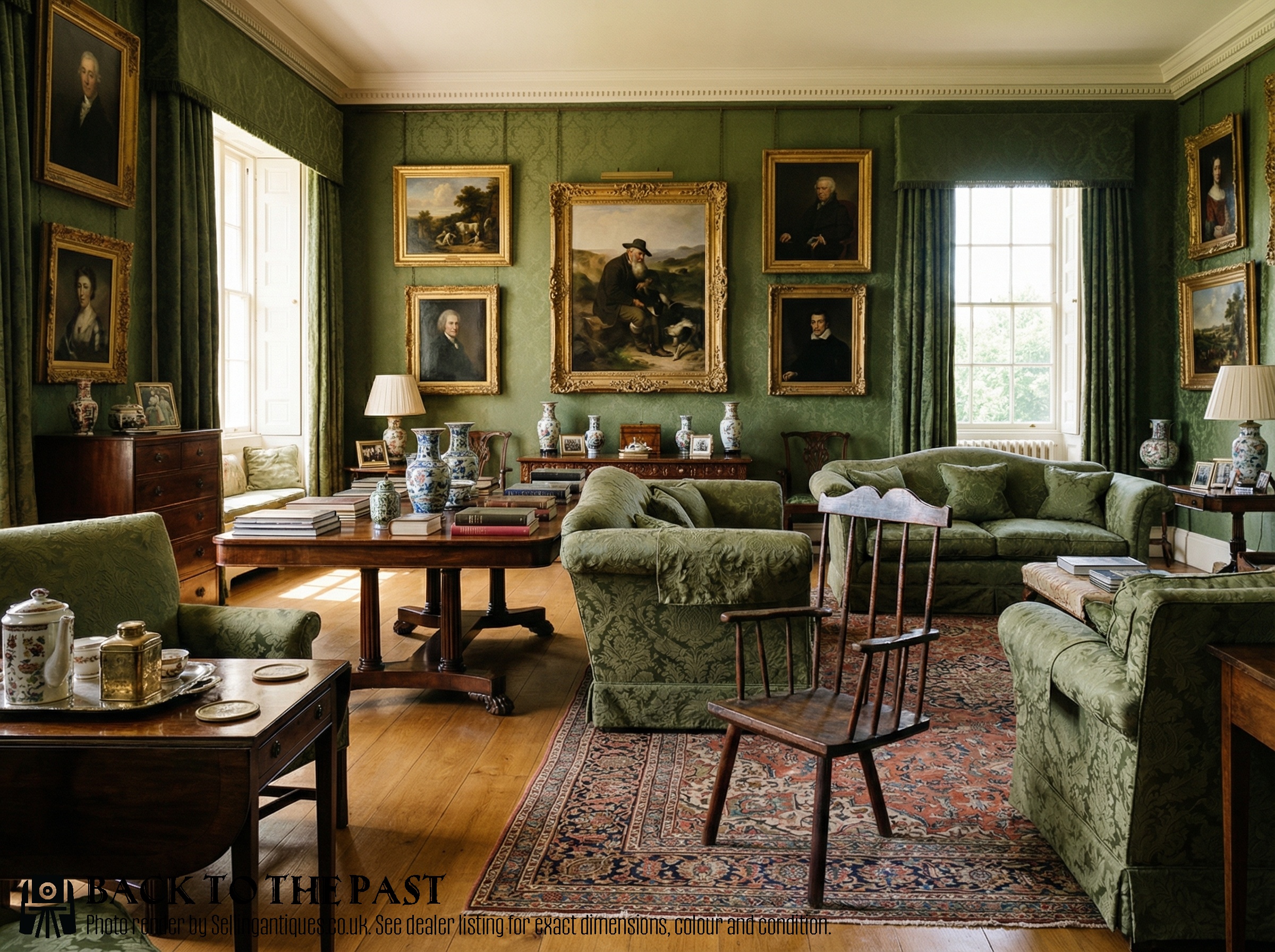
An antique welsh armchair encompasses sturdy forms built for everyday utility across rural households, including heavy panelled wainscot constructions and lighter stick-built seating. The pieces appearing most frequently range from sturdy 17th-century oak armchairs to 18th-century country Windsons and stick chairs originating from valleys like Swansea and Carmarthen.
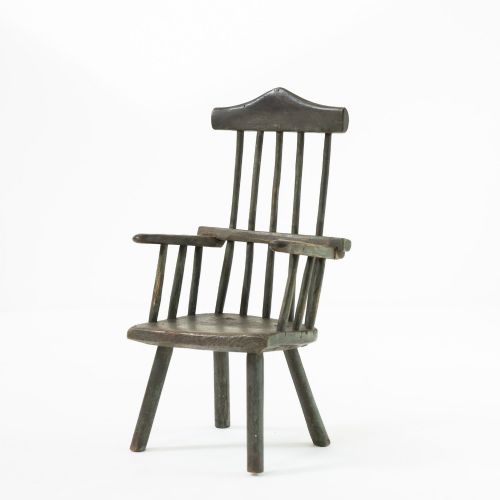
Makers working within local traditions also produced smaller children's armchairs and utilitarian chair tables alongside grander library or fireside seating. Surviving examples demonstrate how vernacular furniture evolved from heavy timber framing into flexible regional stick and comb back designs.
How They Were Made
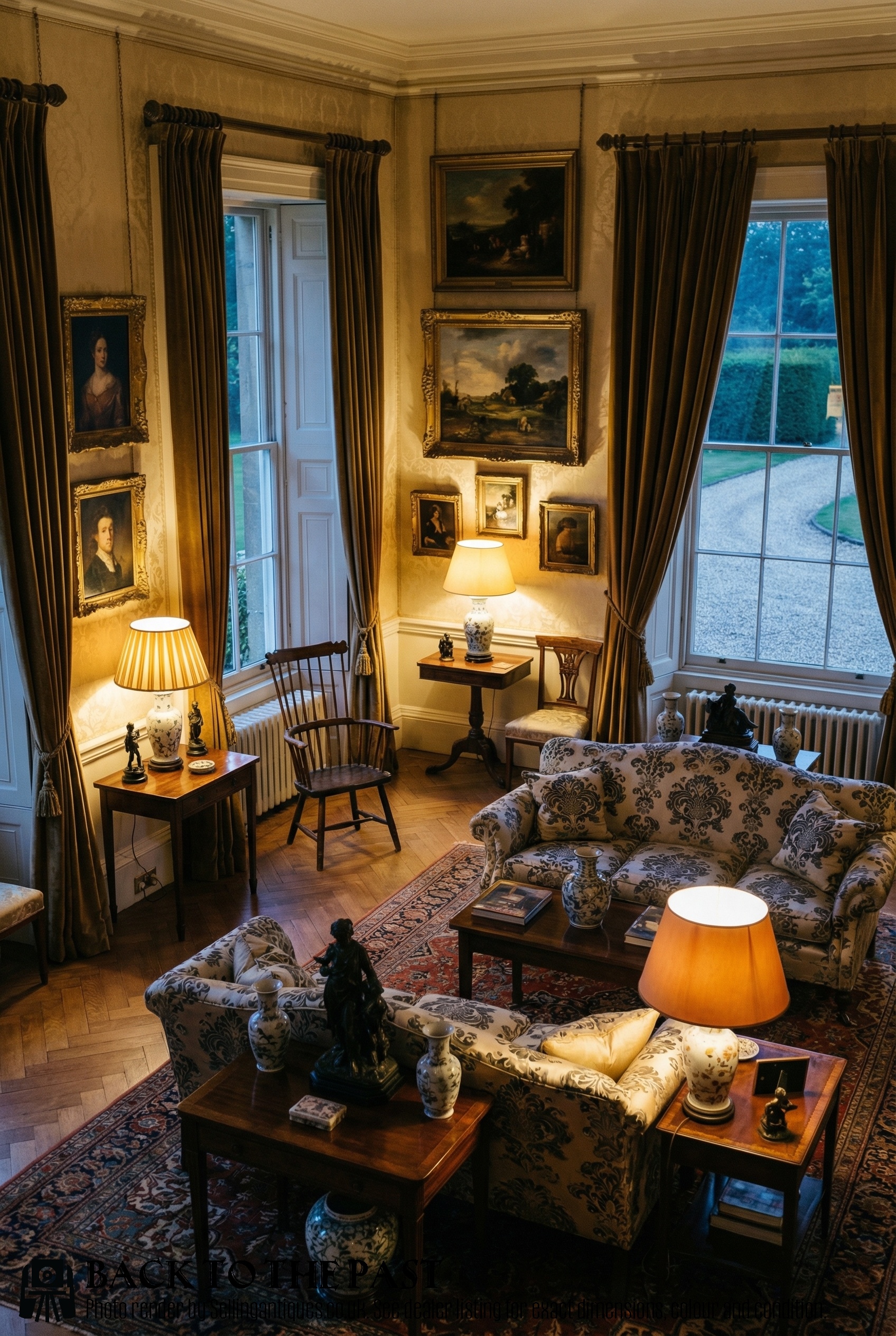
Joiners relied on native hardwoods such as oak, ash, elm, and yew, often combining multiple timbers within a single frame to utilise the specific strengths of each wood. Solid oak provided the rigid structure for panelled wainscot designs, while flexible ash and elm formed the bent components of Windsor and stick back chairs.
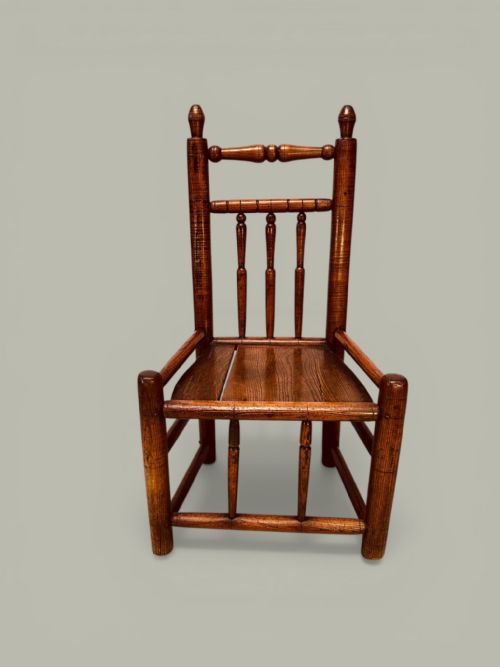
Construction techniques balanced straightforward pegging and mortise joints with robust bodger-style turned elements, occasionally finishing surfaces with paint or retaining the natural grain of burr timber.
One unexpected child's armchair survived centuries of nursery adventures while keeping its original painted coat intact.
What Varies in Quality
The distinction between standard vernacular seating and superior examples rests upon the ambition of the design, the proportion of the timber, and the integrity of the original construction. Pieces exhibiting sculpted comb backs, generous proportions, or regional variations like Snowdonia framing command greater attention than simple utility seating.
Original surface treatments, such as untouched early paint or patinated oak surfaces, preserve the historical authenticity of the piece far better than heavily stripped or over-restored frames.
The Antique Welsh Armchair Glossary
- Wainscot
- A heavy wooden armchair constructed with panelled backboards and solid arm supports, typical of the 17th century. These pieces display rigid framing and early vernacular joinery.
- Stick back
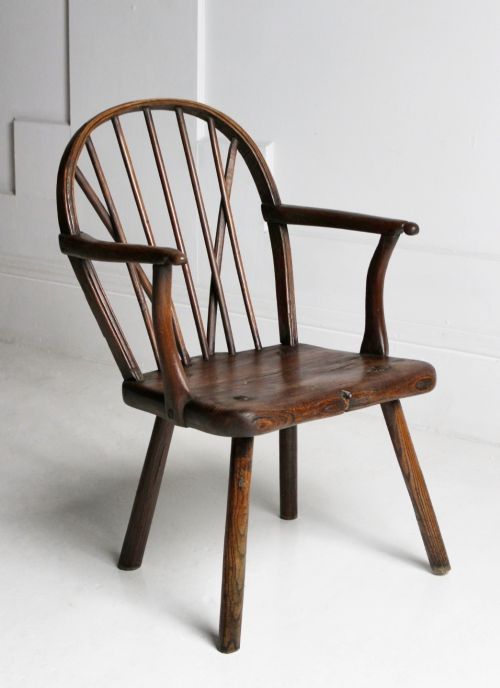
- A chair construction method where turned spindles or sticks are tenoned directly into a solid wooden seat. This method forms the backbone of traditional Welsh country seating.
- Windsor
- A chair style featuring a solid wooden saddle-seat into which the legs, back spindles, and bow are separately fitted. Welsh variants frequently incorporate comb backs or local timber combinations.
- Chair table
- A convertible piece of furniture with a large back that pivots downward onto the arms to form a table. This dual-purpose form maximises space in smaller rural dwellings.
- Commode chair
- An armchair fitted with a concealed internal compartment for a chamber pot, often enclosed by a panelled seat. These pieces combined domestic comfort with practical household management.
Antique Welsh Armchair: Frequently Asked Questions
How do I date an oak wainscot armchair?
Dating relies on examining the construction methods, joint pegging, and overall proportions of the heavy timber frame. Early 17th-century examples typically show deep hand-carving and rigid panel assembly.
Subsequent 18th-century iterations gradually transition toward simpler country lines while maintaining heavy regional oak construction.
What is the difference between a stick chair and a Windsor?
Stick chairs generally feature spindles inserted directly into a plank seat without the continuous bentwood bow defining a classic Windsor. Both styles utilise native woods like ash and elm to achieve resilient country seating.
Regional Welsh stick chairs often display distinct local turning patterns specific to valleys such as Swansea or Carmarthenshire.
Are painted finishes on these chairs original?
Original paint surfaces appear on specific pine and softwood country examples, showing characteristic wear and layering accumulated over generations. Preserved paint adds significant historical context to vernacular furniture.
Careful inspection under natural light helps determine whether the pigment dates to the period of manufacture or represents later decoration.
How were these armchairs used in traditional homes?
Heavy armchairs served as principal seats of authority near the hearth, shielding occupants from cold drafts in stone cottages. Lighter stick and comb back chairs provided adaptable seating around farmhouse tables.
Specialised forms like chair tables and commode chairs fulfilled multiple domestic functions within limited living spaces.