
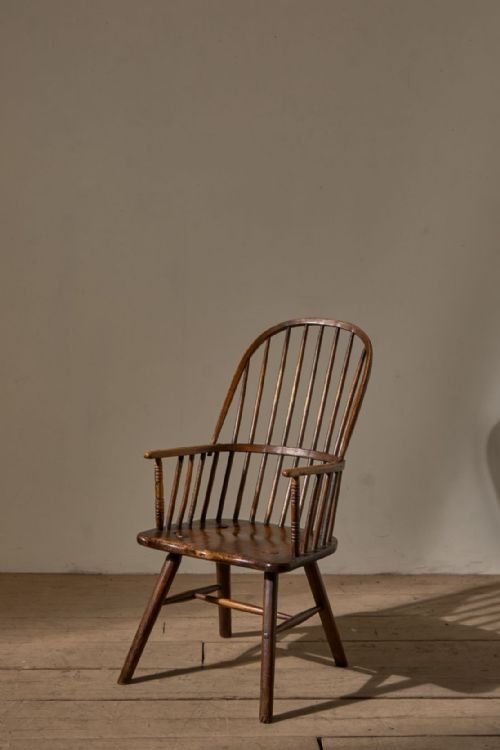

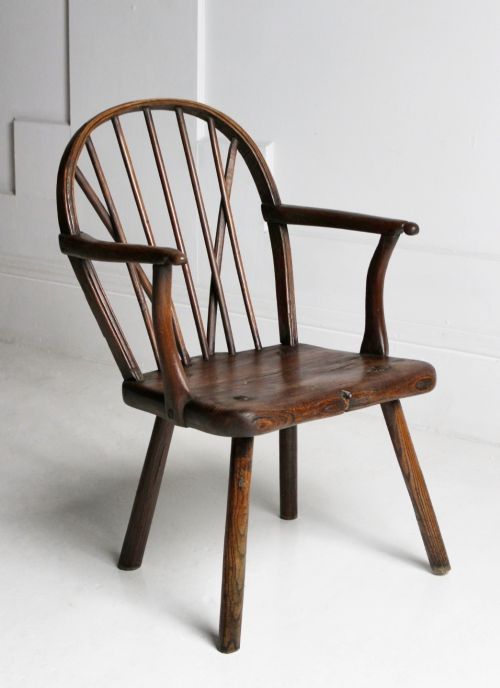


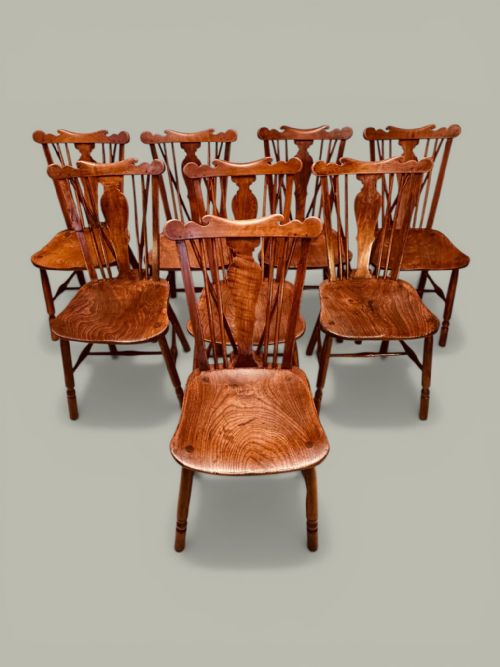


18th Century Stick Chair
An 18th century stick chair brings organic timber and regional vernacular design directly into your home.
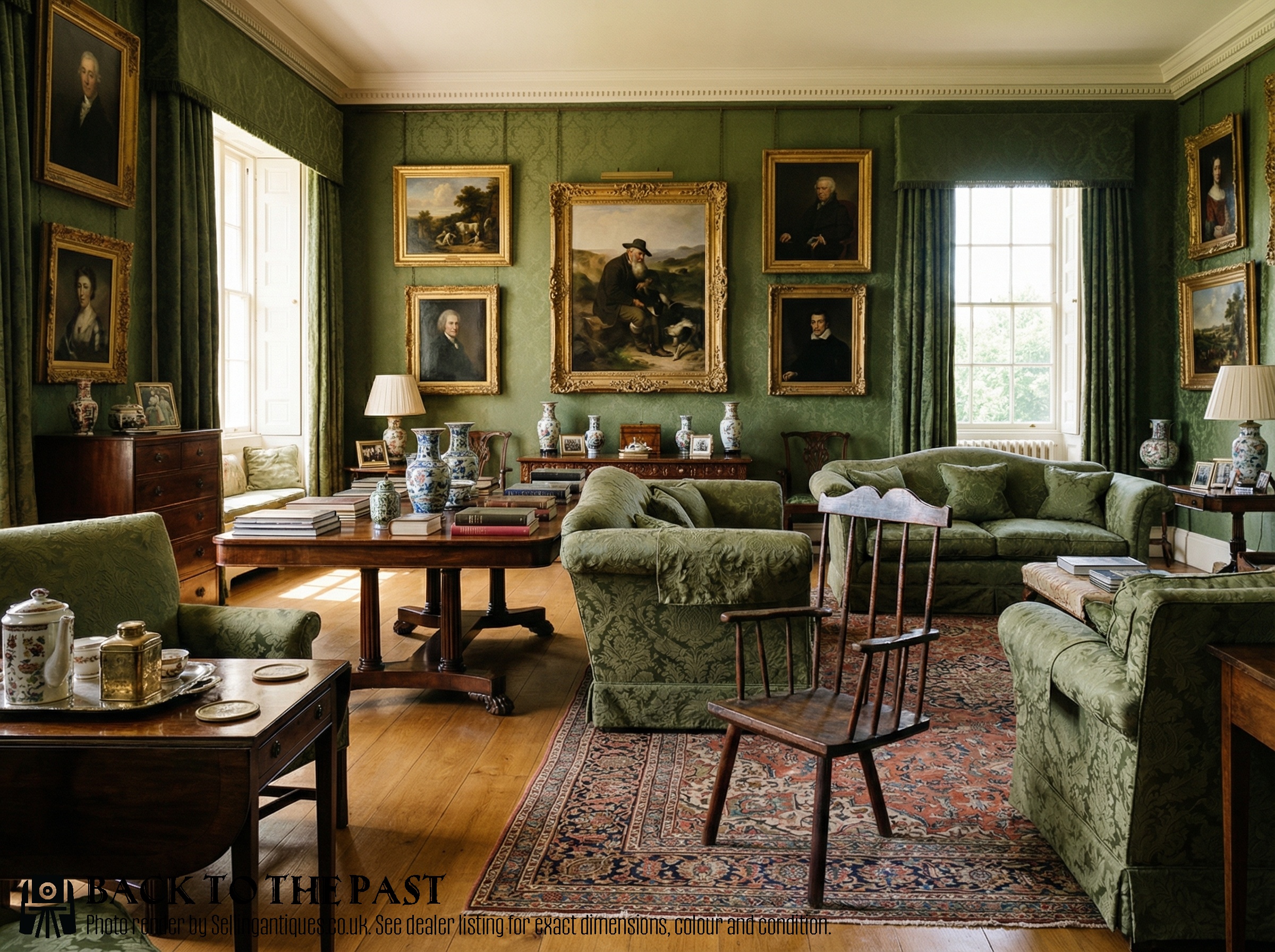
18th Century Stick Chair
The 18th century stick chair encompasses robust vernacular seating built by regional hands using locally sourced timber. When you search for an 18th century stick chair, you encounter sturdy armchairs, dining chairs, and occasional children's chairs shaped by necessity and local tradition.
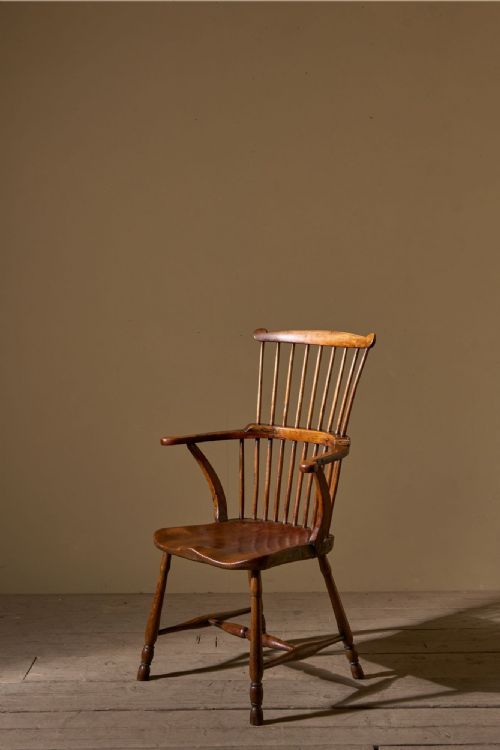
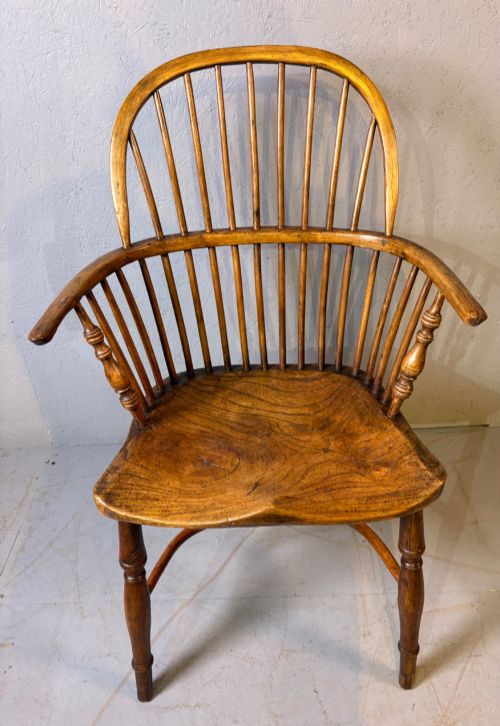
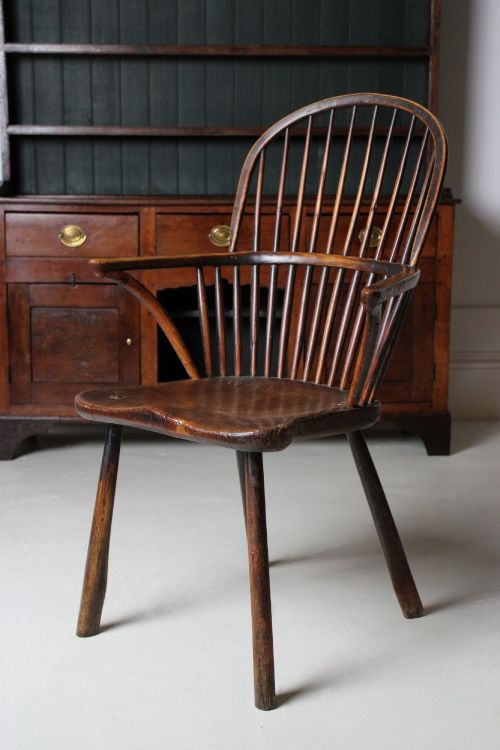
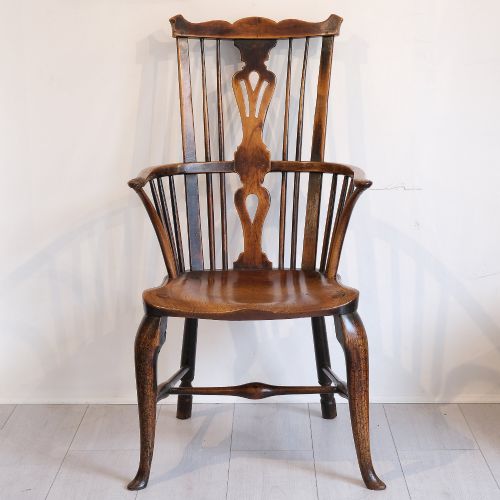
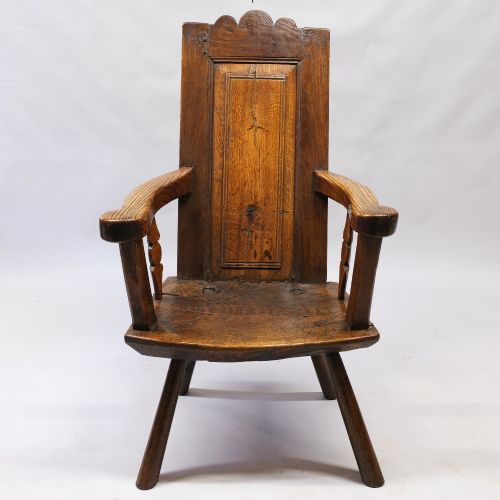
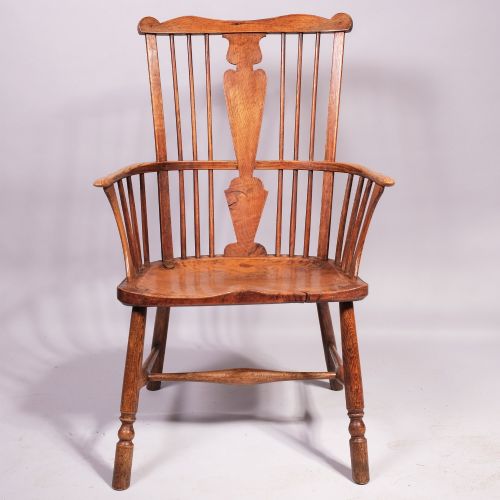
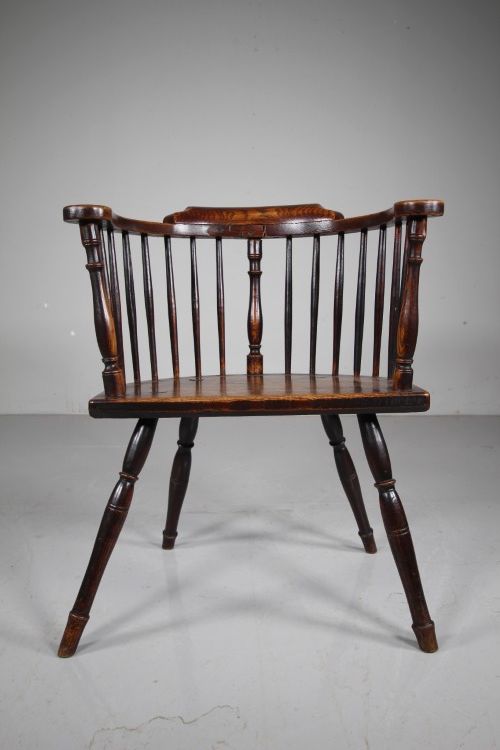
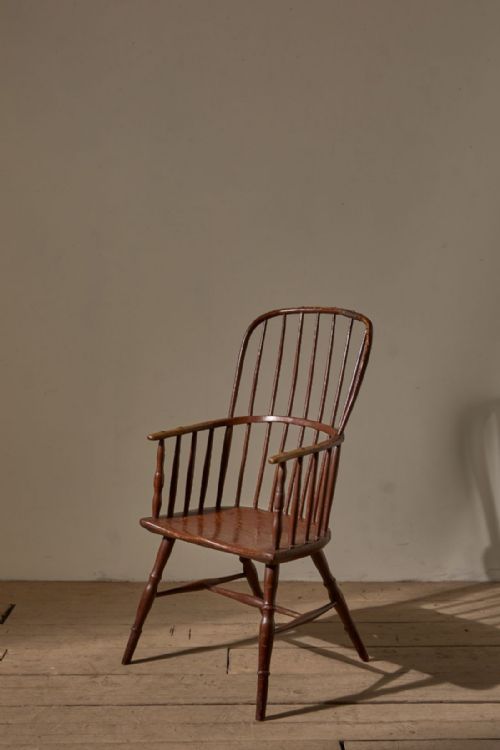
Most pieces on this page originate from English and Welsh workshops, displaying vernacular forms such as comb backs, hoop backs, and panel backs. These chairs served everyday domestic life in farmhouses and cottages before entering the antique market.
Makers utilised available woods for specific parts, combining strong timbers like ash and oak for frames with pliable or figured elements like elm, fruitwood, and yew. The resulting forms range from simple stick backs to elaborate Windsor designs with sculpted seats.
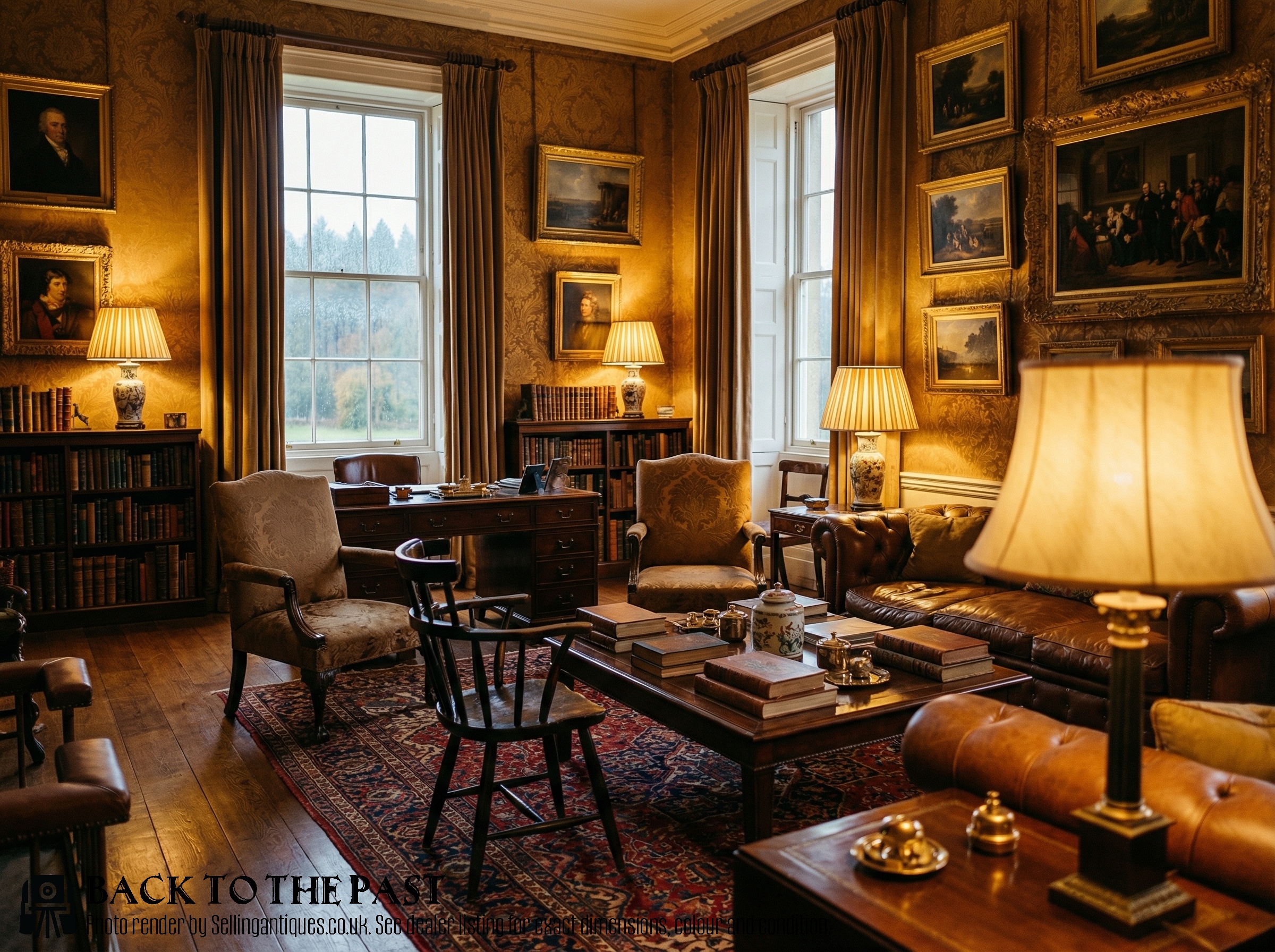
How they were made
Construction relied on combining solid timber seats with turned or cleft spindles driven directly into drilled mortises. Elm frequently formed the substantial slab seat because its interlocking grain resisted splitting under heavy use.
Spindles and legs were turned on pole lathes or shaped with drawknives from green wood such as ash, beech, and fruitwood, allowing the joints to tighten securely as the timber dried and seasoned over time.
Makers bent bowed crest rails and hooped backs using steam or natural curvature, securing the structural components with wedges and pins rather than modern adhesives.
Some chairs preserve honest traces of old brown paint, having quietly survived centuries of farmhouse kitchens before reaching the showroom.
What varies in quality
Quality in these vernacular pieces rests on the harmony of timber selection, structural integrity, and regional character rather than uniform factory precision. The best examples display thoughtful combinations of contrasting woods, such as yew or laburnum accents paired with elm and ash.
Proportion and comfort dictate the upper tier of the range, where sculpted seats and balanced rake to the legs create both visual elegance and physical stability. Lesser examples often show awkward proportions, heavy-handed repairs, or replacement components that diminish the original rustic unity.
John Brand of Sleaford
The 18th Century Stick Chair Glossary
- Comb back
- A chair design featuring a high backrest with vertical spindles topped by a horizontal crest rail resembling the teeth of a comb.
- Hoop back
- A continuous bentwood rail that forms the arms and backrest in a single flowing curve.
- Vernacular
- Objects built by local craftsmen following regional traditions rather than formal academic design rules.
- Windsor chair
- A form characterised by a solid wooden seat into which the legs and back spindles are independently tenoned.
- Cleft timber
- Wood split along the natural grain rather than sawn, yielding superior strength for structural spindles and legs.
18th Century Stick Chair: Frequently Asked Questions
What is a Welsh stick chair?
A Welsh stick chair is a regional vernacular seating form characterised by individual spindles socketed into a thick wooden seat, often featuring distinct local turning styles from areas like the Swansea Valley or Carmarthenshire.
These chairs reflect the domestic utility of rural Welsh cottages, constructed by local woodworkers using whatever strong native timber was immediately to hand.
How do I care for an antique wooden chair?
Protect your antique chair by keeping it away from direct heat sources and sudden humidity changes that can cause old timber to shrink or split. Feeding the dry wood with appropriate wax polish helps maintain the natural finish over time.
Avoid placing these chairs in areas of heavy moisture or direct sunlight, which can fade original painted surfaces and dry out historic elm and ash seats.
Are these chairs comfortable for daily use?
Many of these chairs offer surprising ergonomic comfort through their sculpted wooden seats and supportive raked spindles designed for long hours of labour or rest. Their sturdy construction handles normal daily seating without difficulty.
Adding a simple loose cushion can enhance comfort further while protecting the historic wooden seat surface from modern wear.
How can I tell the age of a stick chair?
Dating relies on examining tool marks, construction methods, timber shrinkage, and wear patterns that reveal decades of use in a domestic setting. Hand-riven surfaces and early pole-lathe turnings point towards the eighteenth century.
Comparing regional styles and joinery details against documented vernacular examples helps narrow down the period of manufacture.