
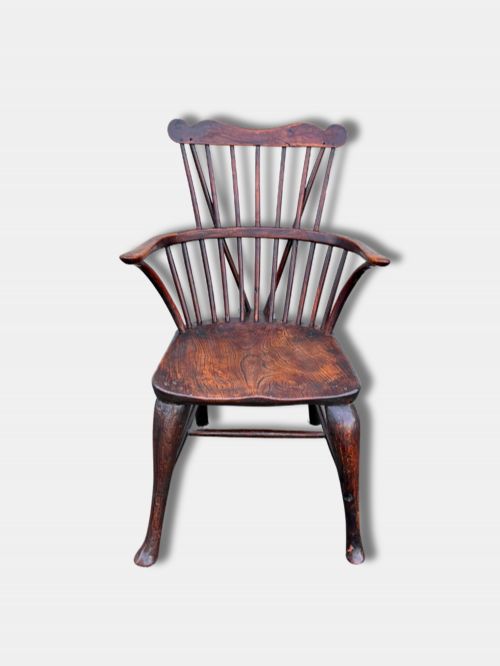

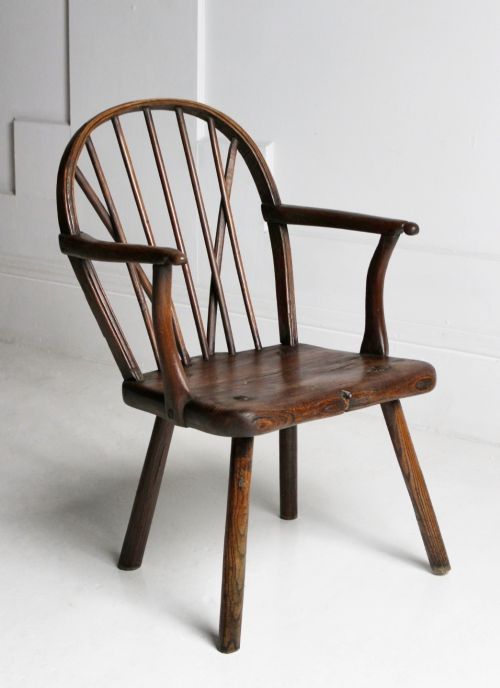


Primitive Elm Armchair
A primitive elm armchair brings honest country craft into a room, offering sturdy seating built by regional makers.
Primitive Elm Armchair
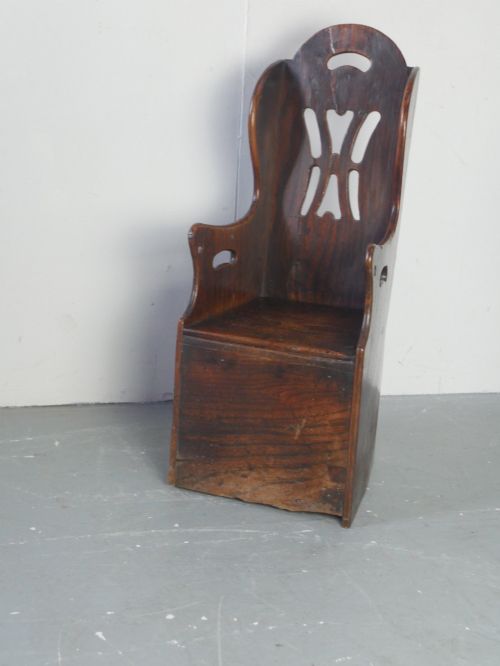
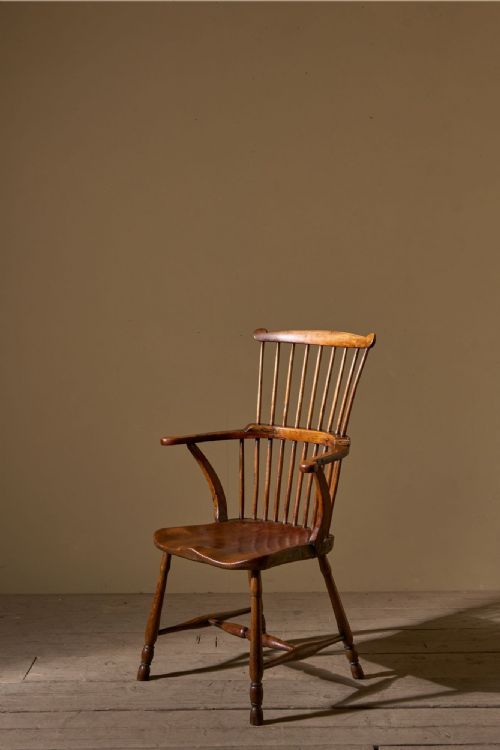
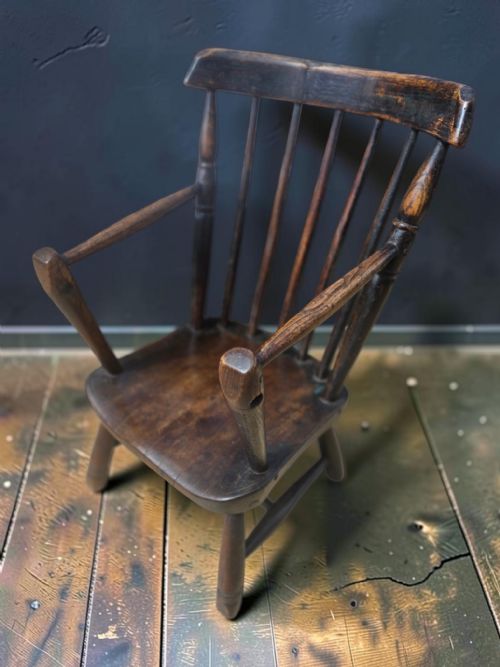
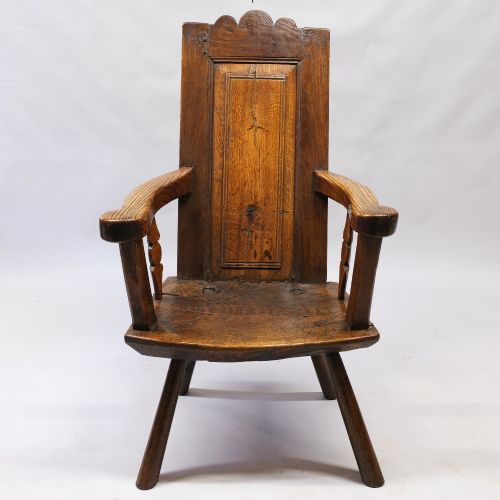
A primitive elm armchair is a vernacular seating piece rooted in regional English and Welsh country traditions. When searching for a primitive elm armchair, buyers encounter comb-back windsors, stick-back chairs, and panel-backed forms shaped by local joiners.
Regional variations appear across the Thames Valley, West Country, and Wales. The forms rely on solid plank seats with inserted spindles and legs rather than formal cabinetmaking joints.
What varies in quality
Quality rests in the balance of the proportions and the character of the timber grain. Finer examples show thoughtful shaping to the comb back and arms, alongside rich original surface patination.
Simpler regional pieces display heavier, more utilitarian construction. The choice of contrasting secondary woods, such as yew or burr elm, elevates the visual depth of the chair.
Some makers used whatever timber lay to hand, resulting in chairs boasting five distinct tree species in a single frame.
The Primitive Elm Armchair Glossary
- Comb-back
- A Windsor chair design where the vertical spindles extend through a bentwood arm bow to form a separate headrest resembling a comb. This style provides solid upper back support.
- Stick-back
- A chair construction where turned or cleft wooden sticks form the backrest and attach directly into the seat. It represents a straightforward regional vernacular method.
- Vernacular
- Objects built by local craftsmen using traditional regional methods rather than mengikuti metropolitan academic styles. These pieces reflect the immediate materials and needs of the countryside.
- Lobster pot
- A regional descriptor for comb-back Windsor chairs featuring tightly raked spindles that curve inward. The shape resembles traditional wicker fishing traps.
Primitive Elm Armchair: Frequently Asked Questions
How do I date a primitive armchair?
Dating relies on construction methods, tool marks, and wood species visible in the seat and undercarriage. Eighteenth-century examples often display broader plank seats and hand- cleft spindles.
Later nineteenth-century versions introduce more standardised turned components and machine-sawn elements. Comparing regional traits helps narrow the decade of production.
What woods were used?
Elm serves as the primary timber for solid saddle seats because its interlocking grain resists splitting. Ash provides strong, flexible material for bentwood comb backs and spindles.
Makers frequently incorporated yew, fruitwood, laburnum, and oak depending on local woodland availability. Mixed-timber construction is common in English and Welsh country seating.
Are these chairs comfortable?
The saddle-shaped solid wooden seats are carved to fit the body for extended sitting. High comb backs and sturdy armbows offer solid postural support.
While lacking modern upholstery, their ergonomic wooden contours provide surprising support. Many owners add loose wool or linen cushions for softness.
Where were they made?
Production centred in rural English districts, notably the Thames Valley and the West Country. Welsh workshops also produced distinct stick chairs with local regional character.
Country bodgers and village carpenters built these items using nearby timber resources. Each region developed specific spindle arrangements and undercarriage turnings.