


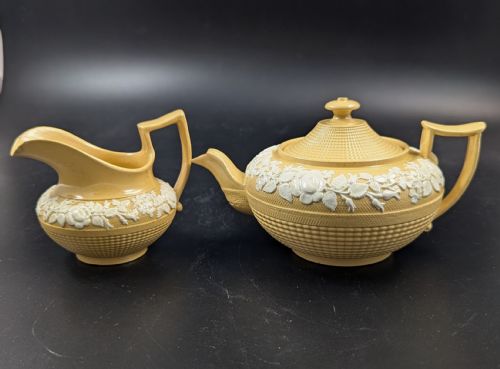
Antique Wedgwood Stoneware
Antique wedgwood stoneware pieces are durable ceramic vessels and decorative objects prized for their fine classical reliefs and distinctive coloured bodies.
Antique Wedgwood Stoneware
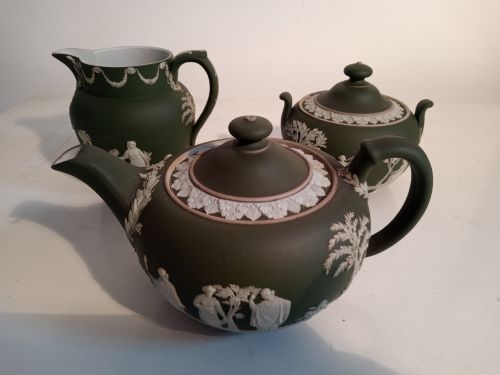
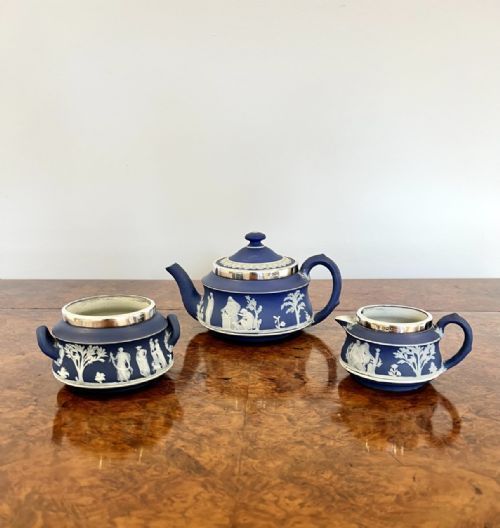
When you search for antique wedgwood stoneware, you encounter a range of functional and ornamental ceramic items spanning the eighteenth, nineteenth, and twentieth centuries. The selection centres heavily on nineteenth-century and Victorian pieces, including tea sets, biscuit barrels, decanters, candlesticks, and game pie dishes.
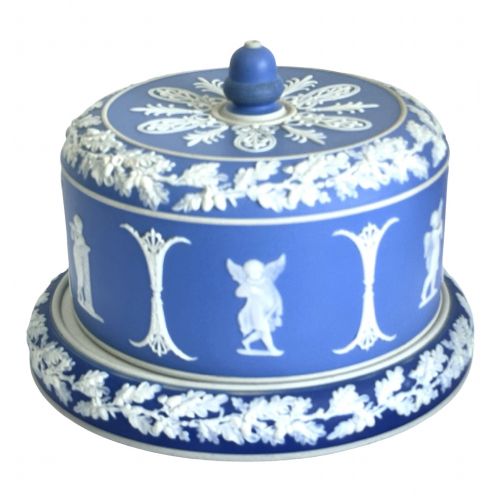
The forms extend from traditional blue jasper dip circular patch boxes and miniature teapots to large cheese domes and campana urns. Collectors frequently meet classic blue and dark blue jasperware, alongside olive green, yellow three-colour pieces, white stoneware, black basalt, drabware, and caneware.
How they were made
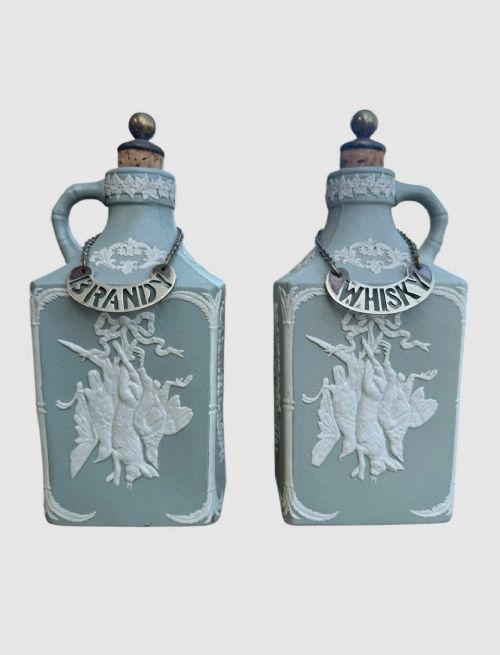
Potters utilised vitrified ceramic bodies such as fine stoneware and jasperware, shaping vessels that often incorporated applied white clay bas-reliefs in the neoclassical manner. Many items combine these ceramic bodies with metal mounts, utilising silver plate, solid silver, and cork components.
Makers achieved contrasting background colours through dipping techniques, creating distinct surfaces like blue jasper dip, while certain examples integrated multiple colours within a single piece.
Forms range from biscuit barrels and game pie dishes to miniature teapots and portrait medallions.
What varies in quality
The distinction between standard domestic items and superior works rests upon the crispness and definition of the applied white reliefs. Finely modelled classical figures and sharp botanical borders require exceptional precision during application.
Quality also depends on the complexity of the piece, such as multi-colour bodies and the integration of hallmarked silver collars or mounts, which elevate the status of teapots, biscuit barrels, and decanters.
The Antique Wedgwood Stoneware Glossary
- Jasperware
- A fine-grained, unglazed vitreous ceramic developed by Wedgwood, most commonly found in blue but also produced in green, yellow, black, and drab. It serves as the primary canvas for applied white neoclassical bas-relief decorations.
- Basalt
- A dense, fine-grained black stoneware body created by Josiah Wedgwood, utilised for teapots and urns with a matte finish. This material mimics antique carved stone and requires no glaze.
- Caneware
- A buff-coloured earthenware or stoneware resembling the colour of bamboo or cane, frequently employed for nineteenth-century culinary vessels such as game pie dishes. It provides a warm, natural tone distinct from standard white ceramics.
- Drabware
- A muted, brownish-grey ceramic body produced by Wedgwood for utilitarian and dessert services during the Victorian period. Its neutral hue offers a subtle backdrop for relief ornamentation.
- Campana urn
- A classical bell-shaped vessel form utilised for decorative vases and garniture sets, often mounted on square pedestals. These pieces draw directly upon ancient Roman bronze and marble prototypes.
Antique Wedgwood Stoneware: Frequently Asked Questions
What is jasper dip?
Jasper dip refers to a technique where a white ceramic vessel is dipped into a coloured liquid clay slip to produce a thin, even surface layer. This method was widely utilised to achieve the signature blue and green backgrounds while conserving costly cobalt oxides.
Pieces created this way reveal a white body beneath the coloured exterior if chipped or scratched. It represents a standard production method seen across nineteenth-century tableware and decorative boxes.
How do I date antique Wedgwood stoneware?
Dating relies on impressed factory marks, letter codes, style periods, and the specific shade of the ceramic body. Eighteenth-century pieces often feature single uppercase letters, while nineteenth-century items frequently display three-letter date codes impressed into the base.
Stylistic cues such as Victorian neoclassical shapes, silver mounts, and distinct colour palettes like olive green or yellow also narrow the decade of production. Examining the sharpness of the relief work and any accompanying metal hallmarks provides further chronological context.
Were these items meant for daily use?
Many items, including teapots, bachelor tea sets, and dessert services, were manufactured for practical dining and entertaining. Durable stoneware and ceramic bodies allowed these vessels to withstand regular service on the nineteenth-century dining table.
Other objects, such as portrait medallions, patch boxes, and campana urns, served primarily decorative or personal purposes. Silver collars and mounted spirit flagons indicate that utilitarian pieces were frequently finished with high-quality metalwork for formal parlour use.
What is black basalt?
Black basalt is an unglazed, solid black stoneware developed to imitate ancient basalt stone and antique excavated vases. Wedgwood utilised this dense material extensively for teapots, creamers, and commemorative busts.
The body derives its dark colour from iron and manganese oxides mixed into the clay before firing. It yields a smooth, matte texture that accepts engine-turned fluting and applied relief decoration with high definition.
How should I clean antique Wedgwood stoneware?
Cleaning unglazed stoneware and jasperware requires gentle methods to protect the delicate, porous surface and applied white reliefs. Dusting with a soft, dry brush removes surface particles without introducing moisture that could stain the unglazed body.
Silver collars or mounts require isolated polishing with a suitable metal cloth while avoiding contact with the surrounding ceramic. Harsh chemical detergents and soaking should be avoided entirely to preserve the original paste and finish.