
Antique Weather Barometer
These antique weather barometer pieces bring historic atmospheric measurement into the home through timber cases and brass dials.
Antique Weather Barometer
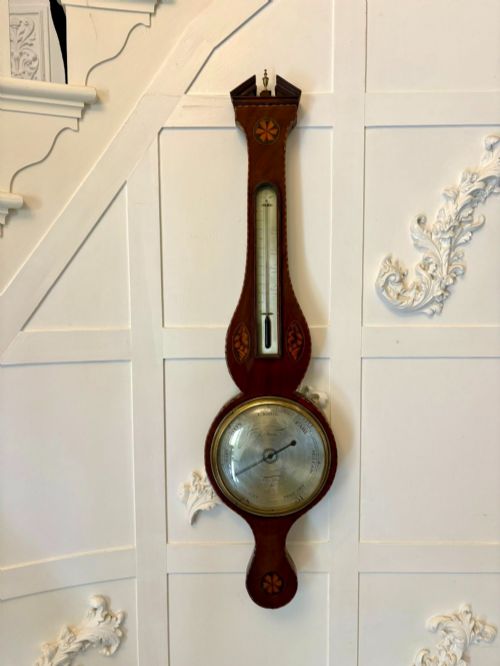
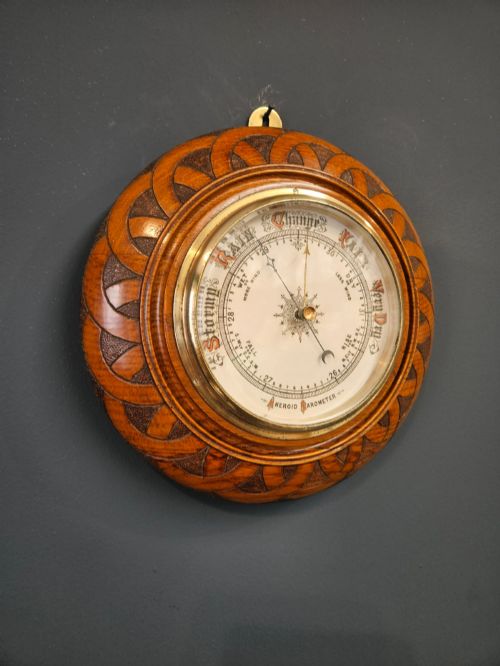
An antique weather barometer encompasses scientific instruments housed in timber wall cases, desk mounts and pocket formats. The selection here leans heavily towards Victorian and Edwardian oak, mahogany and walnut wall models alongside Georgian stick barometers.
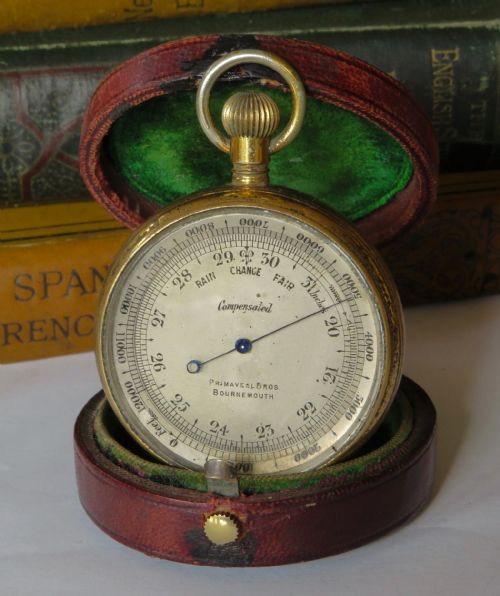
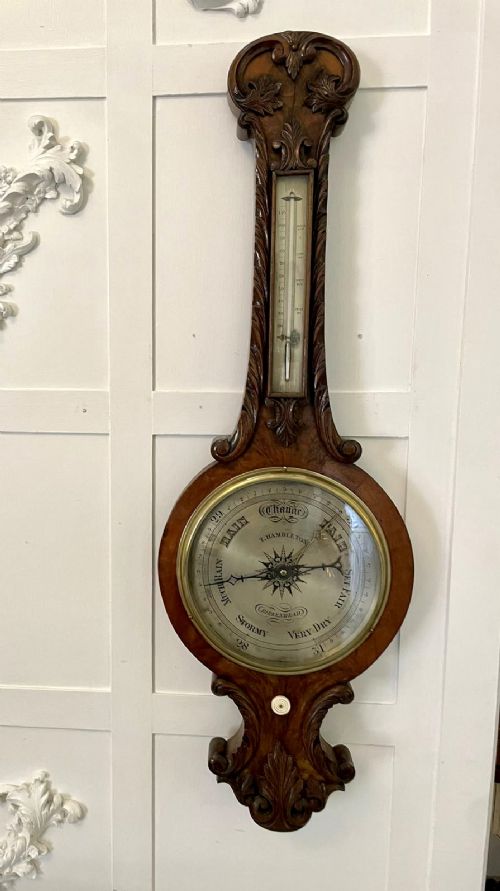
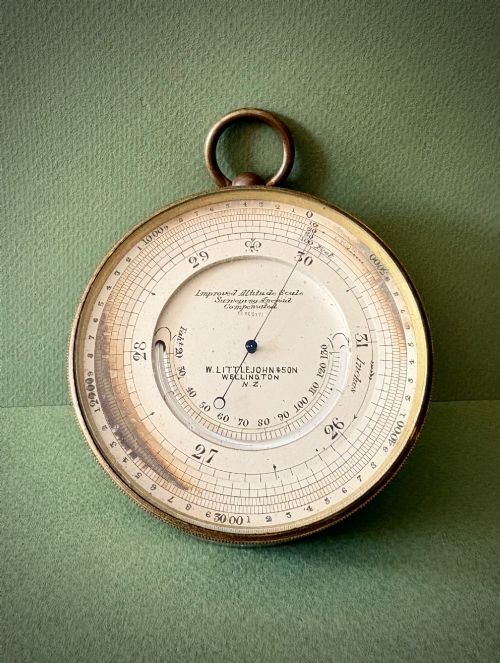
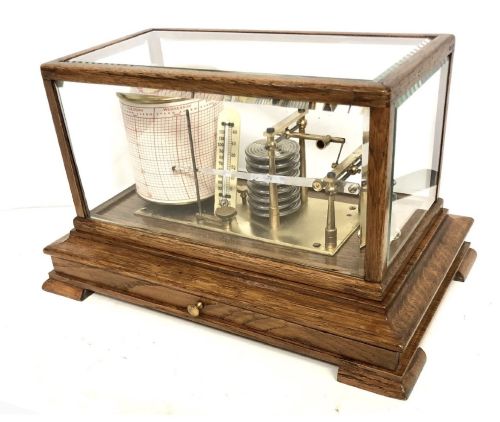
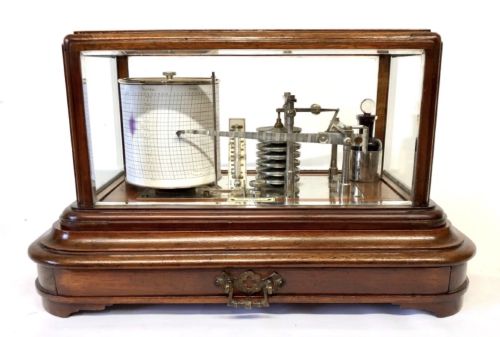
Buyers encounter banjo barometers, recording barographs with chart drawers, and pocket-sized altimeter variants from various periods. These instruments measure atmospheric pressure changes to indicate upcoming weather shifts.
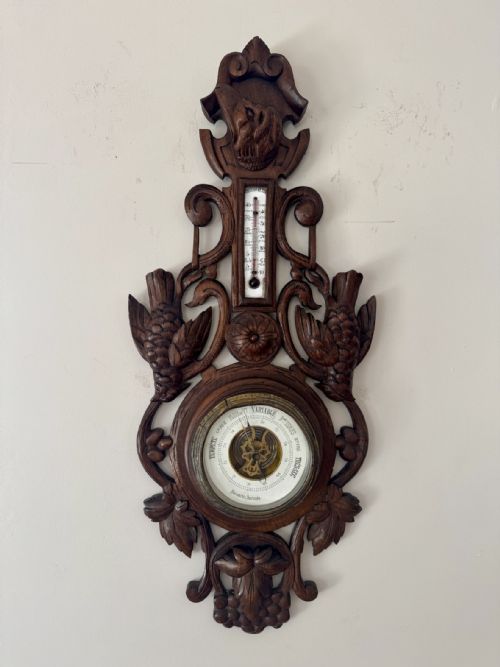
Domestic interiors from the Georgian era onwards utilised these devices to track atmospheric conditions. The surviving examples range from plain utilitarian oak housings to elaborately carved Black Forest and Chinoiserie designs.
Materials and Construction
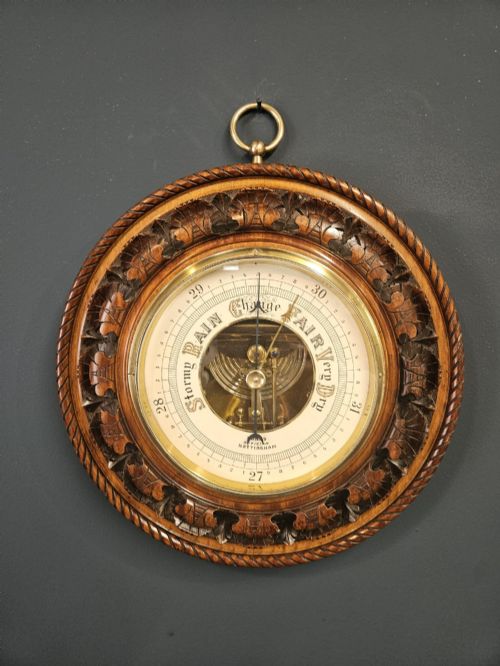
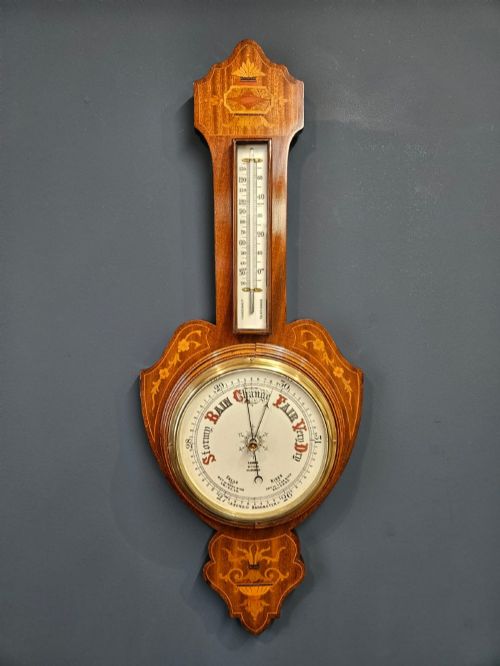
Cabinetmakers utilised dense hardwoods including mahogany, oak, walnut and burr walnut for the outer cases. These timbers were frequently carved, turned or inlaid with shell motifs and contrasting veneers.
Dials and bezels incorporate brass, silver gilt, enamel and bevelled glass to protect the delicate internal movements. Metal components work alongside mercury tubes or aneroid chambers to register barometric pressure.
The listings span styles from Georgian stick barometers to Art Deco aneroid dials, utilising brass, glass, mahogany, oak and walnut.
Assessing Craftsmanship and Detail
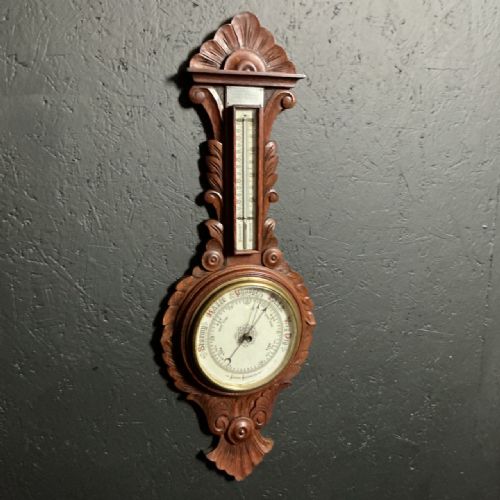
Superior examples display crisp hand-carving on the timber cases, particularly within Victorian Black Forest and Edwardian styles. The precision of the dial engraving and the quality of the glass bevelling separate standard production from finer work.
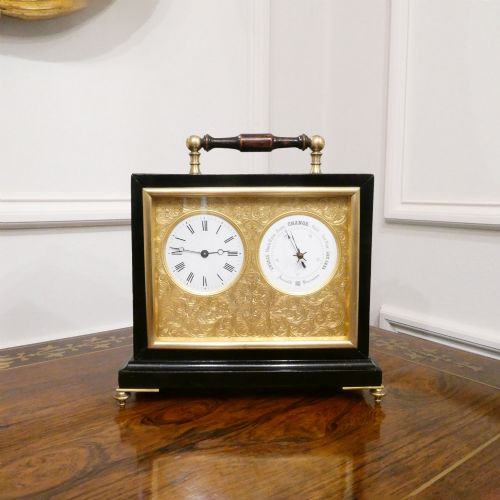
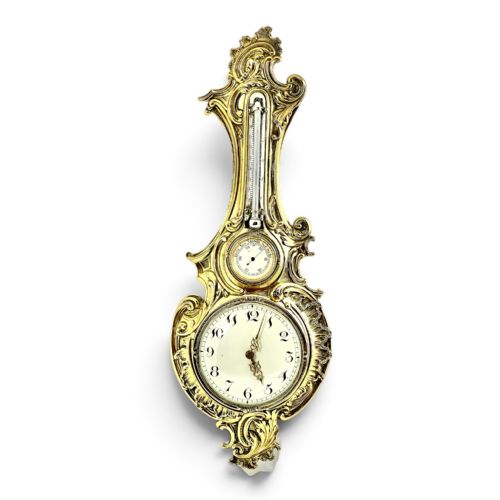
Makers integrated thermometers, hygrometers and clock movements into the principal barometer housing on more ambitious pieces. The integration of secondary instruments and fitted chart drawers denotes higher ambition in the design.
Negretti & Zambra·Wilh. Lambrecht·Short & Mason·George Adams·B. Besozzi·Hyde & Sons Sleaford·Gaupp & Co·Hezzanith·Primavesi·Aitchison·P. Caminada
The Antique Weather Barometer Glossary
- Aneroid barometer
- A barometer that measures pressure using a flexible metal box called an aneroid cell, which expands or contracts with atmospheric changes. This mechanical design replaced mercury in many domestic wall barometers.
- Stick barometer
- A tall, vertical barometer housing a long glass tube filled with mercury. Georgian and Victorian makers favoured this form for precision readings.
- Banjo barometer
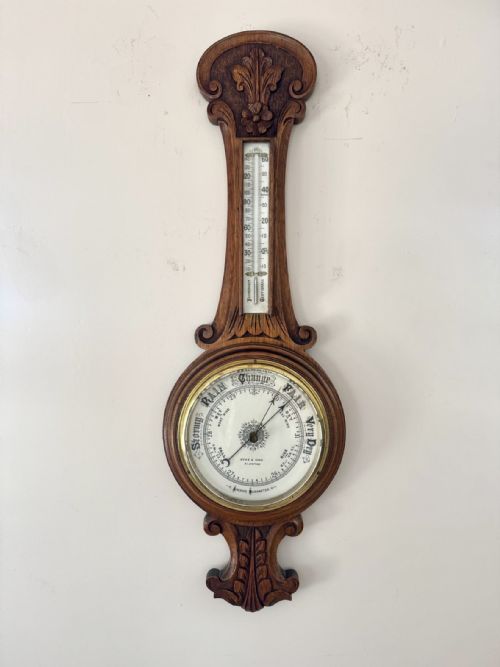
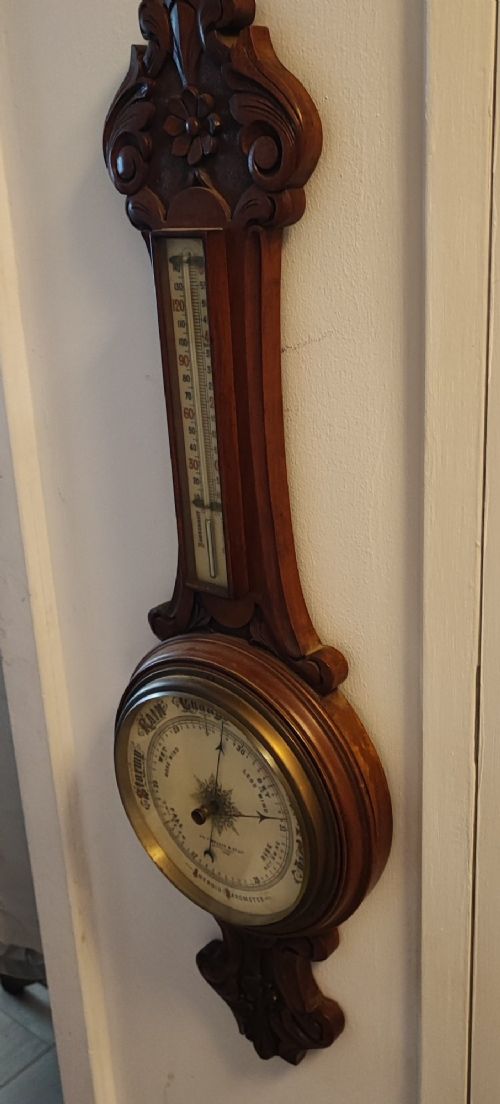
- A wall barometer shaped like a banjo, featuring a circular dial at the top and a longer body containing a thermometer or level. This form dominated nineteenth-century domestic interiors.
- Barograph
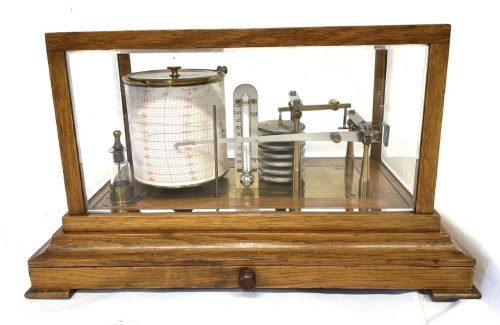
- A recording barometer that draws a continuous line of atmospheric pressure onto a revolving paper chart. These instruments often sit within oak or mahogany glazed cases featuring chart drawers.
- Hygrometer
- An instrument used for measuring the moisture content in the atmosphere. Examples often appear paired alongside barometers and thermometers in domestic weather stations.
Antique Weather Barometer: Frequently Asked Questions
How do I read an antique barometer?
Most wall and banjo barometers feature a dial marked with weather descriptions such as rain, change and fair. A pointer linked to the internal mechanism moves across these scales as atmospheric pressure rises or falls.
Many instruments include a manual setting needle that the user aligns with the current pointer. Observing whether the main pointer has moved relative to this marker shows the direction of pressure change.
Where should I hang a wall barometer?
Select an interior wall away from direct sunlight, radiators and draughty doors. Temperature fluctuations can interfere with the internal mechanical response of aneroid movements.
Ensure the wall fixing supports the weight of the timber case securely. Most wall barometers feature a brass hanging loop or mounting bracket integrated into the upper back.
How do I tell an aneroid from a mercury barometer?
Aneroid barometers use a sealed metal capsule and dial face, making them safe to mount at any angle and easy to move. They dominate domestic wall and pocket formats from the Victorian era onwards.
Stick barometers use a long vertical glass column containing liquid mercury. These instruments require careful handling and must remain upright to prevent air entering the glass tube.
Do antique barometers still work?
Many surviving aneroid barometers and barographs remain fully functional if their internal linkages are intact. Adjusting the calibration screw on the back allows the needle to match current local barometric pressure.
Mercury stick barometers require undisturbed conditions and occasional professional recalibration. Even when non-operational, historic weather instruments survive as decorative pieces of period furniture.