








Antique Walnut What Not
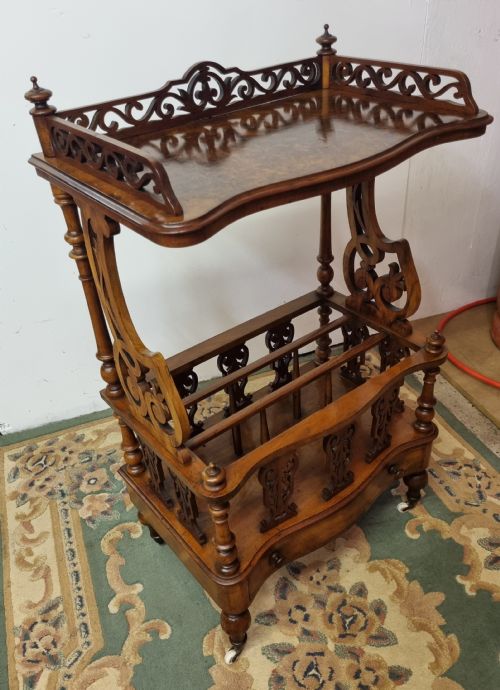
An antique walnut what not brings tiered open shelving and rich timber grain to a room, offering display space that dates mainly to the Victorian era.
Antique Walnut What Not
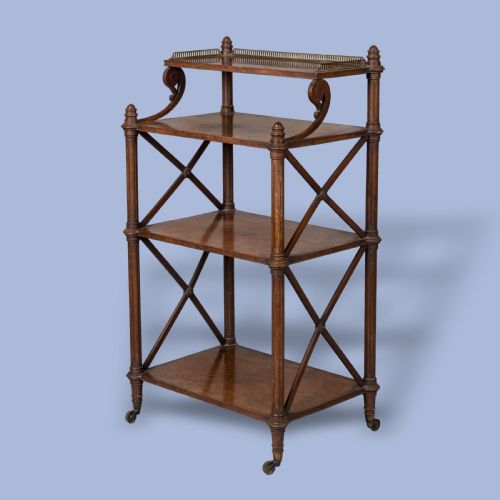
When you search for an antique walnut what not, you encounter multistoried display stands, étagères, and multifunctional pieces that combine shelves with magazine racks or music cabinets. The majority stem from the nineteenth century, taking the form of freestanding multi-tier units, serpentine corner stands, or side tables fitted with upper tiers.
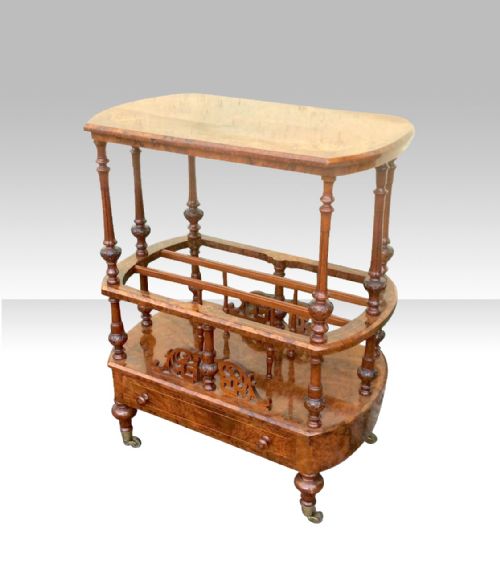
Victorian makers produced these open display pieces in plain walnut and burr walnut, frequently incorporating marquetry, inlay, and ebonised wood details. Pieces often merge functions, serving simultaneously as a Canterbury, a music stand, or a display shelf for porcelain and ceramics.
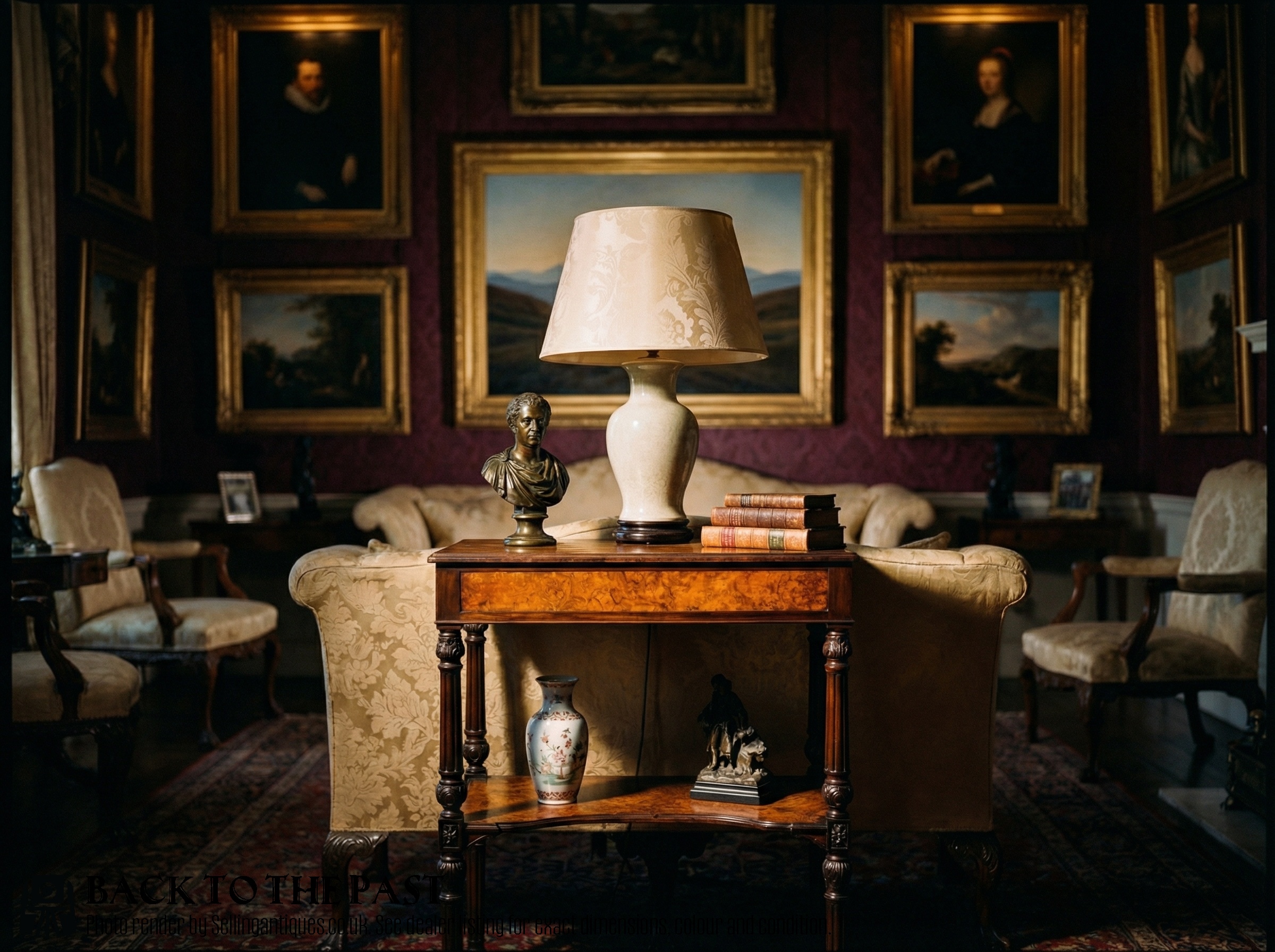
Materials and Construction
Carpenters utilised solid walnut and decorative burr walnut veneers over secondary timbers, selecting figured grain patterns for visibility on tops and shelves. Marquetry inlay, brass mounts, ormolu, and ebonised wood accents ornament the framework, while ceramic castors sometimes support the base.
Shelves link via turned or carved upright supports, creating rigid multi-tiered structures designed to hold books, sheet music, and display objects. French polish finishes seal the timber, heightening the natural contrast and warmth of the walnut grain.
Antique Walnut What Not Retail Price Guide 2026
Typical asking prices for walnut what not among the pieces listed under this phrase on Sellingantiques today, from the lower quarter to the upper quarter. They describe what is for sale here now, not the wider market.
The listings show pieces predominantly from the Victorian period, spanning the eighteen-sixties through to nineteen hundred, constructed in walnut and burr walnut with ceramic and brass details.
Judging Quality in Walnut Display Pieces
The choice of timber sets the baseline, with richly figured burr walnut and intricate marquetry separating standard production from finer exhibition pieces. The crispness of turning on upright supports and the precision of inlaid details indicate the level of craftsmanship invested in the piece.
Proportion and structural integrity dictate the standing of a piece, particularly in corner units and multi-tier étagères where stability relies on sound joinery. Integrated functions, such as drawers, drop-front compartments for music, or integrated brass galleries, elevate the complexity of the design.
Gillows·Holland & Sons
The Antique Walnut What Not Glossary
- Whatnot
- An open set of tiered shelves designed for displaying ornaments, books, or small objects. These pieces gained popularity during the Victorian period.
- Canterbury
- A low stand featuring partitions for holding sheet music, magazines, or newspapers, often combined with a whatnot top or drawer. They sit on castors for easy movement.
- Étagère
- A French term for a piece of furniture consisting of a set of open shelves for displaying small articles. They match the tier arrangement seen in standard whatnots.
- Burr Walnut
- Timber taken from a tree growth or burl, yielding complex, swirling grain patterns. Cabinet makers prized this wood for decorative veneering.
- Marquetry
- The art and craft of applying pieces of veneer to a structure to form decorative designs. Makers utilised various tinted woods to create floral or geometric motifs.
Antique Walnut What Not: Frequently Asked Questions
What is an antique walnut what not used for?
These tiered stands provided Victorian households with dedicated space to display porcelain, small sculptures, and decorative objects. They arranged items across multiple open levels to keep surfaces tidy.
Makers also combined the shelf tiers with lower compartments, serving as music cabinets, magazine racks, or small side tables in a drawing room.
How do I identify a Victorian walnut what not?
Look for the characteristic timber, which ranges from plain walnut to highly figured burr walnut veneers. Many examples incorporate nineteenth-century marquetry inlay, ebonised accents, and turned wooden supports.
Most surviving pieces date from the Victorian era, specifically between eighteen-sixty and eighteen-eighty, often featuring brass castors and multi-tier open shelving.
Are all whatnots freestanding?
While many multi-tier designs stand independently in the centre of a room or against a flat wall, a substantial portion are built specifically as corner units. Corner stands utilise angled shelves to fit snugly into room junctions.
Freestanding versions frequently feature symmetrical serpentine fronts or four-tier configurations designed to be viewed from multiple angles.
How do you clean burr walnut veneer?
Dust the surfaces regularly with a soft, dry cloth to prevent grit from accumulating in the intricate grain of the burr walnut. Avoid modern chemical sprays that can damage the traditional French polish finish.
Occasional application of high-quality beeswax feeds the timber and maintains the natural lustre of the polished wood without stripping the antique patina.