


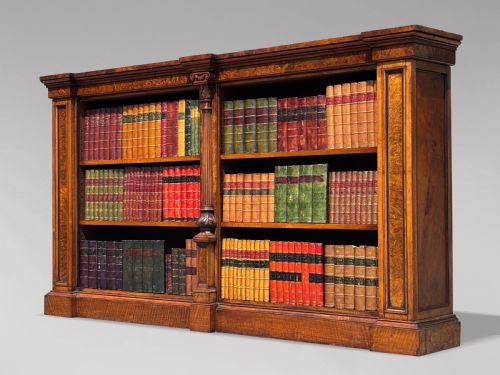
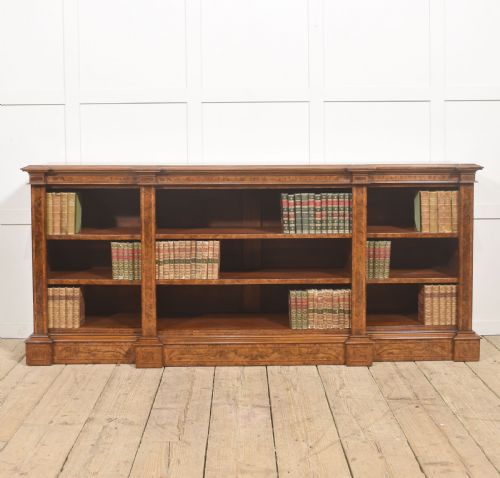


Burr Walnut Shelving Unit
A burr walnut shelving unit brings rich, organic grain and tiered display space to a room, turning practical storage into a centrepiece.
Burr Walnut Shelving Unit
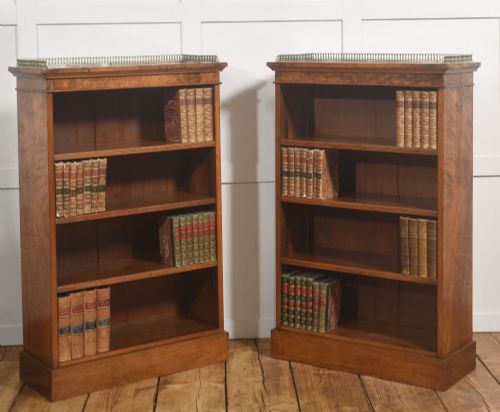
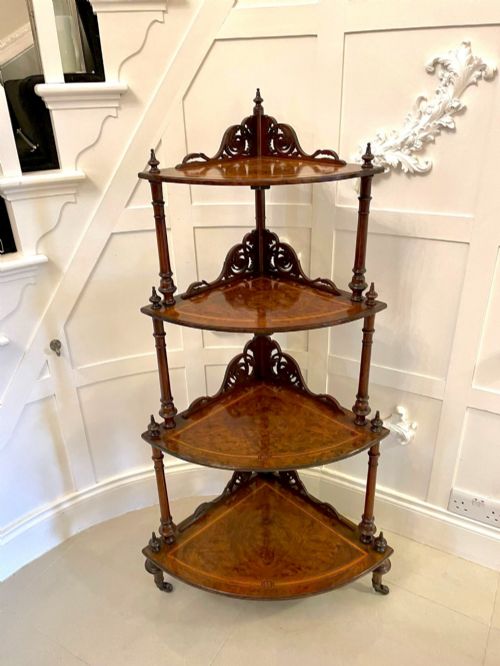
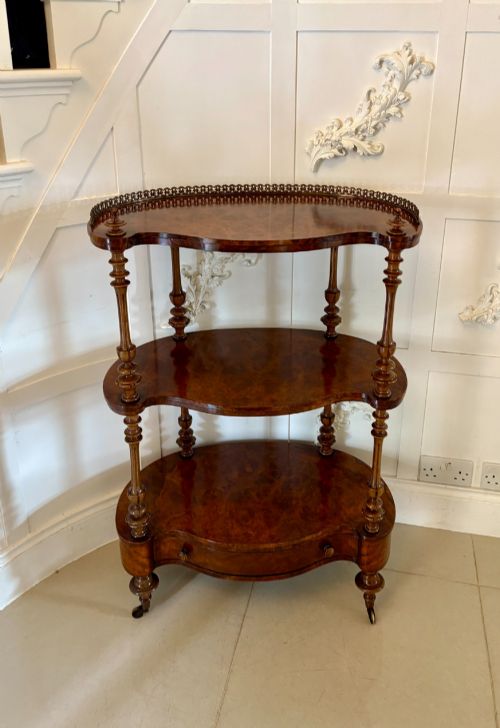
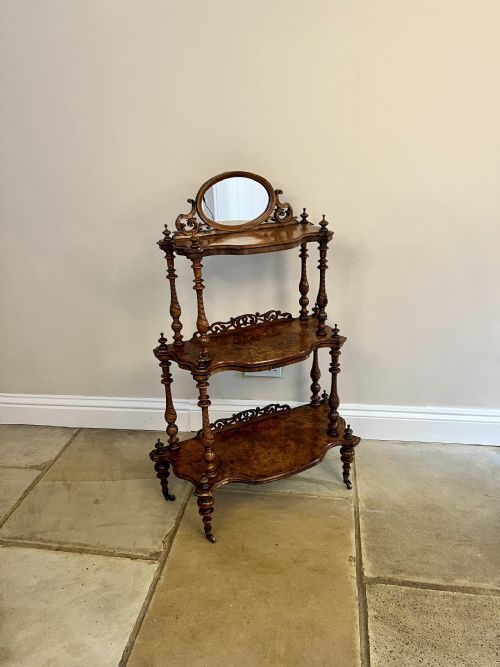
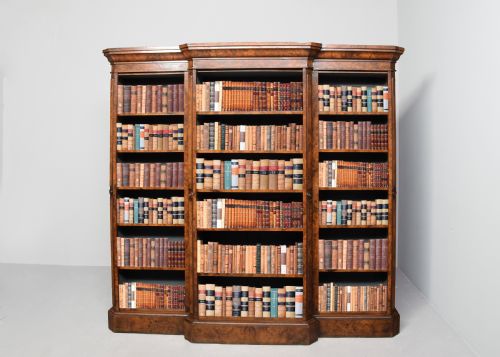
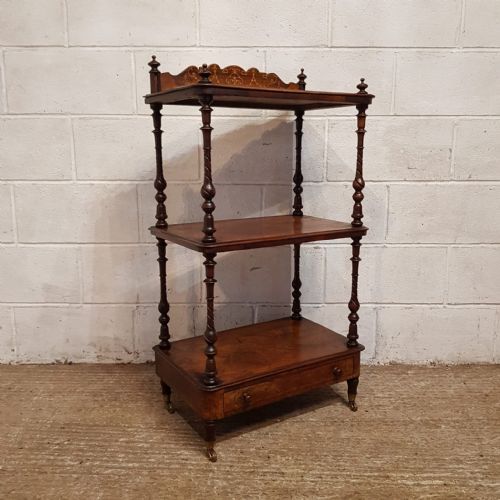
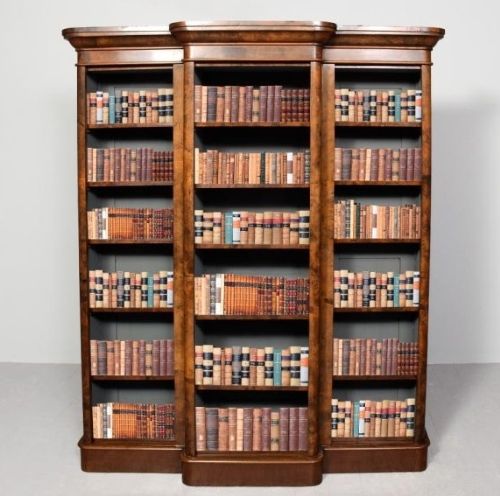
A burr walnut shelving unit combines open display tiers and bookcase forms, most frequently appearing as Victorian whatnots, etageres, and open bookcases from the nineteenth and early twentieth centuries. These pieces span from serpentine shapes and corner stands to breakfront bookcases with adjustable shelves.
Buyers looking for this phrase meet examples ranging from mid-Victorian three-tier whatnots to early twentieth-century open bookshelves and Queen Anne style cabinets. The form is defined by its timber and its vertical display function, whether standing in a corner or commanding a wall as a low bookcase.
What varies in quality
Quality rests in the intensity and selection of the burr walnut figure across the visible surfaces, where master craftsmen aligned the swirling grain patterns for visual harmony. Pieces showing superior timber selection and refined serpentine or breakfront proportions stand apart from simpler structures.
The sophistication of secondary details, such as crisp marquetry inlay, well-fitted adjustable shelving, and balanced proportions, marks the division between standard production and exceptional examples. The integration of materials like brass and mirror glass further distinguishes the finer pieces in this group.
Burr Walnut Shelving Unit Retail Price Guide 2026
Typical asking prices for burr walnut shelving unit among the pieces listed under this phrase on Sellingantiques today, from the lower quarter to the upper quarter. They describe what is for sale here now, not the wider market.
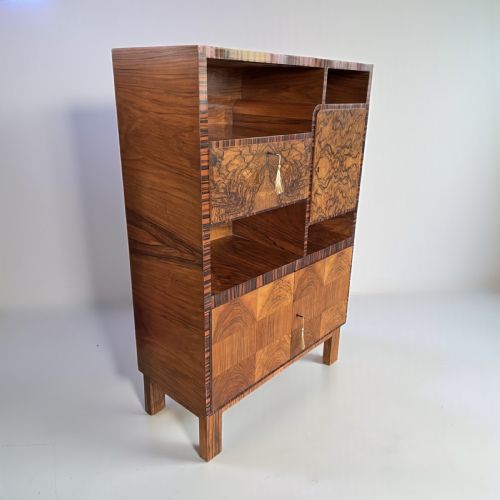
Listings span from 1840 William IV pieces through Victorian incarnations to 1930 Art Deco cabinets, utilising timber, brass, glass, and mirror glass.
The Burr Walnut Shelving Unit Glossary
- Burr walnut
- A figured veneer harvested from the wart-like growths on walnut trees, prized for its complex, swirling grain patterns. It provides a decorative surface on Victorian and revival furniture.
- Breakfront
- A piece of furniture whose central section projects forward from the flanking sections. This configuration adds architectural depth to bookcases and cabinets.
- Marquetry
- The art of applying pieces of veneer to a structure to form decorative patterns and pictures. It appears on finer Victorian surfaces alongside figured walnut.
- Serpentine
- A curved line of furniture fronting that undulates outward in the centre and inward at the sides. This contour demands advanced woodworking skill.
Burr Walnut Shelving Unit: Frequently Asked Questions
What is a burr walnut shelving unit?
It is a piece of furniture featuring open tiers or shelves, surfaced in highly figured burr walnut veneer. These items include Victorian whatnots, etageres, and open bookcases.
They combine the practical utility of book storage with the decorative impact of ornate timber grain. The form ranges from corner stands to low breakfront bookcases.
How do I date a burr walnut bookcase?
Dating relies on observing structural characteristics, timber preparation, and stylistic cues associated with periods from the mid-nineteenth century onward. Victorian examples often feature rich figuring and inlaid marquetry.
Later pieces from the early twentieth century reflect revival styles such as Queen Anne or Georgian influences. Examining the construction of the shelves and the backing provides further chronological context.
Where should I place a whatnot in my home?
A whatnot suits spaces where vertical display and slender proportions are an advantage, such as a corner or an alcove. Their open shelves allow them to hold books or decorative objects without dominating a room visually.
Lower open bookcases function well against primary walls, while corner stands utilise neglected angles. Their figured walnut surfaces benefit from moderate placement away from direct sunlight.
What is the difference between a whatnot and a bookcase?
A whatnot is primarily an open, multi-tiered stand intended for displaying ornaments and miscellaneous items across several levels. A bookcase is specifically designed for holding books, often with adjustable shelving.
While some pieces blur these lines through hybrid forms, traditional whatnots emphasise tiered display spaces supported by slender uprights.