

Antique Wall Console Table
An antique wall console table brings architectural grace to a hallway or drawing room, anchoring the space with period craftsmanship and stone or timber tops.
Antique Wall Console Table
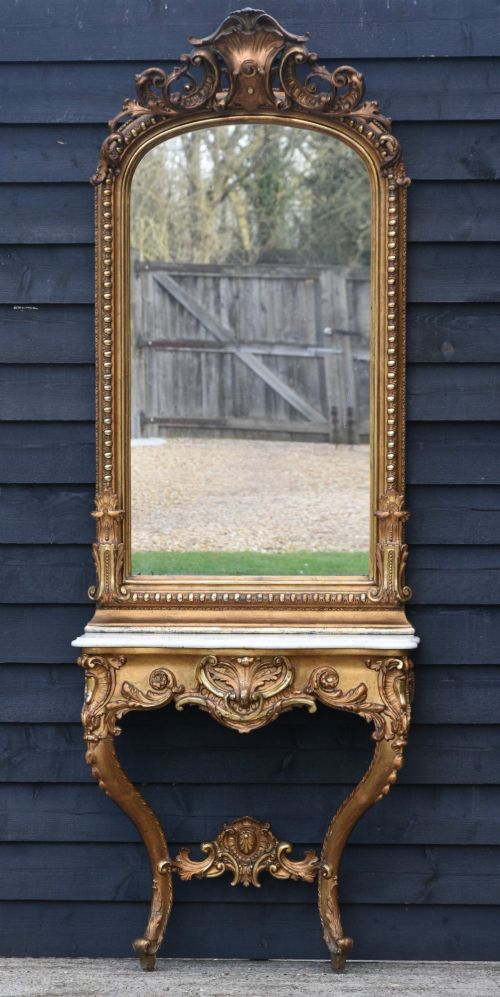
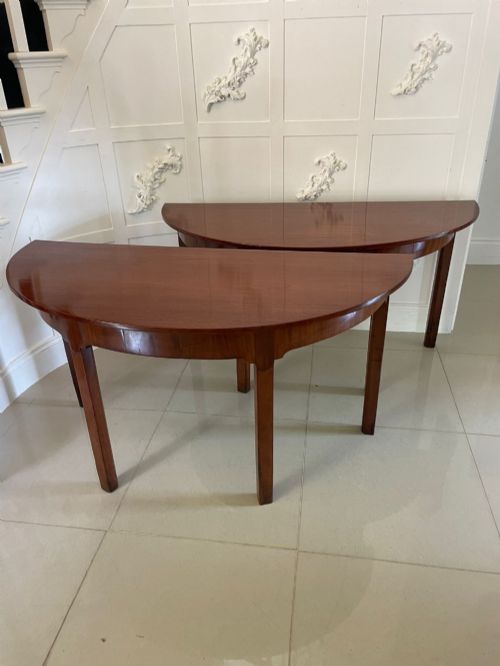
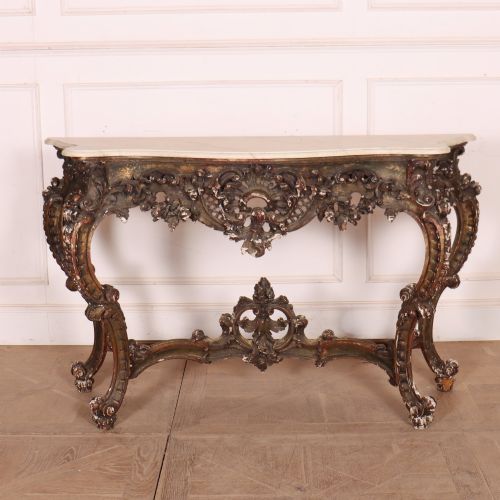
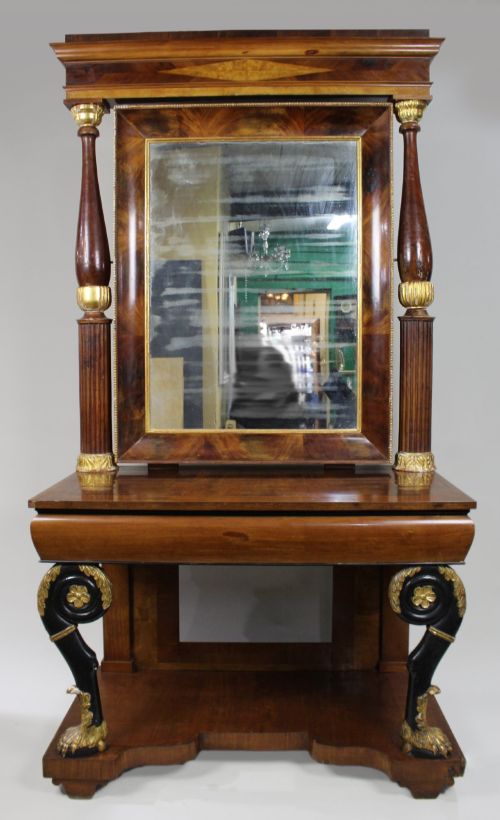
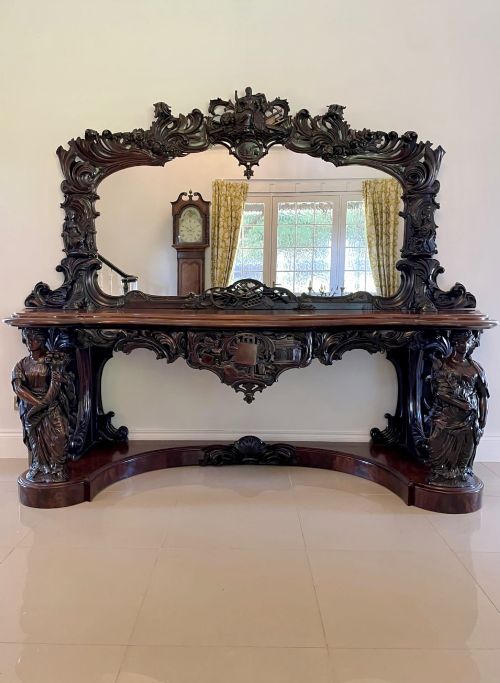
When you search for an antique wall console table, you are looking at wall-mounted or semi-circular pier tables designed to stand flush against a wall, frequently paired with matching mirrors. These pieces span the eighteenth, nineteenth and early twentieth centuries, drawing on styles from George III and Regency to French Rococo and Victorian revival.
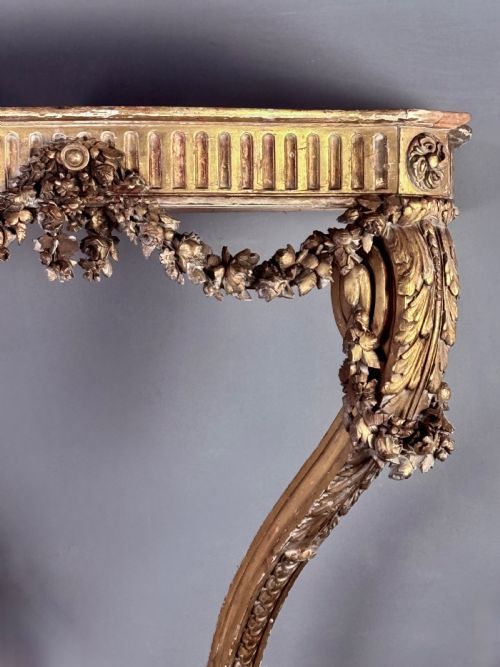
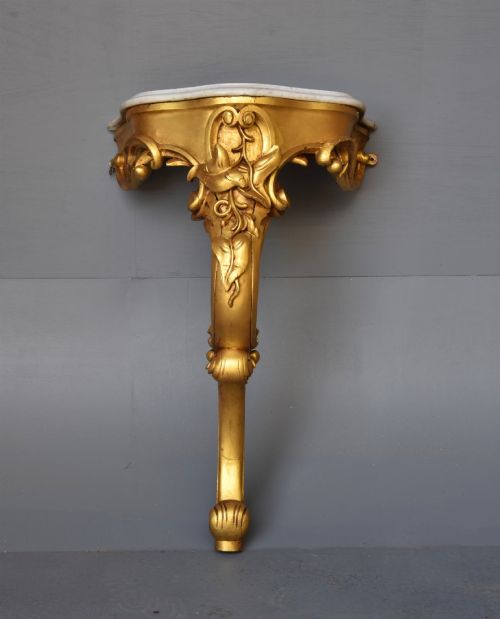
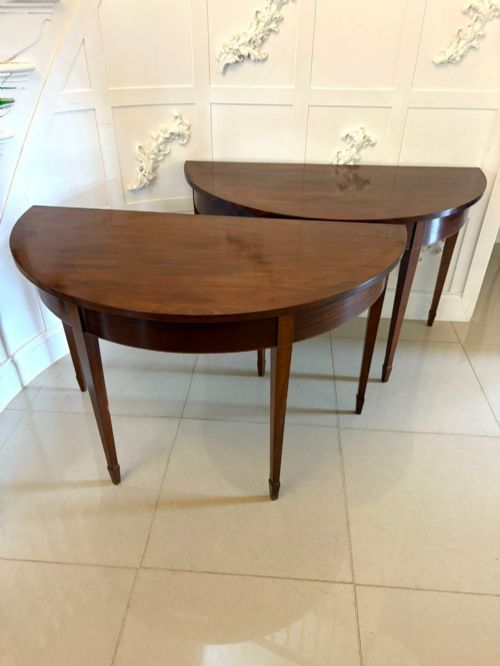
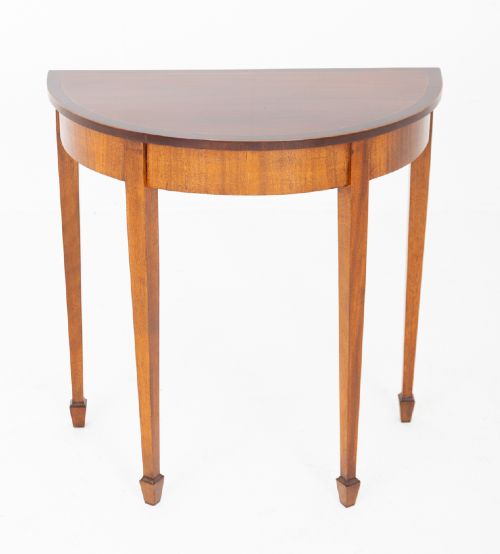
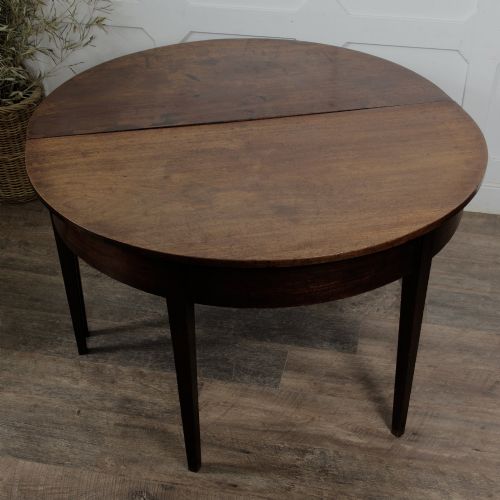
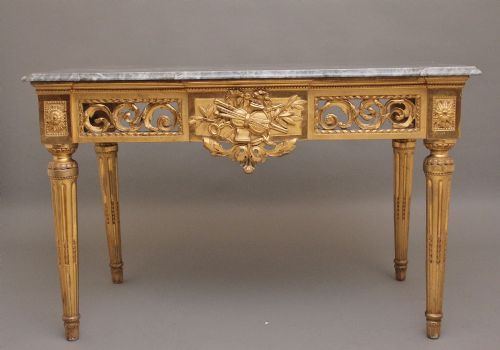
The versions you will most commonly encounter on this page are mahogany demi-lune shapes and giltwood frames topped with marble. Originating in workshops across England, France and Italy, they served as decorative display surfaces in formal rooms rather than heavy working tables.
How they were made
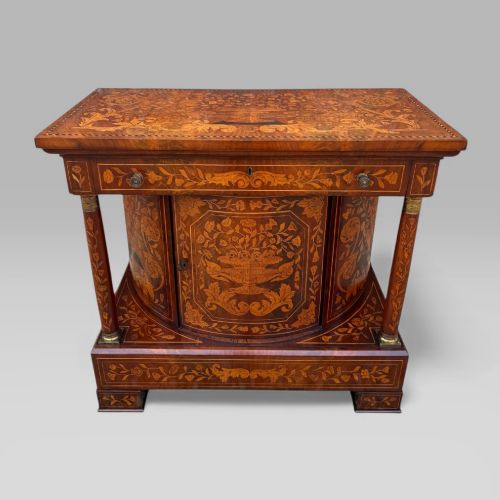
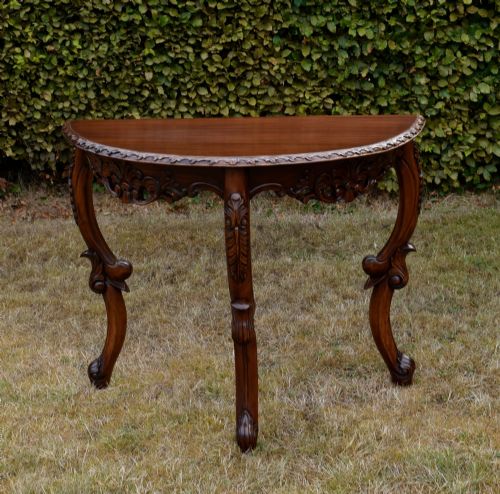
Cabinet makers and gilders utilised dense timbers like figured mahogany, walnut and satinwood, often embellishing the wood with marquetry, parcel gilt details or painted finishes. Carved frames in giltwood and gesso relied on skilled hand-workmanship to shape elaborate scrolls, cabriole legs and neoclassical motifs.
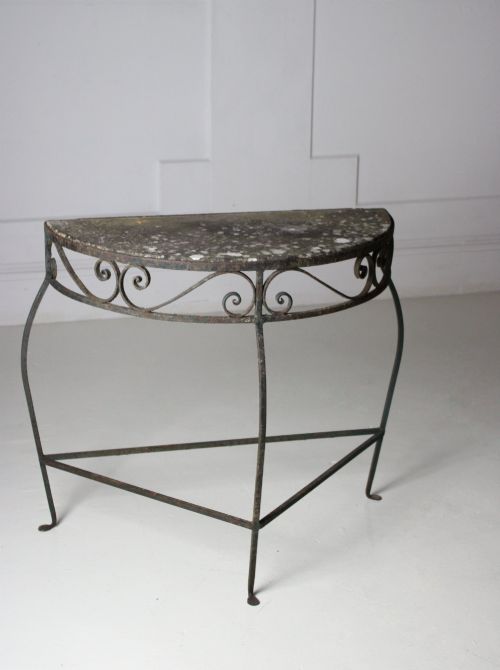
Heavy slabs of marble, including breche d'alep, were cut and polished to fit snugly onto the timber or iron bases. Wrought iron and brass also appear in specific examples, providing structural support for both wall-mounted brackets and freestanding demi-lune formats.
Some console tables come with a mirror that has spent two centuries quietly watching the room change around it.
What varies in quality
The division between standard output and exhibition quality lies in the depth of the carving and the choice of materials. Finer pieces display crisp, hand-carved gesso work on giltwood frames and select cuts of figured mahogany or inlaid marquetry rather than simpler painted deal.
The integration between the top and the base also signals distinction. Heavy, well-figured marble slabs fitted precisely to shaped serpentine or demi-lune frames reflect a higher standard of original commission than later assembled pairings.
Felix Alfred Ternisien
The Antique Wall Console Table Glossary
- Demi-lune
- Half-moon shape. This semicircles format allows the table to sit flat against a wall while projecting minimally into a room or hallway.
- Giltwood
- Wood coated with gold leaf or metal leaf. This decorative surface reflects candlelight and daylight in formal period interiors.
- Gesso
- A plaster mix applied to wood bases. It provides a smooth surface for subsequent gilding and intricate carving.
- Marquetry
- Veneers arranged in decorative patterns. Craftsmen used contrasting woods to create pictorial or geometric designs on tabletops.
- Pier table
- A table designed for the wall space between windows. It is frequently accompanied by a matching pier mirror mounted directly above it.
Antique Wall Console Table: Frequently Asked Questions
What is an antique wall console table used for?
These tables were originally placed in grand reception rooms, halls and drawing rooms to display decorative items, clocks or lamps. Because many required wall mounting or a pier arrangement, they functioned primarily as permanent decorative fixtures rather than mobile furniture.
Today, they serve a similar purpose in modern homes, providing a narrow surface for hallways where floor space is limited while adding distinct period character.
How do I distinguish George III from Victorian pieces?
George III pieces often feature restrained neoclassical lines, fine figured mahogany, and precise satinwood marquetry dating around eighteen hundred. Cabinet work from this era emphasises structural elegance and proportion.
Victorian and later nineteenth-century examples tend toward heavier proportions, bolder carving, and revival styles such as French Rococo or Gothic influences. They frequently incorporate extensive gilding and marble tops.
Are these tables secured to the wall?
Many traditional console tables were designed specifically to be fixed directly to the wall for stability, sometimes operating in tandem with a wall bracket or pier mirror. Others rely on two front legs while the rear depends on wall attachment.
When living with these pieces, checking the original fixing points ensures the table sits securely against the plaster without tipping.
What woods were used in these tables?
Makers predominantly employed mahogany, walnut and satinwood for timber frames and veneered surfaces. Figured mahogany was particularly prized for its grain pattern on demi-lune tops.
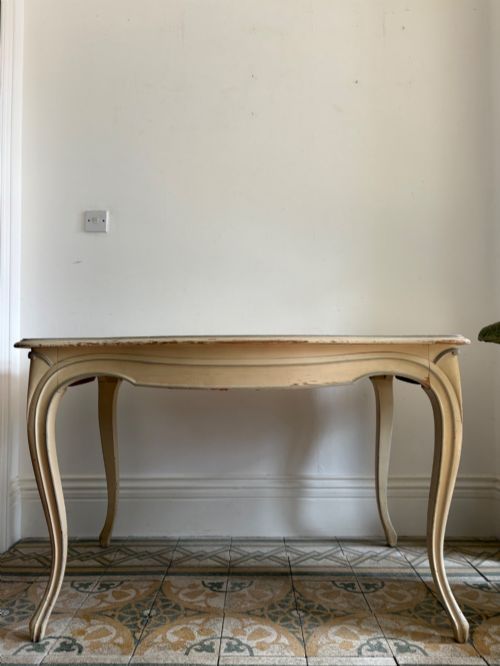
Painted and gilt finishes over softer woods also appear frequently, especially in continental European pieces originating from France and Italy.