


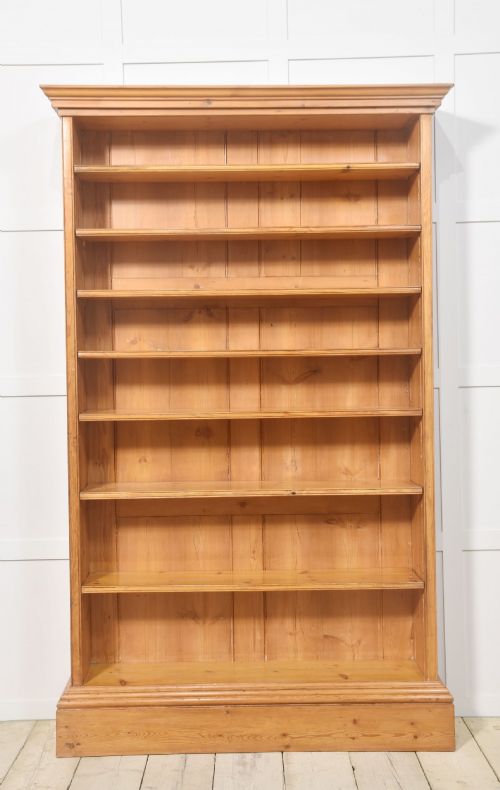
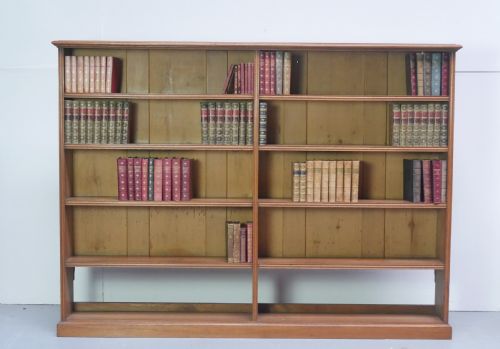
Antique Wall Bookcase
An antique wall bookcase brings practical book storage and display to tight spaces, combining period timber with clever space-saving engineering.
What these pieces are
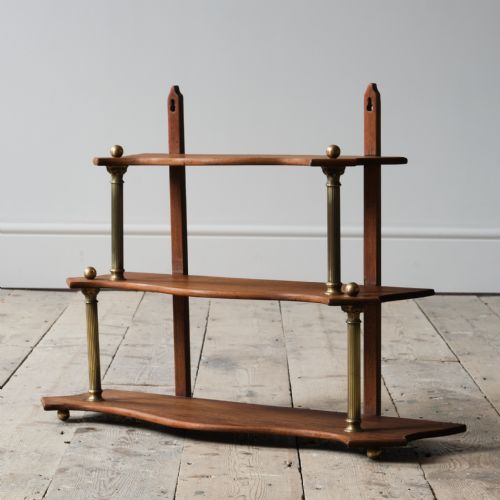
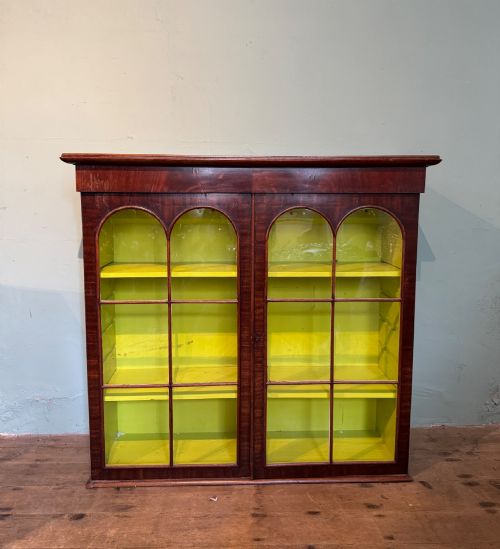
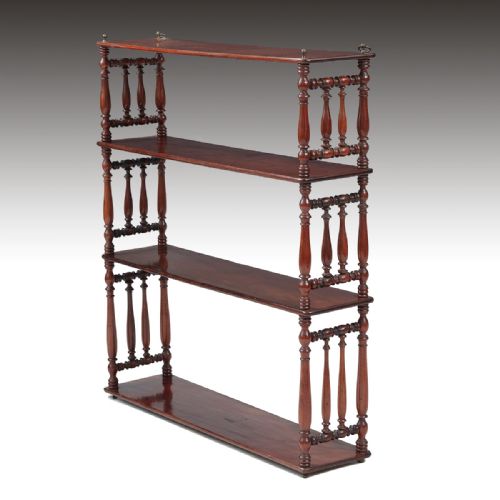
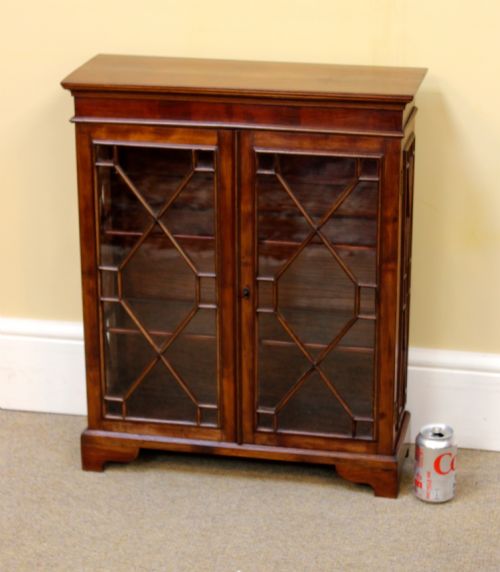
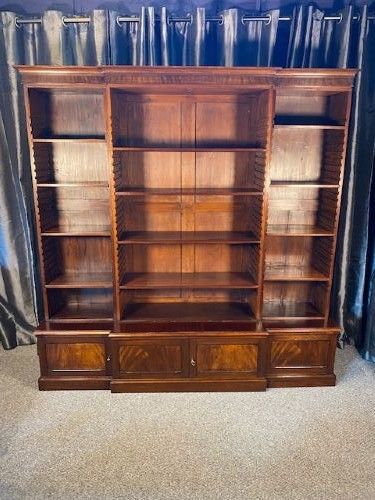
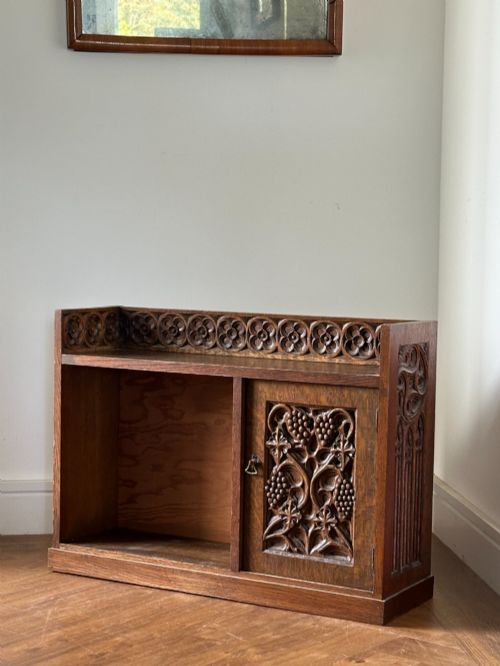
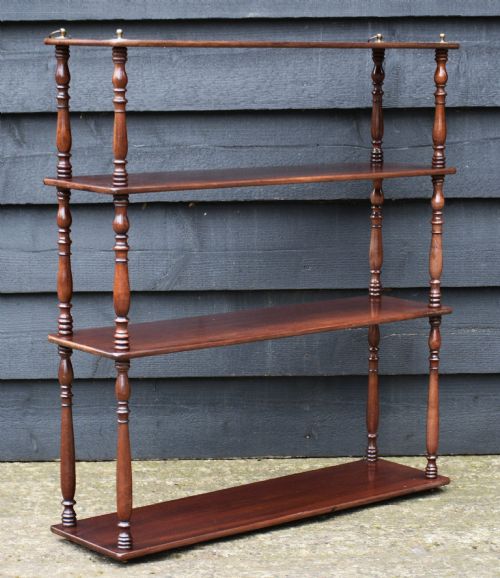
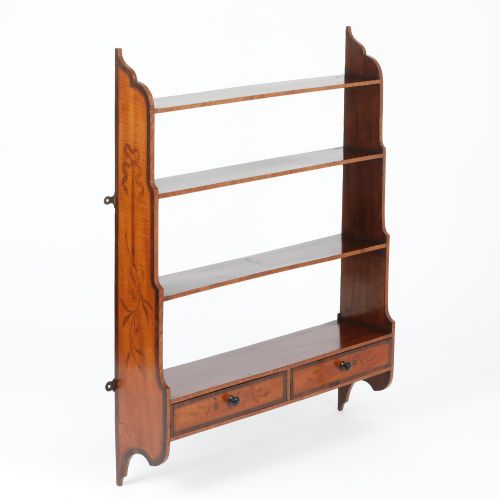
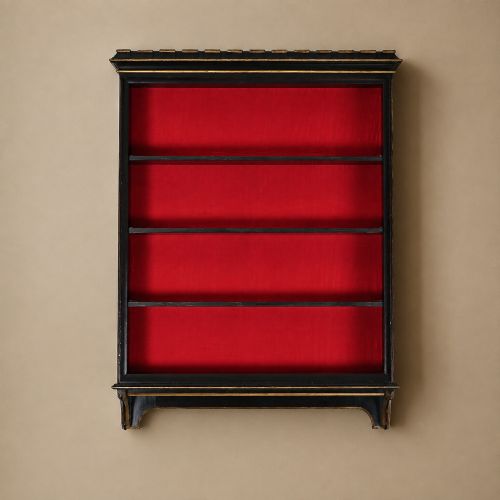
An antique wall bookcase offers compact shelving for books and display, taking various forms from open tiers to glazed cabinets. The pieces catalogued here span the eighteenth century, Regency period, and Victorian era, including substantial Victorian Gothic Revival designs and simpler provincial examples.
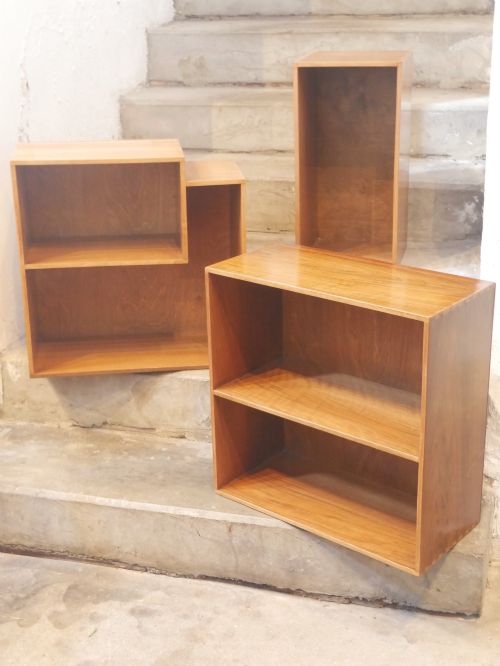
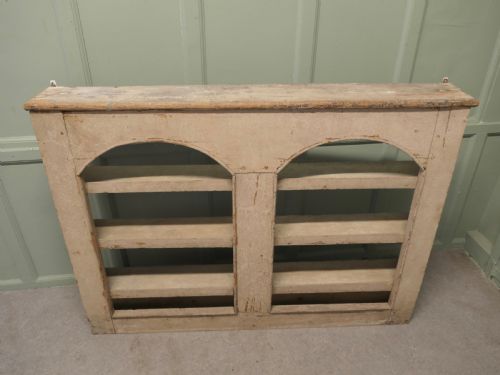
Most items seen on this page are wall-hanging shelves or small cabinets constructed to mount directly onto plaster or wood panelling. They function equally well as standalone library adjuncts or kitchen herb storage, reflecting the adaptable domestic needs of past centuries.
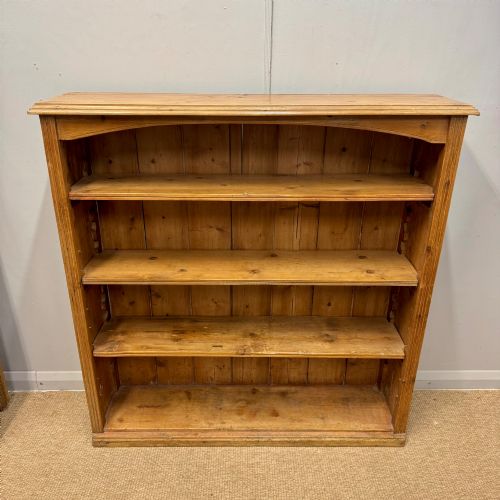
Makers designed these wall bookcases using rich native and imported timbers including mahogany, walnut, oak, elm, and pine. Collectors encounter everything from plain utilitarian shelves to elaborate fret-cut display units with multiple tiers.
How they were made
Cabinetmakers built these wall bookcases using solid hardwoods and occasional pine carcasses, selecting mahogany, walnut, oak, and elm for their durability and grain. Timber selection dictated whether a piece received a clear polished finish or a painted surface.
Construction techniques include traditional joinery such as dovetailed boards and pegged joints, alongside decorative fretwork and turned wooden supports. Brass brackets and hanging loops provided the necessary structural strength to support heavy volumes safely against a wall.
Retail Price Guide 2026
Typical UK retail prices for wall bookcase, calculated from the Sellingantiques database of over a million retail prices indexed since 2003. This retail price guide relies exclusively on Sellingantiques data; no external sources or auction records are used, so the figures do not describe the wider market.
Victorian kitchen herb cabinets doubled as makeshift spice libraries, keeping culinary remedies within easy reach of the cook.
What varies in quality
The distinction between ordinary and superior pieces rests on timber selection and the crispness of decorative carving. Finer examples display carefully matched wood grains, intricate fret-cut sides, and robust original hanging hardware.
Proportion and structural integrity define the higher tiers of these bookcases. Pieces retaining their original painted or polished surfaces demonstrate better preservation and command greater appreciation from collectors.
The Antique Wall Bookcase Glossary
- Waterfall bookcase
- A set of graduated shelves where each tier steps back from the one below, creating a cascade effect popular in the Regency and Victorian periods.
- Whatnot
- A piece of freestanding or wall-mounted furniture consisting of several open shelves placed one above the other for displaying books and ornaments.
- Fretwork
- Ornamental perforated wood carving produced by piercing timber with a fine saw, commonly seen on the side panels of Victorian wall shelves.
- Victorian Gothic Revival
- An architectural and decorative style drawing on medieval forms, featuring pointed arches and heavy timber detailing during the nineteenth century.
- Glazed cabinet
- A wall-mounted storage unit featuring glass-fronted doors designed to protect valuable books and papers from dust while remaining visible.
Frequently Asked Questions
How do I hang an antique wall bookcase safely?
These pieces require secure fixings into structural wall studs or solid masonry rather than plain plaster alone. Original brass brackets or hanging loops provide the primary support points for the weight of the timber and books.
Professional installation ensures the historic joints do not warp or pull apart under load. Distributing heavier volumes on the lower tiers maintains proper balance.
Were these bookcases always meant for walls?
Many examples were constructed specifically for wall mounting to save floor space in smaller period rooms. Some designs feature hybrid bases that allow them to function as either wall shelves or floor-standing units.
Examining the backboards and hanging hardware reveals whether a piece was engineered for vertical suspension from the outset.
What woods were commonly used for these shelves?
Cabinetmakers favoured dense hardwoods like mahogany, walnut, and oak for formal domestic libraries and parlours. Softer woods such as pine and elm appeared more frequently in provincial settings, kitchens, or pieces intended for painted finishes.
Grain patterns and weight often indicate the timber species and help distinguish between regional workshops and urban cabinetmakers.
How do I date a Victorian wall bookcase?
Stylistic clues such as Gothic Revival fretwork or heavily carved mahogany details point towards the middle and later decades of the nineteenth century. Construction methods, including machine-sawn timber versus hand-cut joints, help narrow down the decade.
Comparing the hardware, screws, and backboards with known examples from the Victorian era confirms the likely period of manufacture.