


Antique Twin Bedsteads
Antique twin bedsteads offer matching sleep spaces, uniting historical character with practical symmetry for period interiors.
Antique Twin Bedsteads
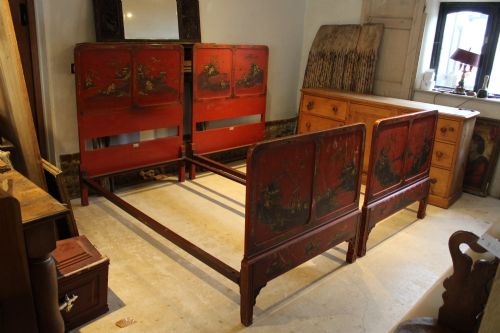
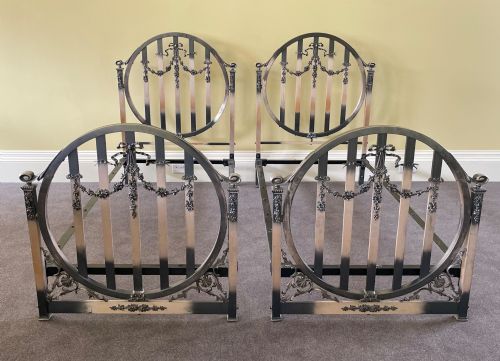
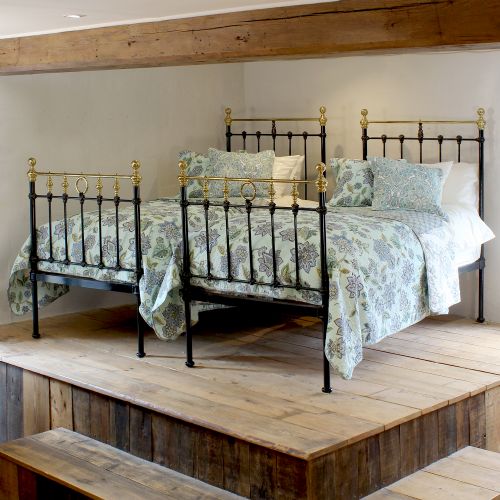
Antique twin bedsteads encompass pairs of single beds and matching bed frames produced across the Victorian, Edwardian, and Art Deco eras. Buyers searching for antique twin bedsteads frequently encounter matched pairs designed to sit side by side or join together in a bedroom.
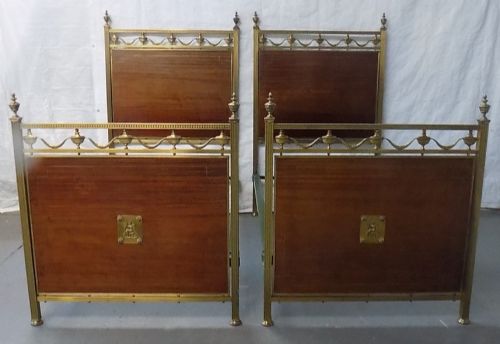
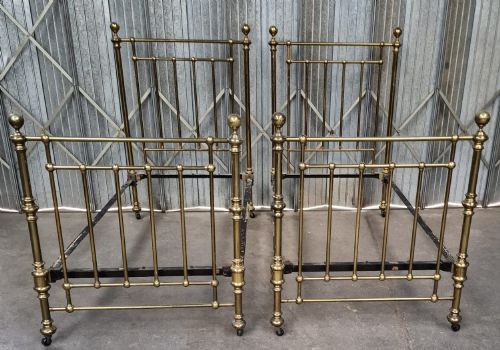
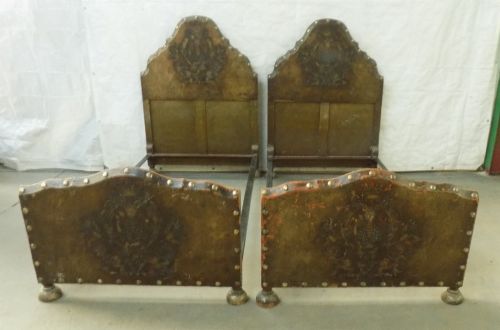
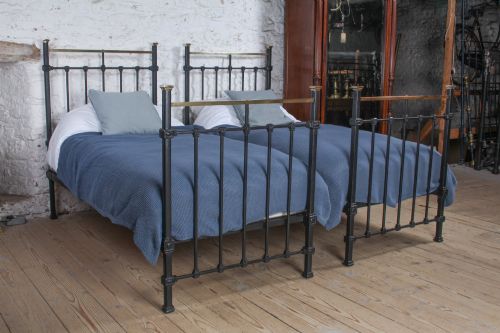
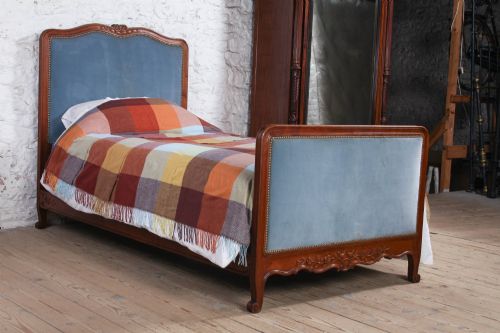
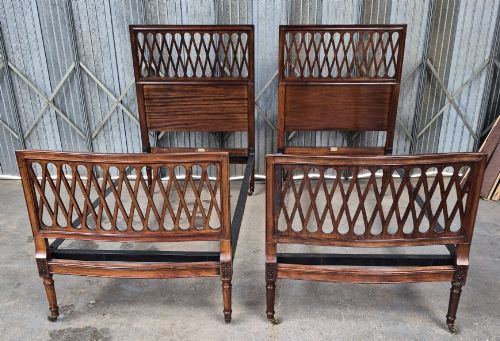
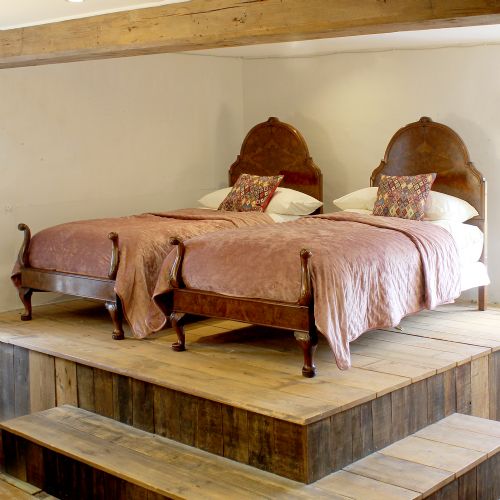
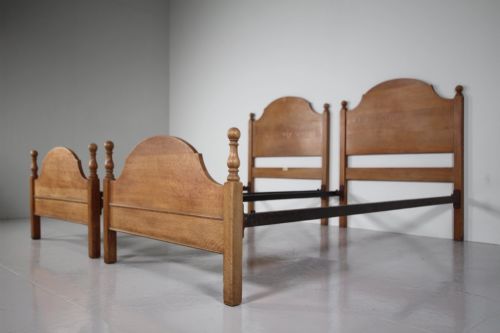
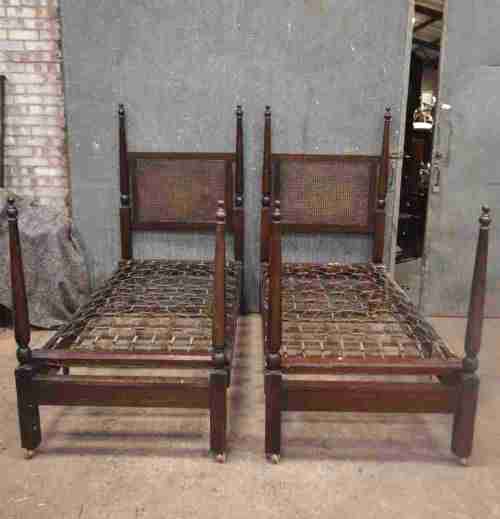
The selection ranges from robust brass and iron frames to polished hardwood structures in oak, walnut, and mahogany. Many pieces reflect specific historical revivals, including French Empire, Queen Anne style, and Louis XVI revival designs.
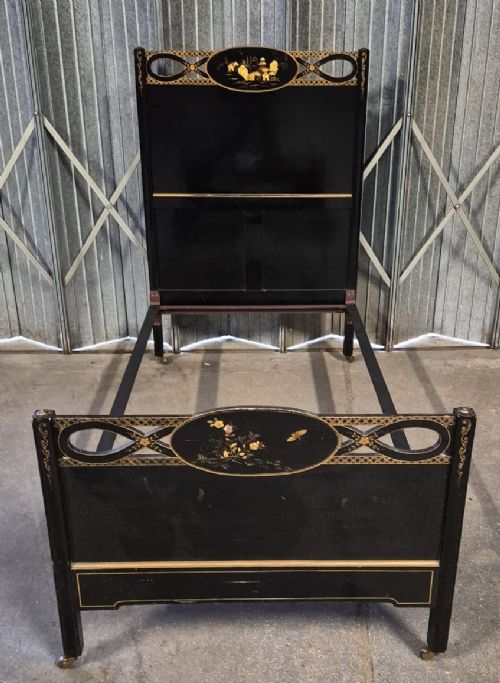
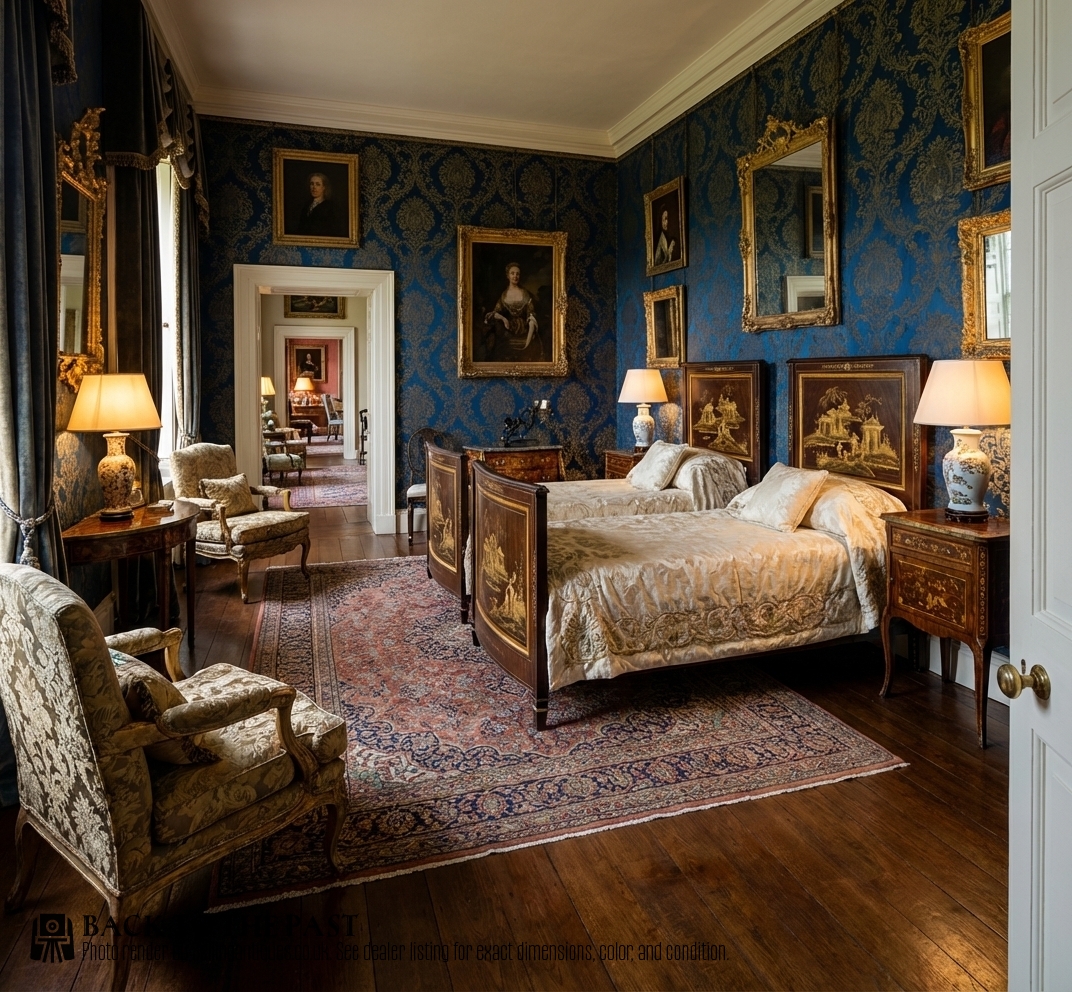
Makers and workshops of the period utilised timber and metal to create coordinated twin sleeping arrangements. These pieces often incorporate decorative elements such as painted portrait panels, inlaid satinwood, and carved woodwork.
How they were made
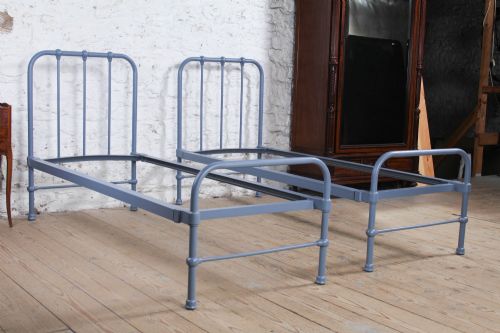
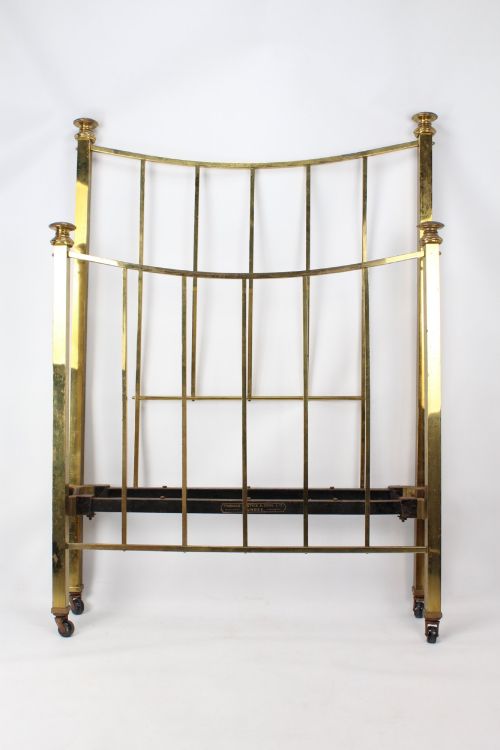
Makers constructed these frames using solid hardwoods like oak, walnut, and mahogany, alongside painted or polished fruitwood. Metal frames combined cast iron and brass, frequently finished with nickel plating or black paint and brass decoration.
Joinery techniques involved traditional carving, turning, and panelling, complemented by inlaid satinwood details and hand-painted portrait panels. Metal components relied on casting and jointed fittings that allowed frames to be joined or separated.
Antique Twin Bedsteads Retail Price Guide 2026
Typical asking prices for twin bedsteads among the pieces listed under this phrase on Sellingantiques today, from the lower quarter to the upper quarter. They describe what is for sale here now, not the wider market.
What varies in quality
Quality separates ordinary utilitarian frames from pieces bearing specific maker labels or workshop attribution. The refinement of carved woodwork, the crispness of brass detailing, and the execution of hand-painted panels define the higher tier.
Proportion and matching symmetry govern the value of a pair, ensuring both beds share identical timber grain, scale, and decorative motifs. Structural integrity and original labels from notable firms distinguish exceptional examples.
Heals·Oliver Morel·Hoskins and Sewell·R W Winfield·Shapland and Petter·Betty Joel
The Antique Twin Bedsteads Glossary
- Bedstead
- The complete framework of a bed, including headboard, footboard, and side rails. This term specifically excludes the mattress and base.
- Bergere
- A closed-upholstered armchair or bed end featuring cane panelling set into a wooden frame. It appears frequently in walnut and oak pieces.
- Corbeille
- A French bed style featuring a curved, basket-like headboard and footboard that wraps around the mattress. These are typically painted or carved.
- Inlaid
- A decorative technique where contrasting woods or materials are inserted into recesses within a solid surface. Satinwood inlay is common on Edwardian frames.
- Nickel plated
- A metal frame coated with a thin layer of nickel to prevent corrosion and provide a bright, silver finish. This technique appeared on turn-of-the-century designs.
Antique Twin Bedsteads: Frequently Asked Questions
Can antique twin bedsteads be joined together?
Many pairs of antique twin bedsteads were manufactured with the capability to be linked together to form a larger sleeping platform. Listings often indicate whether specific iron or wooden frames can be joined.
Buyers should examine the side rails and foot configurations to understand how the two individual pieces connect.
What sizes are antique twin bedsteads?
These frames generally correspond to single or large single sizes from their respective periods, which differ slightly from modern standard mattress dimensions. It is important to check the exact internal frame measurements before sourcing a mattress.
Most listings specify single size or large single size within the title.
How do I identify Edwardian twin beds?
Edwardian twin beds often feature lighter timbers such as satinwood, walnut, and inlaid details reflecting the tastes of the early twentieth century. They frequently show refined proportions compared to heavier Victorian predecessors.
Maker labels from this era can sometimes be found attached to the woodwork.
Are metal twin beds hard to maintain?
Brass and iron frames require basic cleaning to maintain their finish, avoiding harsh abrasives that could damage lacquered or painted surfaces. Cast iron and brass components are generally robust and durable.
Regular dusting and careful handling of painted or nickel-plated sections preserve the condition of the metal.