




Antique Carved Single Beds
Antique carved single beds bring character and individual craftsmanship to a bedroom, offering distinct period styles from walnut to oak.
Antique Carved Single Beds
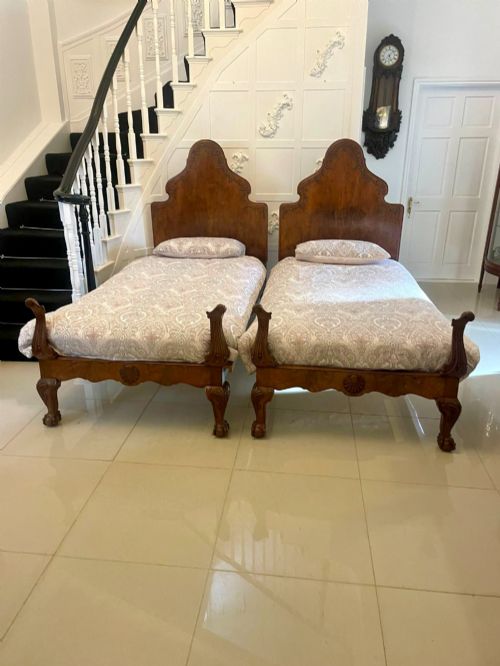
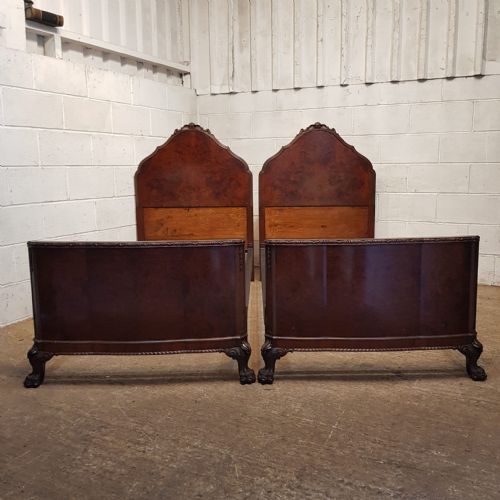
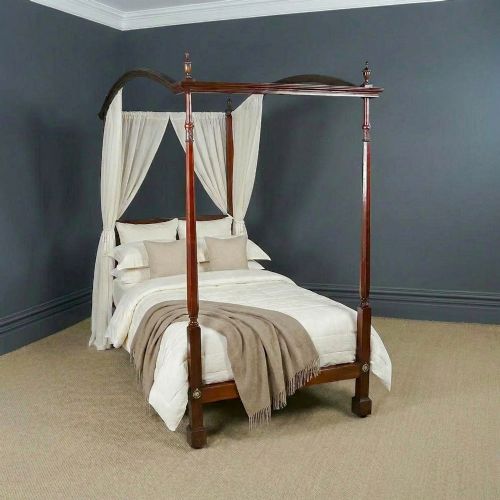
The selection frequently includes matched pairs alongside individual frames, spanning diverse regional tastes from English country house oak to continental fruitwood and mahogany. Formats range from standard head and footboard bedsteads to daybeds and four-poster configurations, providing numerous options for compact bedroom spaces.
Markers of quality
Quality rests upon the depth and crispness of the timber carving, the selection of figured veneers such as burr walnut, and the balance of proportions. Superior examples demonstrate meticulous attention to detail in secondary woods and harmonious integration of decorative hardware or painted panels.
Provenance and maker attribution elevate certain pieces, particularly those bearing documented workshop labels or originating from notable firms. The preservation of original surface finishes and authentic upholstery treatments further distinguishes exceptional specimens from standard production.
Several beds arrive equipped with hand-painted portrait panels, proving that nineteenth-century slumber required a personal audience.
Heals of London·Heal & Son·Heal's·Oliver Morel·Staples & Co.
The Antique Carved Single Beds Glossary
- Bedstead
- The complete structural framework of a bed, supporting the mattress and base without necessarily including modern bedding.
- Daybed
- A form of couch or resting furniture designed for daytime lounging that doubles as a single sleeping berth.
- Parquetry
- Geometric mosaic woodwork used for decorative surface patterning, frequently seen on tabular or headboard panels.
- Corbeille
- A French style of bed featuring a curved, enveloping headboard and footboard reminiscent of a basket shape.
- Linenfold
- A style of carved wooden panelling resembling folded vertical linen fabric, common on Tudor and Gothic revival furniture.
Antique Carved Single Beds: Frequently Asked Questions
Will an antique single bed fit a modern mattress?
Many older single beds vary slightly from contemporary standard sizes, particularly nineteenth-century pieces or wider variations such as three-foot-six configurations. It is essential to measure the internal frame dimensions carefully before purchasing a mattress.
Custom mattress makers can easily accommodate non-standard antique proportions, ensuring a snug and secure fit within the original wooden side rails.
How do I support a modern mattress on an antique bed frame?
Traditional timber frames often require modern slatted wooden bases or bespoke metal support systems to distribute weight evenly without straining antique side rails. Many listings include the necessary bed base or specify compatibility.
Consulting a specialist restorer helps integrate modern support discreetly, preserving the visual integrity of the carved footboards and headboards.
How do I distinguish Edwardian beds from Victorian examples?
Victorian frames often display heavier proportions, darker finishes, and robust Gothic or Arts and Crafts influences with deep, substantial mouldings. Oak and walnut are predominant in this heavier aesthetic.
Edwardian pieces generally exhibit lighter forms, frequent use of satinwood inlay, painted surfaces, and refined Edwardian mahogany or inlaid detailing inspired by earlier eighteenth-century revivals.
Are antique carved single beds available as pairs?
Yes, many listings feature matched pairs of single beds originating from country houses, hotels, or large Edwardian residences. These pairs frequently share identical carving, timber selection, and decorative schemes.
Finding matching pairs of single beds from the nineteenth or early twentieth century offers a cohesive look for guest rooms or twin bedroom layouts.