
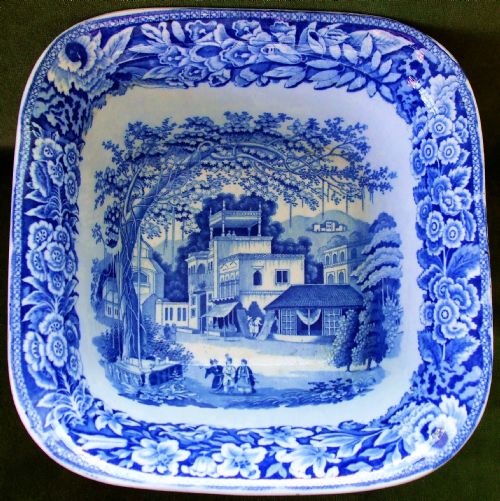
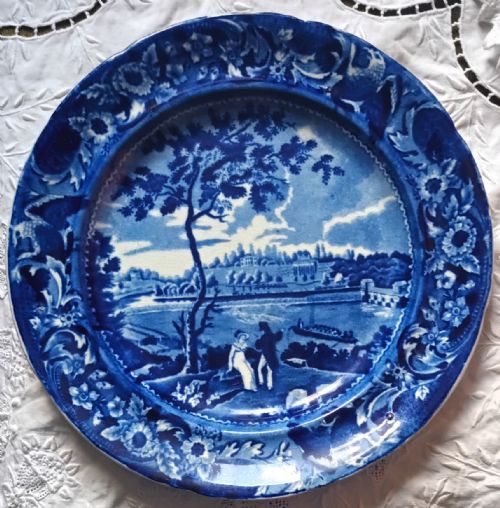
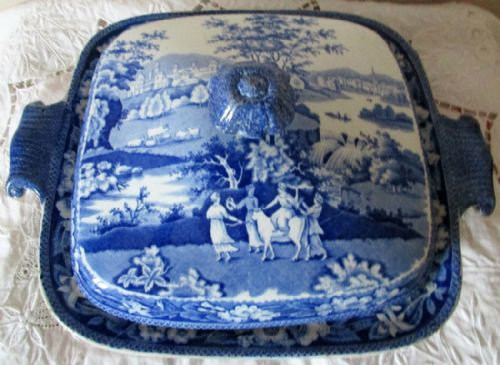

Antique Transfer Printed Pottery
Antique transfer printed pottery brings the detailed topography and narrative scenes of the nineteenth century straight onto earthenware jugs, platters and tureens.
Antique Transfer Printed Pottery
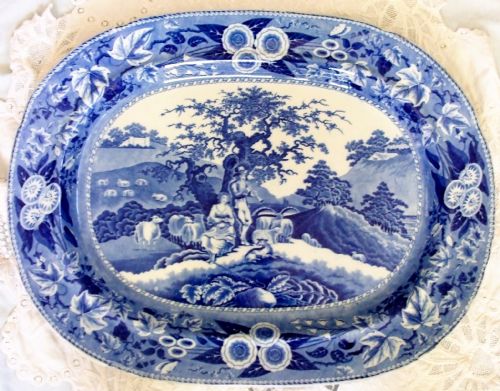
When you search for antique transfer printed pottery, you encounter domestic items manufactured across the nineteenth century, including Georgian and Victorian periods. The pieces appearing most frequently on this page are blue and white transfer printed plates, serving dishes, and large jugs from Staffordshire potteries.
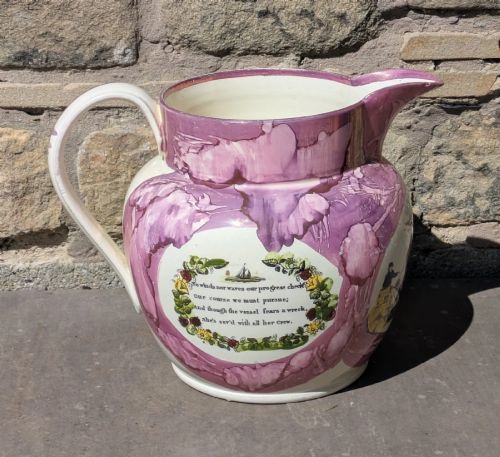
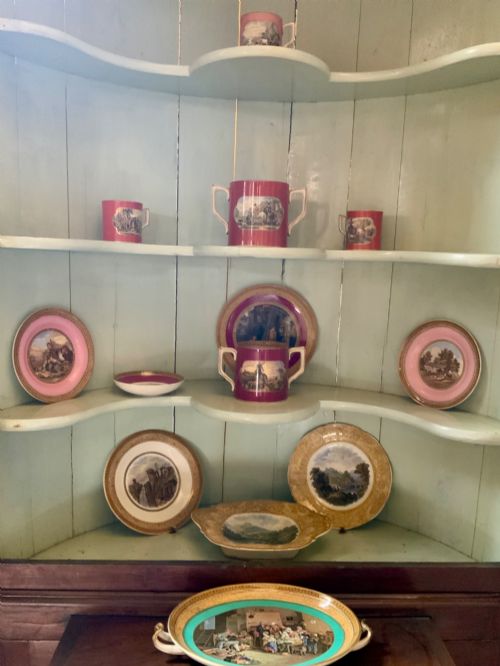
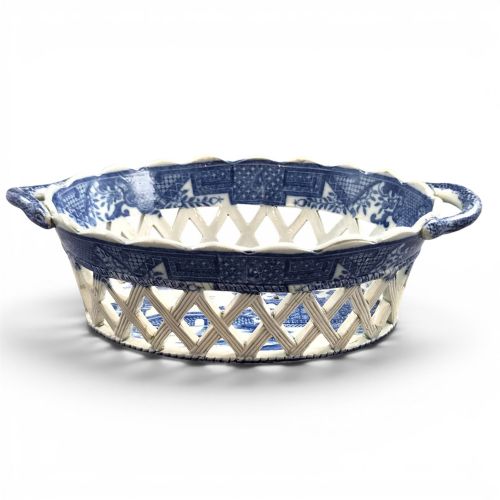
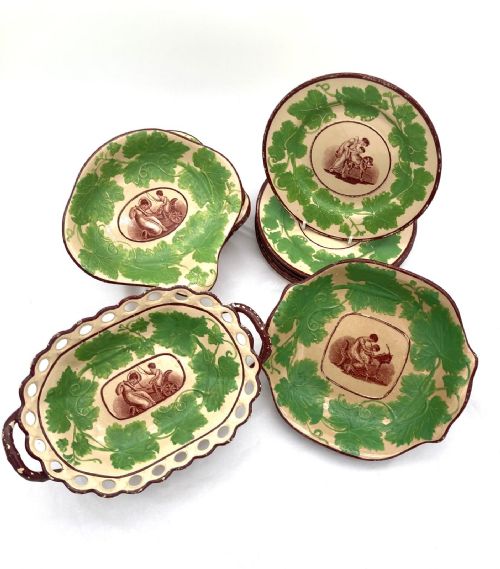
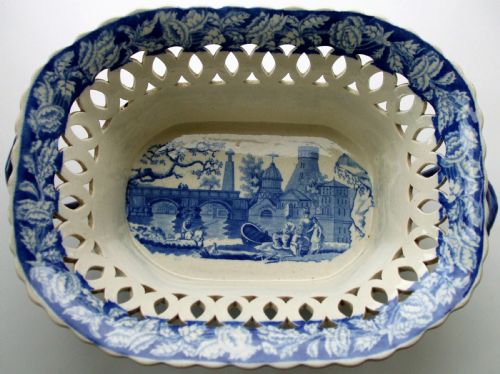
Forms range from everyday tableware such as chestnut baskets and dessert services to commemorative mugs and advertising flasks. Makers applied copperplate printing techniques to transfer intricate landscapes, classical ruins, and maritime themes onto ceramics.
Originating largely from English manufactories, these objects served functional dining and decorative purposes in households. The selection spans pearlware, creamware, and stoneware vessels produced across the Georgian and Victorian eras.
Materials and production methods
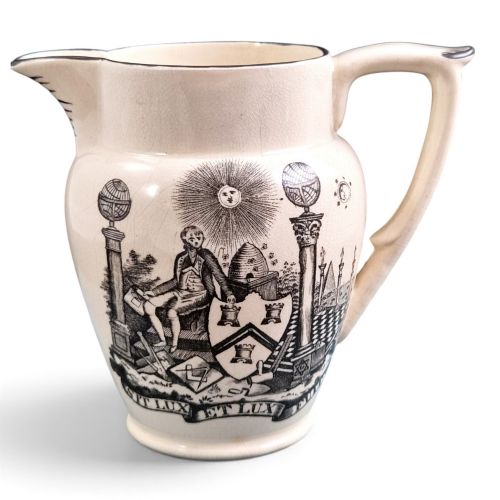
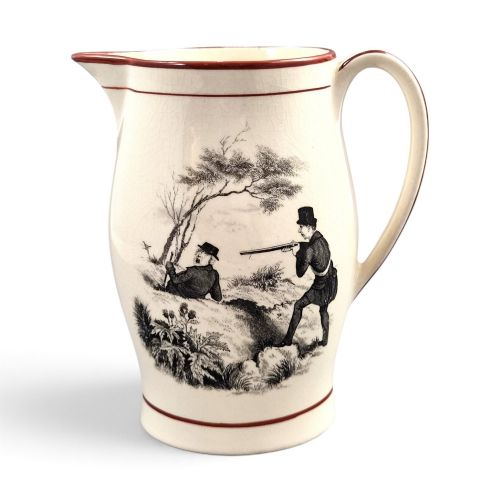
Potters shaped earthenware, creamware, and pearlware bodies before applying cobalt pigment or black transfer prints from engraved copper plates. Clear lead glazes were then fired over the pottery to fix the design and provide a glossy protective surface.
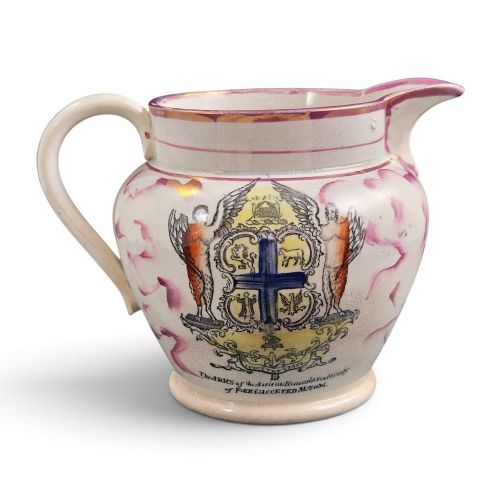
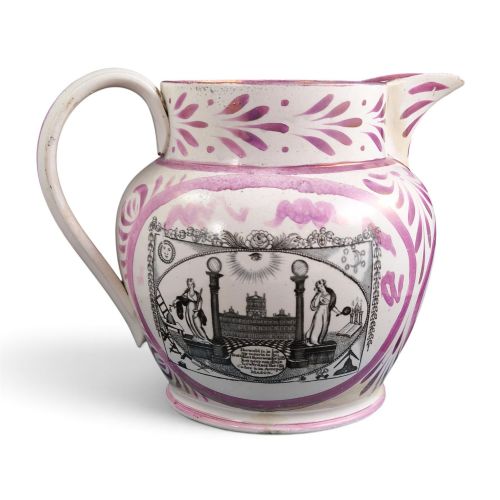
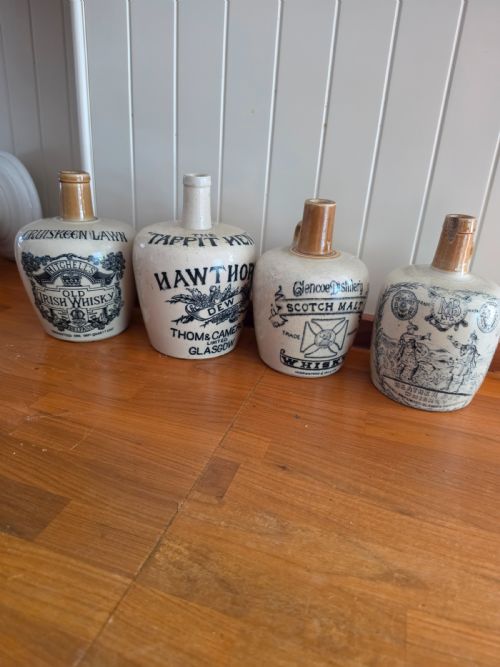
Certain vessels received additional metallic lustre applications, such as pink lustre washes, or hand-painted highlights over the printed outlines. Stoneware items like whisky flasks and advertising jugs utilised denser clay bodies fired at higher temperatures for industrial durability.
Certain drinking mugs concealed ceramic frogs inside the bottom, intended to startle unsuspecting drinkers as the liquid drained.
Elements of quality and execution
The clarity and registration of the printed transfer define the upper tier of these ceramics, where lines remain sharp without smudging or overlapping. Finer examples display crisp detail in complex multi-figure scenes, architectural ruins, or topographical views.
The subtlety of the base ceramic body and the evenness of the glaze separation distinguish superior pieces from utilitarian wares. Master potters balanced delicate reticulated basketwork with precise application of cobalt pigment and supplementary lustre finishes.
J. & R. Clews·J. & R. Riley·Thomas Lakin·Brameld & Co.
The Antique Transfer Printed Pottery Glossary
- Transfer printing
- A method of applying engraved designs to pottery by pressing paper inked with metallic pigments onto the ceramic surface before firing. This technique allowed factories to produce uniform pictorial scenes efficiently.
- Pearlware
- A refined earthenware developed in the late eighteenth century featuring a subtle bluish-white glaze that pooled in crevices. It bridged the gap between creamware and later white ironstone.
- Creamware
- A light-coloured refined earthenware perfected during the eighteenth century with a warm yellowish lead glaze. Josiah Wedgwood refined this body extensively.
- Lustreware
- Pottery finished with a metallic glaze that produced a reflective copper, silver, or pink sheen. Potters achieved this effect by introducing metallic salts during reduction firings.
- Reticulated
- Pierced or openwork ceramic design resembling lattice or basketry. Craftsmen cut these patterns into wet clay before glazing and firing.
Antique Transfer Printed Pottery: Frequently Asked Questions
How do I care for transfer printed pottery?
Wash these ceramics gently by hand using warm water and mild soap, avoiding abrasive scrubbers that might damage the historic glaze.
Keep pieces away from modern dishwashers and sudden temperature changes to protect the nineteenth-century material from crazing or cracking.
Were these items used daily?
Many plates, platters, and tureens served active roles in nineteenth-century dining rooms for family meals and formal dinners.
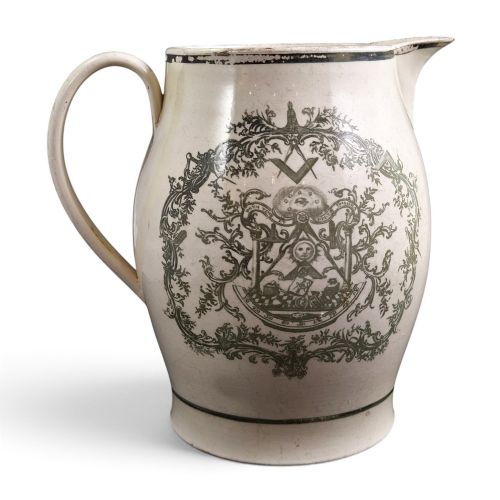
Other vessels, such as commemorative jugs, Masonic pitchers, and advertising flasks, had specific social functions or marked fraternal gatherings.
How can I distinguish pearlware from creamware?
Examine the pooled areas of the glaze for a faint bluish tint, which indicates the cobalt additive used in pearlware to mimic Chinese porcelain.
Creamware displays a warm, pale butter-yellow tone across the body without the blue undertones found in pearlware glazes.
What themes appear on these ceramics?
Designs frequently feature pastoral landscapes, classical ruins, topographical views, and historical events from British and American life.
Maritime subjects, Masonic symbols, and literary scenes also appear prominently across jugs, bowls, and commemorative plates.