

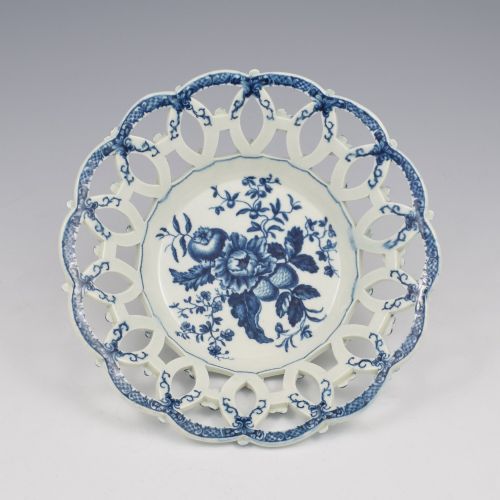


Pierced Ceramic Chestnut Basket
These pierced ceramic chestnut basket examples are perforated vessels created for serving autumn fruit and nuts at formal dining tables.
Pierced Ceramic Chestnut Basket
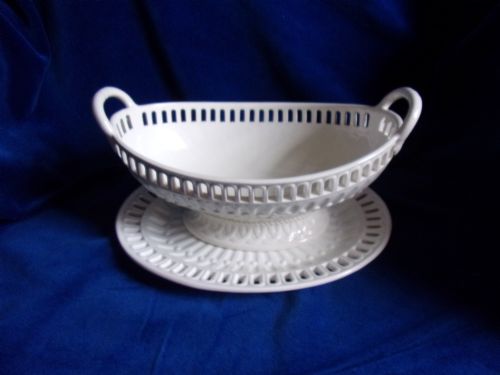
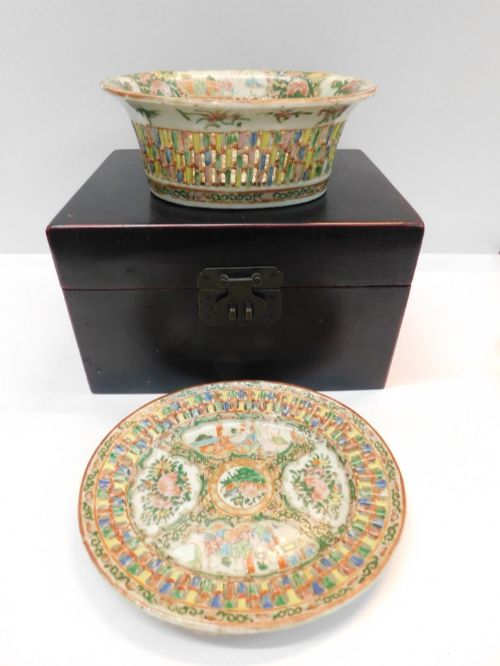
When you search for a pierced ceramic chestnut basket, you encounter distinctive dining vessels designed for holding roasted chestnuts or fruit during the Georgian and nineteenth-century periods. The examples on this page span English factories such as Worcester, Derby, Wedgwood, and Mason's, alongside Chinese Export wares made for the Western market.
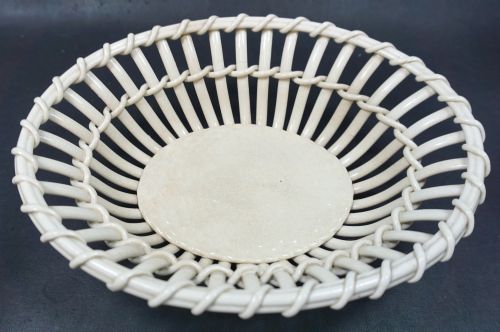
Most pieces take the form of circular or oval bowls accompanied by matching stands or covers, featuring intricate openwork walls. The forms range from soft-paste porcelain and creamware to pearlware and ironstone, reflecting both domestic utilitarian design and luxury export production.
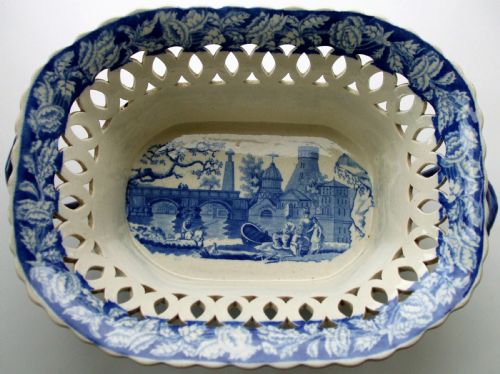
The style vocabulary draws heavily on Rococo moulding, Chinese Famille Rose enamelling, and transfer-printed blue and white scenes including Willow and River Scene patterns. Buyers find both standalone baskets and complete sets with their original undertrays.
How they were made
Potters shaped these vessels using earthenware, creamware, pearlware, and soft-paste porcelain, applying lead or enamel glazes to seal the porous bodies. Many English and Chinese pieces utilise delicate piercing or reticulation techniques to cut open patterns into the wet clay wall before firing.
Decoration relied on hand-painted enamels, gilding, and blue and white transfer printing to transfer intricate topographical and botanical motifs onto the surface. Factory artisans constructed separate stands and covers to fit the pierced bodies precisely.
Pierced Ceramic Chestnut Basket Retail Price Guide 2026
Typical asking prices for pierced ceramic chestnut basket among the pieces listed under this phrase on Sellingantiques today, from the lower quarter to the upper quarter. They describe what is for sale here now, not the wider market.
Listings feature both English earthenware bodies and Chinese Export porcelain wares dating from the eighteenth and nineteenth centuries.
What varies in quality
Quality rests on the crispness of the piercing and the delicacy of the moulded twig handles or applied floral elements. Sharp, clean fretwork distinguishes superior vessels from heavier, blunt-edged productions.
The sophistication of the painted or transfer-printed decoration separates standard utility wares from high-end cabinet pieces. Pieces retaining their matching original stands or covers command greater interest than isolated baskets.
J. & R. Clews·Wedgwood
The Pierced Ceramic Chestnut Basket Glossary
- Creamware
- A refined earthenware body developed in Staffordshire featuring a pale yellow or creamy lead glaze. Wedgwood mastered this versatile material during the eighteenth century.
- Reticulation
- An openwork net or pierced pattern cut into the ceramic wall during manufacture. This technique lightens the vessel and allows air circulation around stored fruit or chestnuts.
- Pearlware
- An improved earthenware introduced in the late eighteenth century with a bluish-tinged glaze that pooled attractively in crevices. It provided a whiter surface for blue and white transfer printing.
- Soft-paste porcelain
- A glassy ceramic composition fired at lower temperatures than true hard-paste porcelain. English factories utilised this body extensively before discovering local china clay deposits.
- Transfer printing
- A mechanical method of applying detailed designs to pottery by pressing a paper sheet inked from an engraved copper plate onto the bisque body. This innovation enabled complex pictorial scenes like the Willow pattern to be produced consistently.
Pierced Ceramic Chestnut Basket: Frequently Asked Questions
What were chestnut baskets used for?
These vessels served elite dining tables for presenting roasted chestnuts or fresh autumn fruit during the Georgian and nineteenth-century periods.
The pierced walls provided ventilation while the matching stands caught any crumbs or moisture during service.
How do I date a ceramic basket?
Dating relies on identifying the ceramic body, such as creamware, pearlware, or soft-paste porcelain, alongside the decorative style and potting technique.
Earthenware pieces with blue and white transfer prints typically point to the early nineteenth century, whereas soft-paste examples with hand-painted motifs often date to the mid-to-late eighteenth century.
Are covers and stands essential?
Many surviving pieces lack their original covers or undertrays because these separate components suffered higher rates of breakage over centuries of use.
While complete sets with matching stands represent the ideal form, standalone baskets remain desirable examples of period ceramic craftsmanship.
How should I display them?
These openwork vessels suit placement on sideboards, open shelving, or dedicated display cabinets where light can pass through the pierced lattice walls.
Due to their delicate construction and historical glazes, they function best as decorative display objects rather than working tableware.