
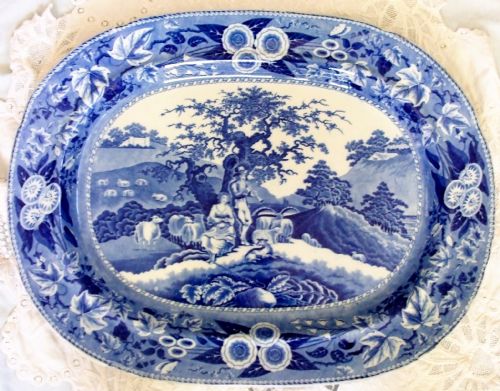


Antique Transfer Printed Platter
An antique transfer printed platter brings rich pictorial scenes into the dining room on durable earthenware, rewarding collectors with vivid blue and white narratives.
Antique Transfer Printed Platter
Every antique transfer printed platter on this page displays patterned ceramics originating in the nineteenth century, spanning Georgian and Victorian periods. Buyers encounter large meat platters, serving dishes, bread stands, and plates adorned with detailed scenes transferred from copper plates.
The designs range from pastoral subjects like the Piping Shepherd and Returning Woodman to topographical views such as London Bridge and the Mausoleum of Sultan Purveiz Allahabad. These earthenware vessels served practical dining functions while showcasing elaborate blue and white imagery across British pottery traditions.
Materials and Technique
Potters built these pieces using earthenware and pearlware bodies, coated with lead glazes that imparted a smooth, protective finish. Artisans applied cobalt pigment to tissue paper from engraved copper plates, pressing the design onto the ceramic surface before firing.
The combination of cobalt pigment and fluid glaze produced deep blue tones that contrast sharply against the white ceramic ground. Kiln conditions during the nineteenth century dictated the precise depth and clarity of each transfer print.
One platter depicts a water dog guarding a gravy well, ensuring even the hounds joined the nineteenth-century dinner table.
Judging Quality
Quality depends on the crispness of the transfer print and the registration of the cobalt pigment across the earthenware body. Sharp, well-defined lines in complex patterns like Classical Ruins or Chinese Garden distinguish superior pieces from blurred impressions.
The depth of the glaze and the complexity of the moulded form also set standards, particularly in meat platters featuring integrated gravy wells or shaped rims. Maker attribution to known potteries like Spode or Thomas Lakin adds historical weight to the physical execution.
Spode·Thomas Lakin·Brameld and Co·Mason·John Rogers and Son
The Antique Transfer Printed Platter Glossary
- Transfer printing
- A decoration technique where an engraved copper plate stamps an inked design onto tissue paper, which is then transferred onto unglazed or biscuit pottery. This method allowed intricate pictorial scenes to be replicated consistently.
- Pearlware
- A refined earthenware body developed in the late eighteenth century, featuring a slight bluish tint in the glaze to mimic Chinese porcelain. It forms the foundation of many early blue and white platters.
- Gravy well
- A recessed trough or depression moulded into the surface of a meat platter to collect juices during carving. This practical addition appears on specialised serving vessels.
- Cobalt pigment
- A metallic oxide used to achieve the deep blue coloration characteristic of these transfer printed wares. It withstands high kiln temperatures without losing intensity.
- Lead glaze
- A liquid silica and lead mixture applied over the decorated ceramic body to create a glossy, impermeable seal. It protected the underlying transfer print from wear during daily use.
Antique Transfer Printed Platter: Frequently Asked Questions
What were transfer printed platters used for?
These large ceramic vessels served joints of meat, bread, and substantial courses at formal dining tables throughout the nineteenth century. Their deep wells and expansive surfaces managed juices and displayed picturesque pastoral or topographical scenes to guests.
Over time, many transitioned from working dining room pieces into decorative wall displays or cabinet collection centerpieces.
How do I date a transfer printed platter?
Dating relies on stylistic clues, ceramic bodies like pearlware versus heavier earthenware, and potter marks stamped into the paste. Georgian examples often feature lighter bodies and romantic ruins, while Victorian pieces lean toward denser ceramics and busier borders.
Matching pattern names to known production years helps narrow down the decade of manufacture.
Are these platters safe for modern food use?
While durable, antique earthenware contains lead glazes and porous bodies that can absorb liquids and harbour bacteria over centuries of wear. Most collectors prefer to exhibit them as decorative items rather than utilising them for active dining.
Hand washing in lukewarm water without harsh detergents is essential if owners choose to handle or clean them.
Why are most patterns printed in blue?
Cobalt oxide was the most stable pigment available to nineteenth-century potters under high kiln temperatures, yielding reliable and vibrant blue tones. This chemical stability prevented the colour from burning away during the firing process.
The aesthetic success of blue and white Chinese porcelain heavily influenced British potteries to adopt cobalt for domestic earthenware production.