




Georgian Pottery Serving Tray
These georgian pottery serving tray pieces are earthenware plates and platters designed for food service, offering collectors rich transfer-printed blue and white scenes.
Georgian Pottery Serving Tray
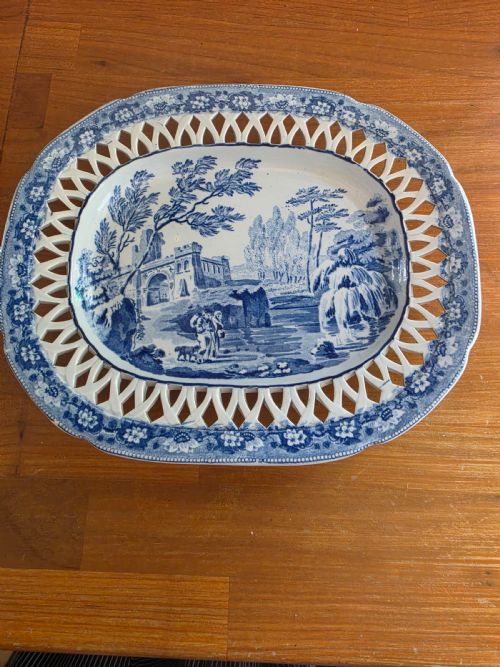
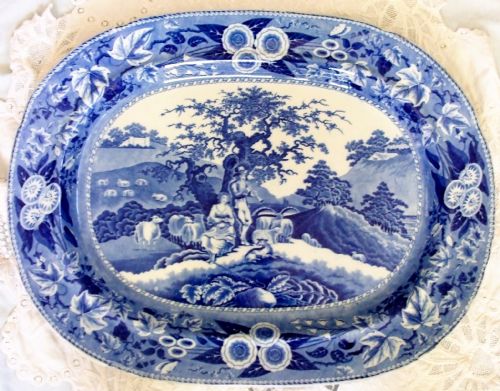
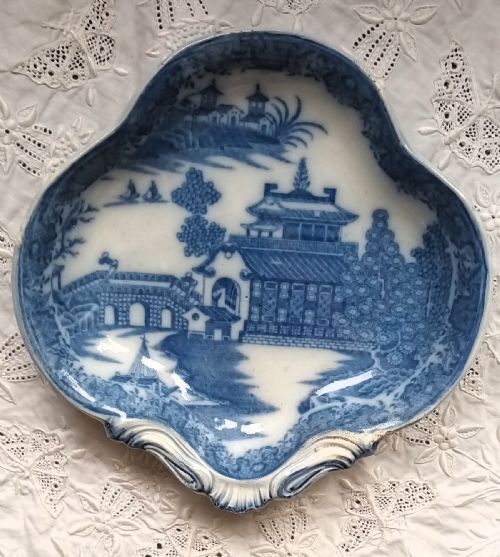
When you search for georgian pottery serving tray, you are looking at large ceramic platters, dishes, and stands created for formal dining and food presentation during the Georgian and Regency periods. The pieces appearing on this page span the late eighteenth century into the early nineteenth century, taking the form of meat platters, bread stands, tureen stands, and trefoil dishes.
Makers shaped these items in earthenware, pearlware, and glazed ceramic, applying elaborate cobalt pigment transfer prints depicting landscapes, romantic ruins, and pastoral scenes. Collectors encounter patterns such as the Bridge of Lucano, piping shepherds, and classical ruins across these serving plates and platters.
How they were made
Potters formed these serving pieces using earthenware and pearlware bodies, which were then coated in lead glaze to create a smooth, glossy surface. Cobalt pigment was applied via transfer printing from copper plates onto the ceramic surface before firing.
Many platters incorporate pierced or fretted borders, requiring skilled hand-cutting of the clay before glazing. The application of the blue transfer print demanded precise placement to align complex pictorial scenes across large serving dishes.
Piping shepherds and elephants share dining table space with classical ruins, proving Georgian potters took eclectic inspiration from far and wide.
What varies in quality
The clarity and depth of the cobalt transfer print dictate much of the visual appeal, separating sharp, well-defined pictorial scenes from smudged or uneven impressions. The crispness of pierced or fretted edges on trays and platters also indicates the skill involved in initial shaping.
The consistency of the lead glaze and the absence of firing warping distinguish finer production standards from simpler utilitarian wares. Well-preserved surfaces retain their original gloss and decorative detail across the earthenware body.
Davenport·Spode·Thomas Lakin·Don Pottery·John Rogers And Son·J And R Clews·Elkin Knight And Bridgwood
The Georgian Pottery Serving Tray Glossary
- Pearlware
- A refined earthenware developed with a bluish-white glaze that pooled in recesses, designed to mimic Chinese porcelain.
- Transfer printing
- A technique using an engraved copper plate to transfer a printed design onto paper and then onto unglazed ceramic.
- Cobalt pigment
- A metallic oxide used to produce the deep blue colour seen in nineteenth-century ceramic decoration.
- Lead glaze
- A shiny coating applied to pottery surfaces before firing to seal the porous earthenware body.
- Trefoil dish
- A three-lobed serving vessel used for presentation at the dining table during the Georgian era.
Georgian Pottery Serving Tray: Frequently Asked Questions
What were these serving trays used for?
These ceramic pieces functioned as meat platters, bread stands, and tureen bases during formal Georgian and Regency meals. They held large joints of meat, bread, or sauce tureens at the dining table.
The raised edges and substantial earthenware bodies accommodated heavy food items while presenting detailed pictorial scenes to diners.
How do I identify a Georgian platter?
Look for characteristic earthenware bodies covered in lead glaze, combined with blue and white transfer-printed topographical or romantic patterns. The forms typically include large oval meat platters and specialised stands.
Pottery from this era often bears maker names or pattern titles within the transfer print on the underside or surface.
Can I use these plates for serving food?
While originally designed for dining use, these nineteenth-century ceramics are generally collected for display today. The lead glaze and antique earthenware require careful handling.
Displaying them on walls or plate racks protects the historic glaze and transfer-printed decoration from modern detergent wear.