
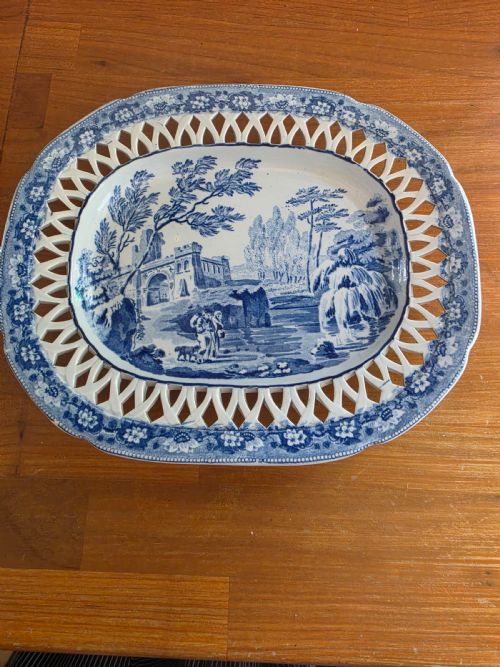
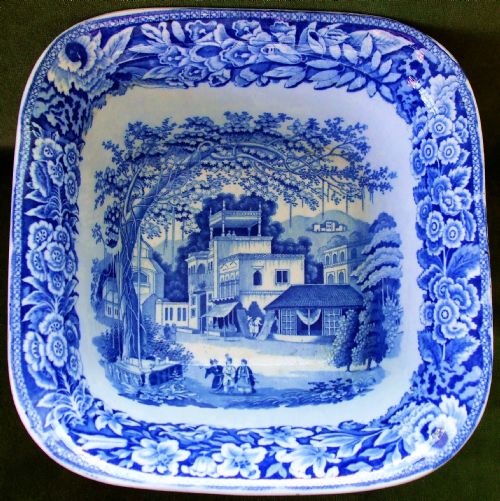
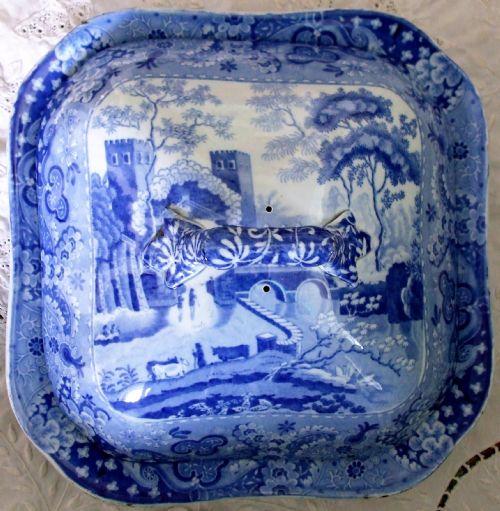
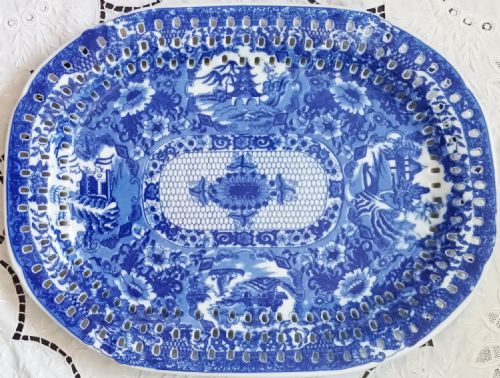
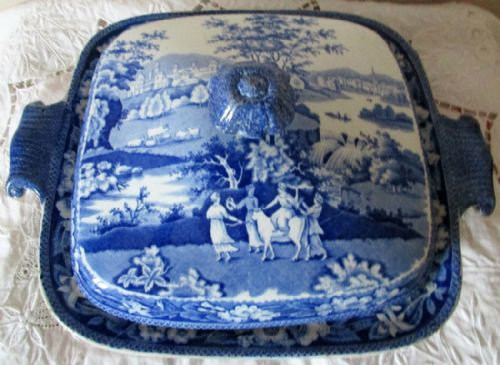


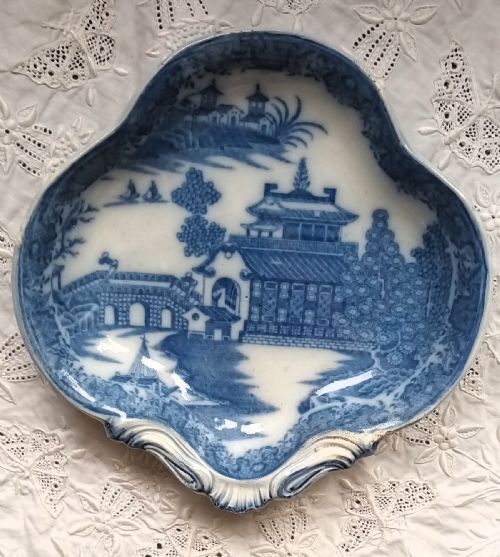


Pearlware Serving Dish
These pearlware serving dish examples are earthenware vessels from the Georgian and Victorian eras, prized for their transfer-printed blue and white scenes.
Pearlware Serving Dish
A pearlware serving dish is an earthenware vessel designed for the table during the Georgian, Regency and early Victorian periods. These pieces include platters, vegetable tureens, bread stands, trefoil dishes and tazzas decorated with blue and white transfer patterns.
Most examples found here date from the nineteenth century and display named topographical, classical or exotic scenes transferred onto a ceramic body. The forms range from simple flat platters to deep vessels with pierced borders and fitted covers.
Makers working across England produced these items for domestic dining, utilising cobalt pigment beneath a distinctive glaze. The resulting tableware combines utility with detailed pictorial decoration characteristic of early ceramic production.
Materials and technique
Potters constructed each pearlware serving dish using refined earthenware clay, which was then fired to form a durable ceramic body. A thin lead glaze containing a small amount of cobalt was applied to achieve the characteristic pale bluish tint that distinguishes pearlware from standard creamware.
Decoration relied on cobalt pigment transferred from engraved copper plates onto the ceramic surface before glazing and firing. This transfer-printing technique allowed makers to apply intricate designs such as castle patterns, eastern street scenes and classical ruins with consistent precision.
Listings feature earthenware materials utilising cobalt pigment and lead glaze across the nineteenth century, Georgian and Regency periods.
Factors that separate examples
Quality in a pearlware serving dish depends upon the clarity of the transfer print and the crispness of the moulded form, such as pierced fretwork borders or shaped rims. Richness in the cobalt pigment and evenness of the glaze also separate superior examples from standard production.
Condition and completeness matter greatly, particularly for items that originally included covers or stands, such as vegetable tureens and sauce tureen stands. The sophistication of the named pattern and the prestige of the pottery influence the standing of each piece.
Davenport·J. & R. Riley·J. & R. Clews·Spode·Thomas Lakin·Don Pottery·John Rogers & Son
The Pearlware Serving Dish Glossary
- Pearlware
- A refined earthenware body developed in the late eighteenth century featuring a subtle blue-tinted glaze designed to mimic Chinese porcelain.
- Transfer printing
- A method of applying engraved designs to ceramics using tissue paper printed with metallic pigment from a copper plate.
- Tureen
- A deep covered vessel used for serving soups, vegetables or sauces at the dining table.
- Tazza
- An elevated shallow bowl or dish supported on a central foot, often used for serving fruit or small dishes.
- Trefoil
- A three-lobed decorative shape reminiscent of a clover leaf, commonly found on specialised serving dishes.
Pearlware Serving Dish: Frequently Asked Questions
How do I care for a pearlware serving dish?
These antique ceramic pieces require gentle handling and hand washing in warm water with mild soap. Avoid modern dishwashers, harsh abrasives and sudden temperature changes to protect the historic glaze and ceramic body.
Display or store them securely away from heavy foot traffic and direct sunlight. Proper support under the base prevents strain on older earthenware structures.
How can I tell the age of these dishes?
Age is identified through ceramic body characteristics, glaze colour, pattern styles and maker marks stamped or impressed into the earthenware. Early nineteenth-century pieces often display specific blue and white transfer themes typical of Georgian and Regency production.
Manufacturing traits such as foot ring construction, stilt marks and the tone of the cobalt pigment help differentiate between Georgian periods and later Victorian output.
Were these dishes used every day?
In their original period, these vessels served functional roles in middle and upper-class dining rooms for presenting meats, vegetables and sauces. Their durable earthenware construction suited regular household use during formal meals.
Over time, many serving pieces transitioned from active dining service into display items or collector cabinets due to their pictorial transfer designs.