


Reticulated Ceramic Dish
A reticulated ceramic dish brings pierced openwork and intricate basketry forms to the table, uniting utility with ornamental design across centuries of ceramic art.
Reticulated Ceramic Dish
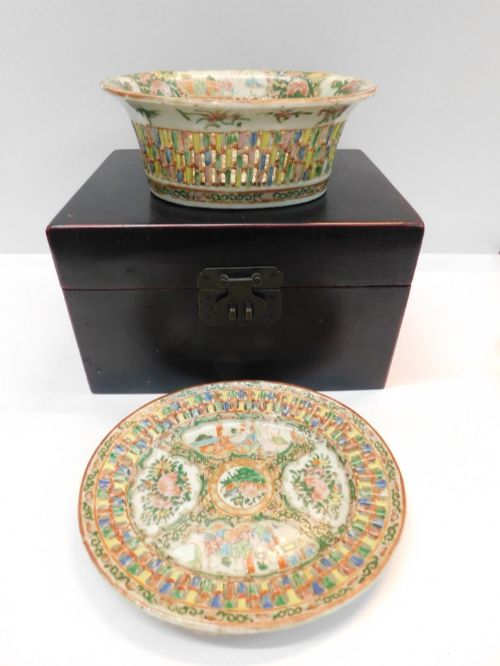
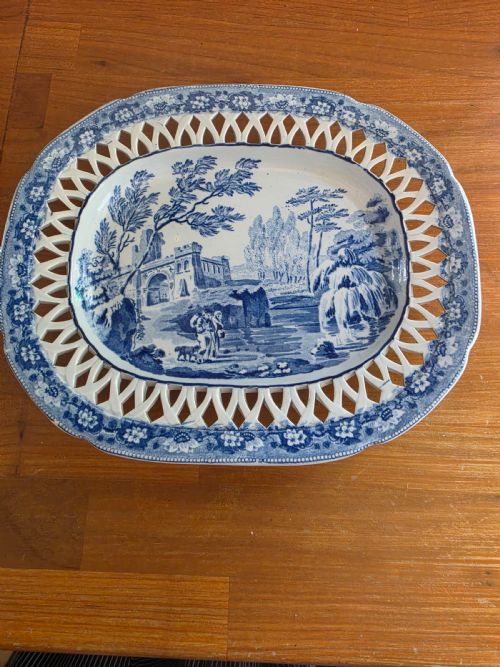
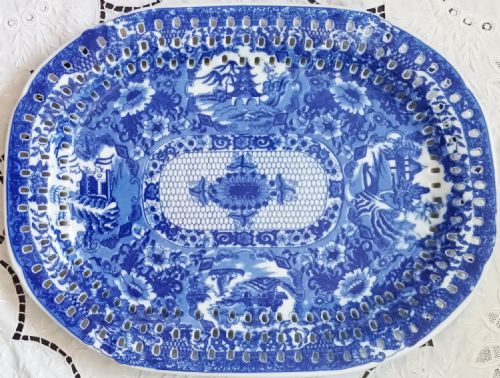
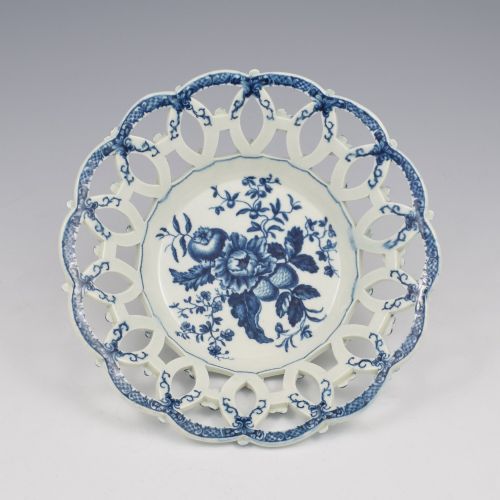
A reticulated ceramic dish unites functional forms such as serving platters, chestnut baskets, and comports with openwork piercing or lattice walls. Pieces span the eighteenth, nineteenth, and early twentieth centuries, originating from English potteries, German factories, and Asian export kilns.
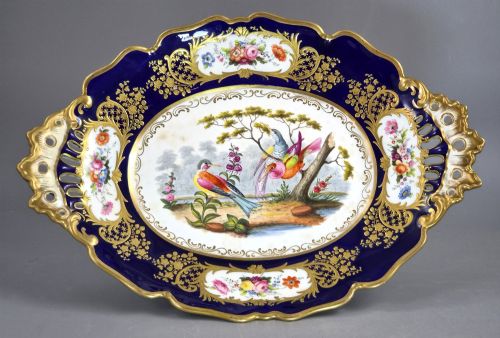
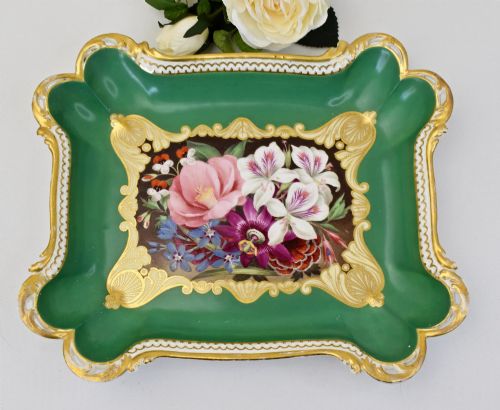
The buyer encounters items ranging from blue and white transferware platters to heavily gilded cabinet plates and porcelain centrepieces adorned with applied flowers. Forms include oval serving dishes, footed bowls, and tiered chestnut baskets with matching stands.
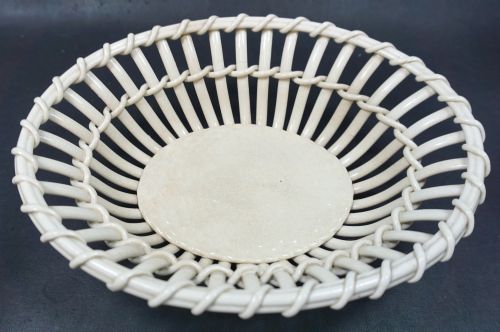
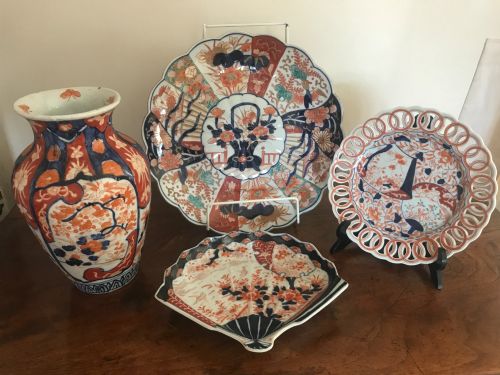
Stylistic influences stretch from Georgian neoclassical designs and Regency fretted borders to Rococo Revival curves and Japanese Imari palettes. Many examples utilise traditional pierced patterns, fretted rims, or woven ceramic strands mimicking natural wicker.
Materials and techniques
Potters shaped these objects using paste compositions including soft-paste porcelain, creamware, pearlware, and earthenware, applying glaze and enamel finishes before final firing. Piercing and fretwork were executed by hand while the clay was leather-hard, cutting geometric or lattice openings through the walls of the dish.
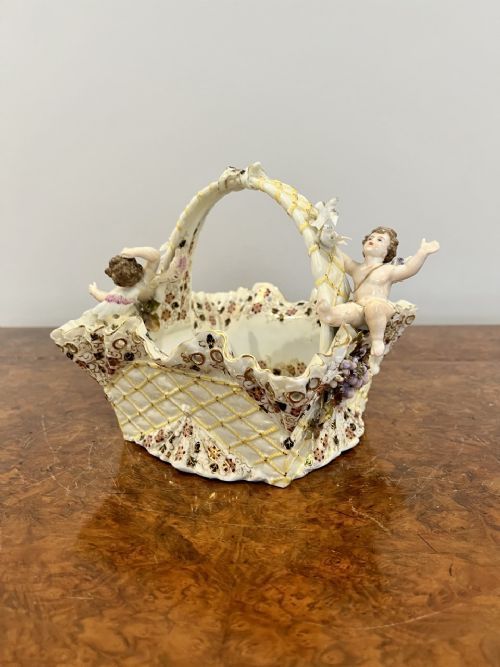
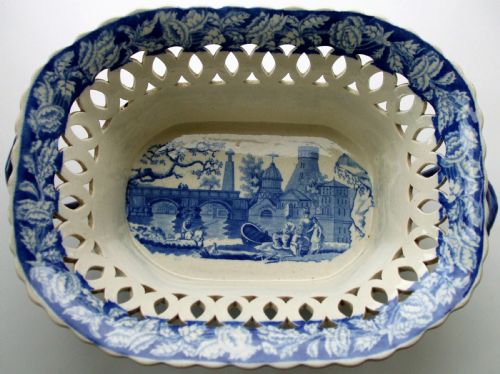
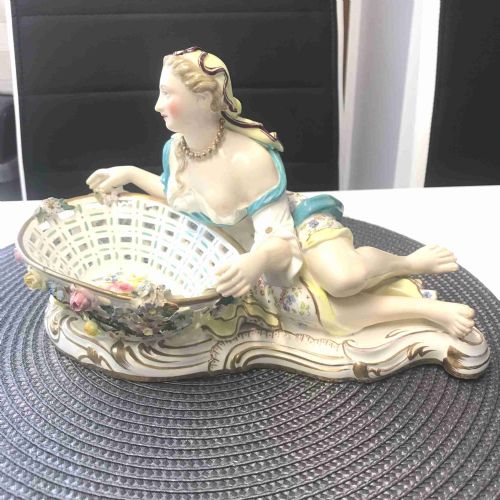
Decoration relied on underglaze blue transfer printing, hand-painted polychrome enamels, and delicate gilding with gold leaf. Some complex forms incorporated applied sculptural elements such as putti, cherubs, and modelled flowers attached prior to glazing.
Several Victorian and Edwardian centrepieces incorporate small porcelain putti who appear to be industriously gardening among applied ceramic roses.
Distinctions in standard
Quality rests upon the crispness of the piercing and the precision with which the openwork lattice is cut from the damp clay. Finer examples maintain structural symmetry and clean geometric or organic voids without distortion from the kiln firing.
Painting and surface decoration separate standard production wares from premier cabinet pieces. Superior items feature meticulous hand-painted botanical or avian subjects, controlled transfer printing, and refined application of gold leaf rather than heavy, thick enamel work.
Coalport·Davenport·J. & R. Clews·Meissen·Worcester·Doe & Rogers·John Ridgway·Furstenberg·Minton·Royal Vienna·Schierholz·Royal Worcester·Sevres·Mason’s Ironstone
The Reticulated Ceramic Dish Glossary
- Reticulated
- Pierced or patterned to resemble a net or network. This openwork design is carved into the ceramic body before glazing and firing.
- Chestnut basket
- A deep serving vessel with a matching stand, typically equipped with pierced sides to allow air circulation for storing chestnuts or fruit at the table.
- Transferware
- Pottery decorated by applying a printed design from an engraved copper plate via tissue paper onto the ceramic surface. It allowed for intricate repeating patterns like river scenes and floral motifs.
- Creamware
- A refined light-coloured earthenware developed in eighteenth-century England, noted for its warm yellowish glaze. It provided a smooth surface for both plain utilitarian forms and elaborate pierced basketry.
- Imari
- A style of Japanese export porcelain characterised by a palette of underglaze blue, iron red, and gold. European factories frequently imitated these striking East Asian colour schemes.
Reticulated Ceramic Dish: Frequently Asked Questions
How were reticulated dishes used?
These vessels served functional roles at formal dining tables for holding fruit, nuts, or sweetmeats, whilst deeper baskets specifically stored chestnuts.
Their openwork walls allowed airflow, making them practical for dry provisions before displaying them as decorative centrepieces.
How do I care for antique porcelain?
Wash these pieces gently by hand using warm water and mild soap, avoiding dishwashers and harsh abrasive sponges entirely.
Store them securely on stable surfaces away from high-traffic areas to protect delicate pierced rims and applied decorations from accidental chips.
What is pearlware?
Pearlware is an improved earthenware introduced in the late eighteenth century, featuring a thin glaze with a slight bluish tinge that pooled in crevices.
It bridged the gap between creamware and later white earthenwares, often serving as the base for blue and white transfer-printed dishes.
How do I distinguish eighteenth-century pieces?
Examine the paste composition, glaze pooling, and hand-painted or early transfer-printed motifs characteristic of specific period factories.
Consult known factory marks, such as early Worcester crescents or Meissen crossed swords, while noting that unrecorded provincial pieces rely entirely on stylistic context.