


Pierced Rim Dish
A pierced rim dish combines utility with openwork decoration, offering a decorative surface that has served tables across centuries.
Pierced Rim Dish
A pierced rim dish is designed with openwork borders, appearing across serveware, dessert services, and decorative plates. When exploring this selection, buyers encounter forms ranging from fruit baskets to cabinet plates and platters.
The objects span the eighteenth and nineteenth centuries, including Victorian, Georgian, and Rococo Revival styles alongside Japanese Imari and Continental porcelain. These pieces serve as functional serveware or decorative centrepieces.
How they were made
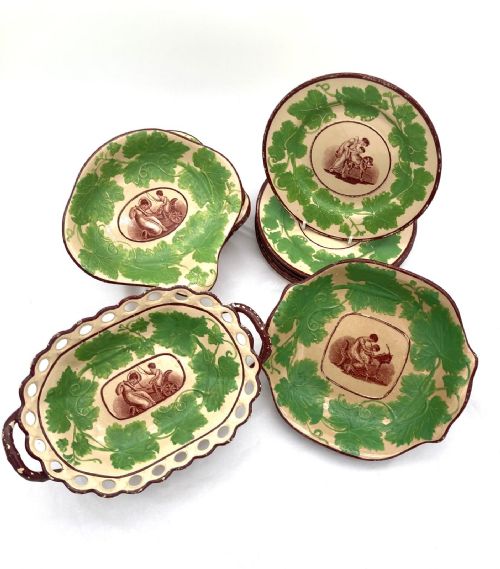
Ceramic examples utilise earthenware, pearlware, and porcelain bodies finished with glaze, enamel, and occasionally gold leaf. Artisans pierced the wet clay or paste by hand before firing to create intricate lattice and net patterns.
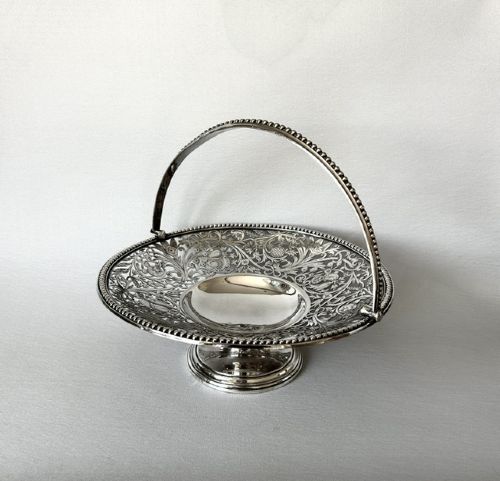
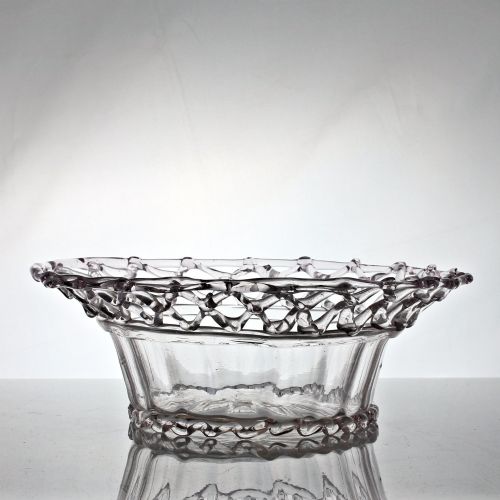
Metal pieces employ silver plate and bronze, shaped through casting and hand-piercing techniques. Glass items involve hand-blown production methods, incorporating openwork galleries or shaped borders into the molten material.
A four-kilogram bronze centrepiece proves that afternoon sweets could occasionally demand a remarkably heavy lifting effort.
What varies in quality
Quality rests in the crispness of the openwork piercing and the precision of hand-painted enamel or transfer-printed decoration. Finer examples maintain structural balance despite intricate cutouts along the rim.
Material selection and decorative depth distinguish standard production from exceptional pieces. The handling of glaze, gold leaf, and surface ornamentation reveals the skill involved in the workshop.
Meissen·Furstenberg·Minton
The Pierced Rim Dish Glossary
- Pierced rim
- A border cut through with openwork designs to lighten the visual weight of a dish. This technique appears on plates, baskets, and bowls across various periods.
- Transfer print
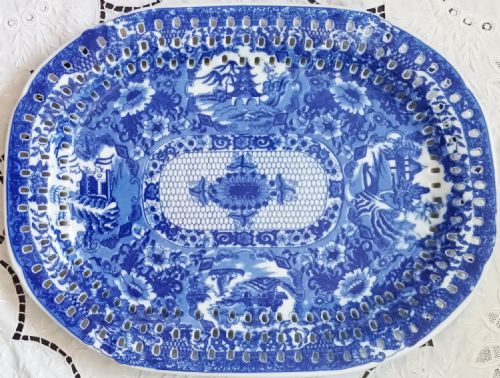
- A decorative method where a design is transferred from an engraved copper plate onto paper and then onto ceramic. This technique enabled consistent blue and white patterns on eighteenth and nineteenth-century earthenware.
- Silver plate
- A base metal coated with a thin layer of silver. This material provided the appearance of solid silver for nineteenth-century fruit baskets and bonbon dishes.
- Reticulation
- A network of interwoven lines forming an openwork pattern resembling a net. This term often describes finely pierced porcelain plates and baskets.
- Pearlware
- A refined earthenware developed in the late eighteenth century featuring a bluish glaze that pooled in recesses. It formed the body for many blue and white transfer-printed serving dishes.
Pierced Rim Dish: Frequently Asked Questions
How were pierced rim dishes used?
These dishes served desserts, fruits, and sweetmeats during formal nineteenth and eighteenth-century dining. Their openwork rims allowed air circulation around delicate foods.
They also functioned as decorative centrepieces and cabinet plates displayed on sideboards. Their visual appeal made them status objects in period interiors.
Are these dishes safe for food?
Most antique ceramic and silver-plated pieces see use as decorative objects or dry serveware today. Their age and historic glazes mean careful handling is necessary.
Hand washing in warm water preserves the enamel, gold leaf, and silver plating. Avoid dishwashers and harsh detergents to protect the historic materials.
How do I identify a Georgian piece?
Georgian pieces from the eighteenth and early nineteenth centuries often feature blue and white transfer printing, earthenware bodies, or hand-painted Continental porcelain. Look for classic motifs like the net pattern and Rococo shapes.
Construction details and ceramic body types help distinguish these earlier examples from later Victorian productions. Comparing the glaze and weight provides further context.
What is the difference between porcelain and earthenware?
Porcelain is a vitrified, dense ceramic material that rings when tapped and remains non-porous even without glaze. Earthenware is a softer, porous pottery body that requires a glaze to hold liquids.
Pierced porcelain allows for sharper, finer openwork cutting than softer earthenware bodies. Both materials support different decorative styles and historical periods.