


English Transferware Meat Platter
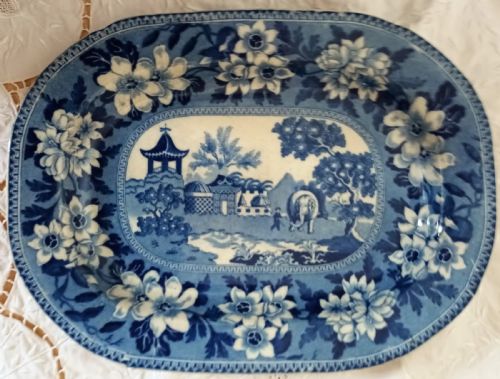
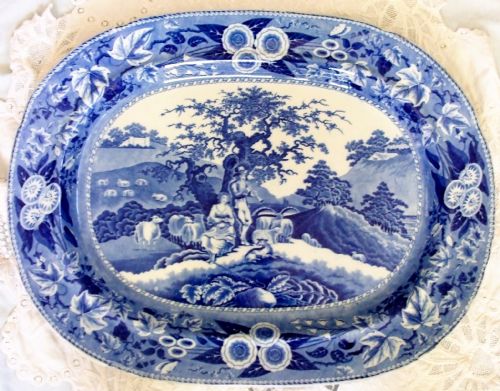
These English transferware meat platter examples bring nineteenth-century scenes to the dining table with enduring blue and white print.
English Transferware Meat Platter
An English transferware meat platter is a substantial ceramic serving vessel designed for family joints and game at the nineteenth-century table. These pieces span periods from the Georgian and Regency eras through to early Victorian times, reflecting the domestic habits of the dining room. Surviving examples often display distinct printed imagery ranging from classical architectural ruins to exotic landscapes and topographical shipping scenes.
The version most commonly met on this page is the large blue and white serving platter, frequently accompanied by matching forms such as earthenware dishes and ceramic platter drainers. Makers utilised deep wells, reservoirs, and fitted drainers to catch juices during carvery service, making these objects both decorative and practical. Collectors encounter regional pottery marks and distinct patterns like Tower, Elephant, or Piping Shepherd that identify the original factory.
Materials and Production Methods
Potters produced these platters using refined earthenware, pearlware, and robust ironstone bodies shaped into wide serving forms. Artisans applied cobalt pigment designs transferred from engraved copper plates onto the biscuit ceramic surface before glazing.
A glossy lead glaze sealed the printed decoration, protecting the cobalt pigment from cutlery and wear during regular household use. Firing in traditional kilns set the deep blue tones and hardened the ceramic fabric to withstand heavy dining service.
Listings feature earthenware, pearlware, and ironstone forms decorated with cobalt pigment under lead glaze.
Assessing Quality and Execution
Quality in an English transferware meat platter depends heavily on the clarity of the printed transfer and the richness of the cobalt pigment against the white ground. Crisp lines in intricate patterns like Chinoiserie or classical ruins separate finer outputs from blurred or smudged print runs.
The weight and stability of the ceramic body, alongside the crisp moulding of reservoirs and draining inserts, dictate the overall standard of the piece. Well-preserved glaze surfaces with minimal firing blemishes or crazing hold greater appeal for serious collections.
John Rogers & Son·Thomas Lakin·Don Pottery·Spode·Mason’s Ironstone
The English Transferware Meat Platter Glossary
- Transferware
- Pottery decorated by applying a printed design from an engraved copper plate onto the ceramic body using a paper tissue. This technique allowed factories to produce intricate pictorial patterns consistently across large services.
- Pearlware
- A refined earthenware developed in the late eighteenth century featuring a faint bluish glaze that pooled in crevices. It bridged the stylistic gap between salt-glazed stoneware and later whiter ironstone bodies.
- Ironstone
- A dense, durable ceramic patented in the nineteenth century that combined earthenware clay with slag and feldspar. It resisted chipping better than standard earthenware, suiting heavy serving vessels.
- Platter drainer
- A perforated ceramic insert designed to sit within the well of a meat platter. It elevated joints of meat above accumulated juices during carving.
- Cobalt pigment
- A metallic oxide used to achieve deep blue coloration under the glaze. It withstood high kiln temperatures without fading or burning away.
English Transferware Meat Platter: Frequently Asked Questions
What is a transferware meat platter?
A transferware meat platter is a large nineteenth-century ceramic dish printed with blue and white designs. They served substantial joints of meat at grand dining tables.
These pieces feature pictorial scenes transferred from engraved copper plates. They remain collectable for their detailed blue patterns and historical domestic utility.
How were meat platters used?
These platters held roasted meat and game for presentation and carving at the dining table. Many included built-in wells and drainer inserts to manage juices.
Their robust earthenware and ironstone construction supported heavy joints. The integrated drainage systems kept meat elevated during carving services.
How do I date an English platter?
Dating relies on ceramic body composition, pottery marks, and stylistic clues. Pieces span the Georgian, Regency, and early Victorian periods.
Earlier items often use pearlware bodies with bluish glazes, while later nineteenth-century examples utilise heavier ironstone fabrics and distinct printed registry marks.
Can I use these platters today?
These antique ceramics function well for decorative display or careful serving use. Modern dishwashers and microwaves should be avoided to protect the historic glaze.
Hand washing preserves the fragile lead glaze and cobalt pigment. Gentle care ensures the nineteenth-century ceramic body remains stable.