


Antique Toilet Mirror Drawers
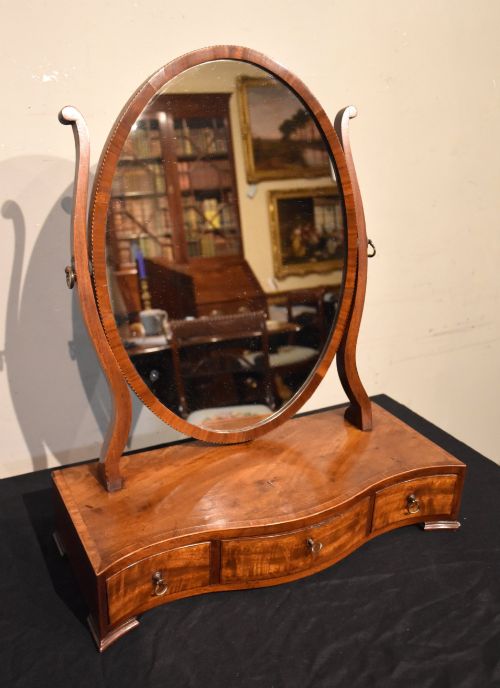
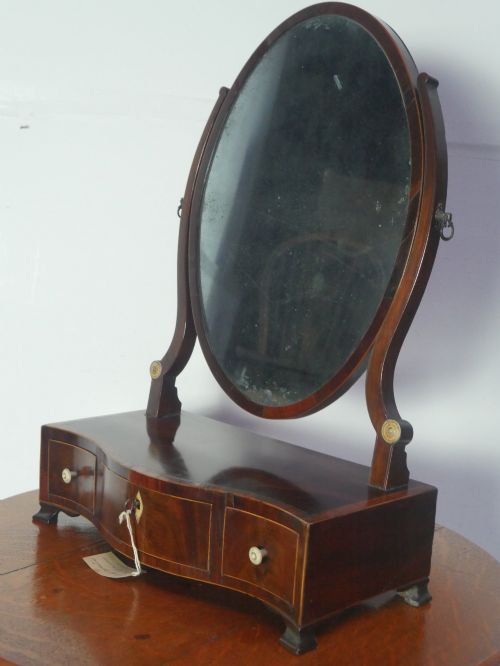
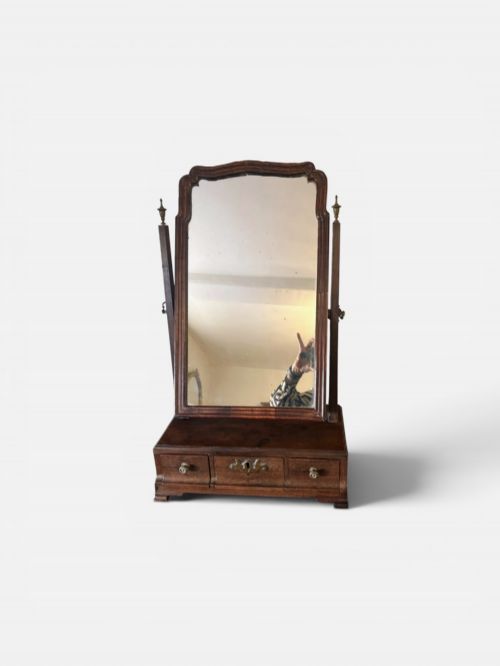
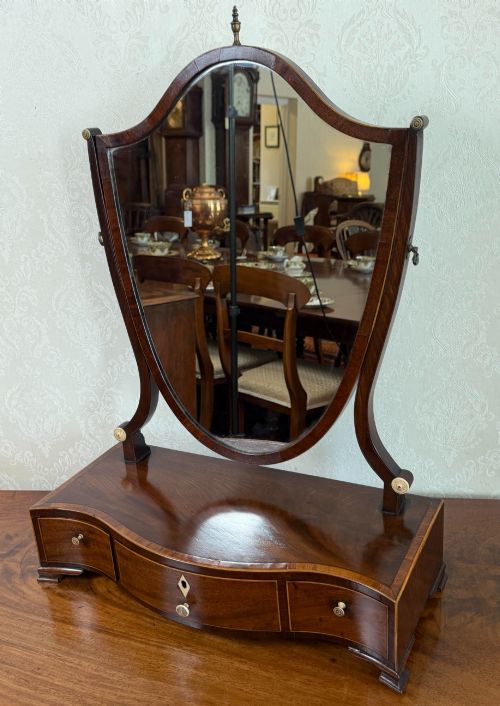
These antique toilet mirror drawers combine a swing mirror with a small storage base for daily grooming.
Antique Toilet Mirror Drawers
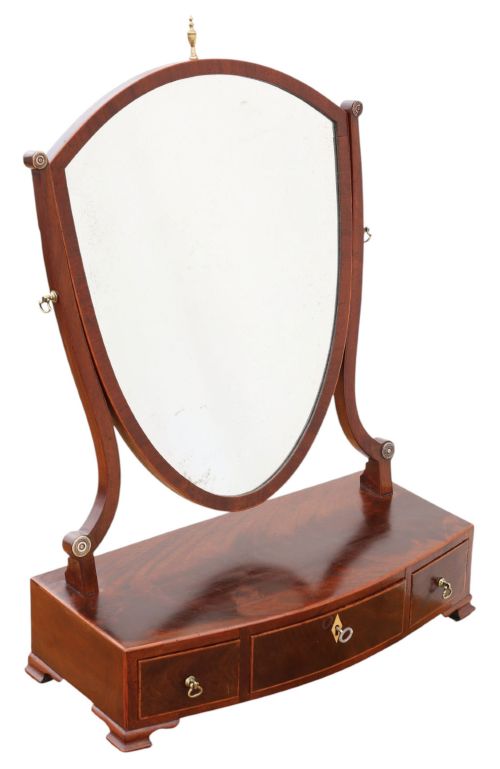
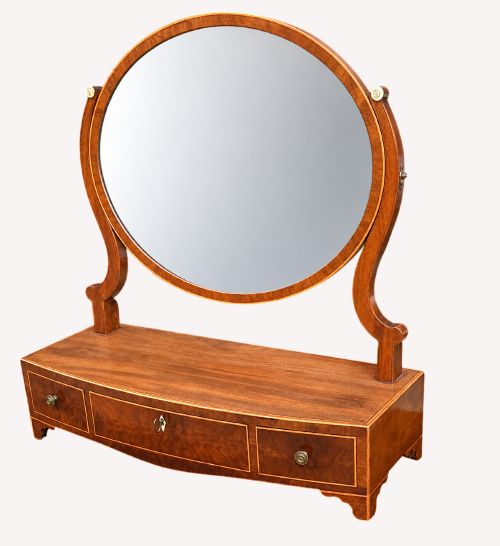
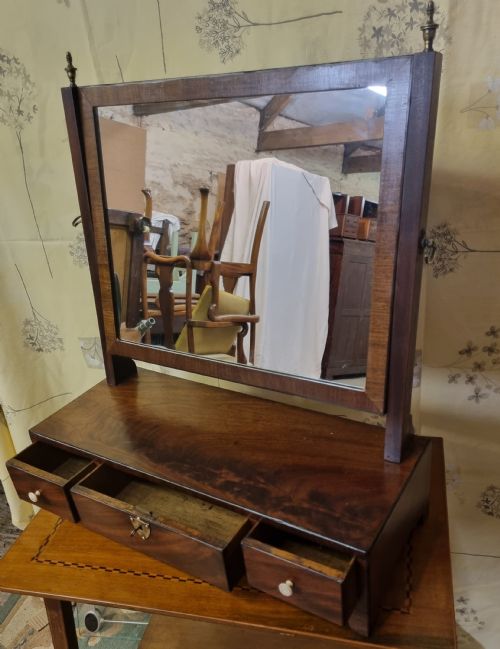
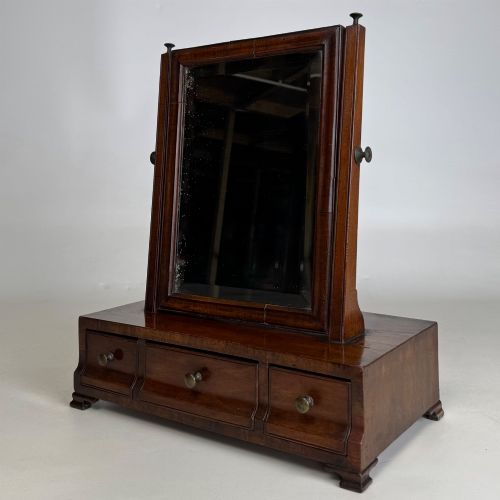
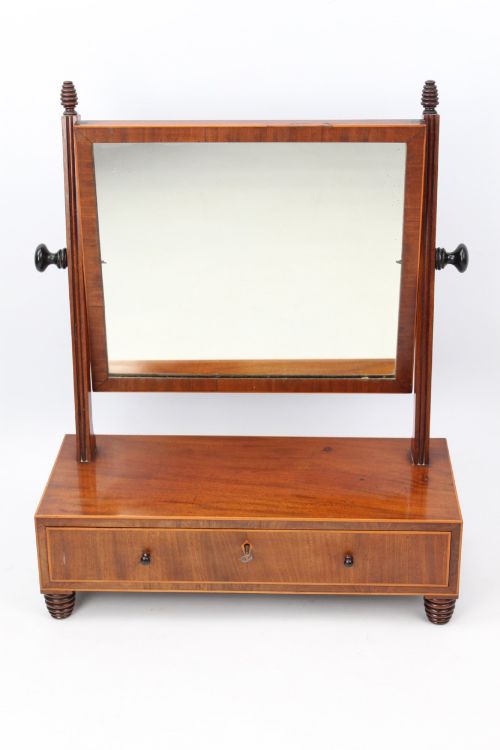
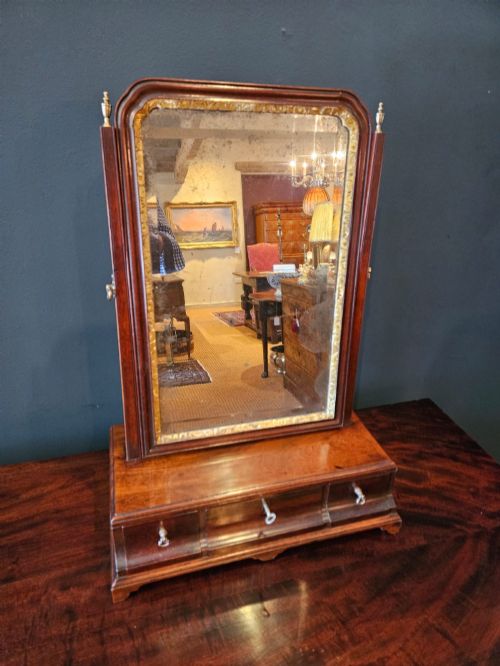
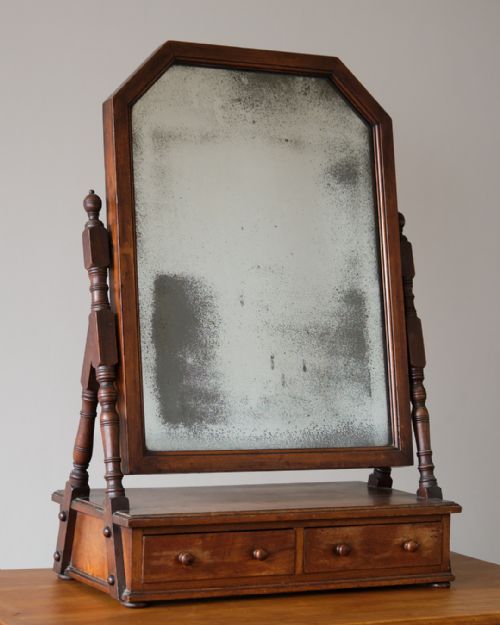
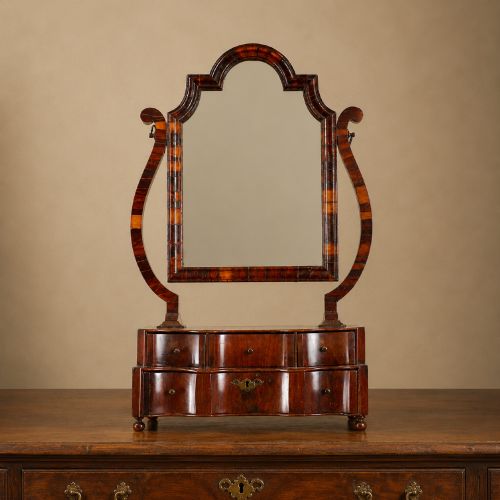
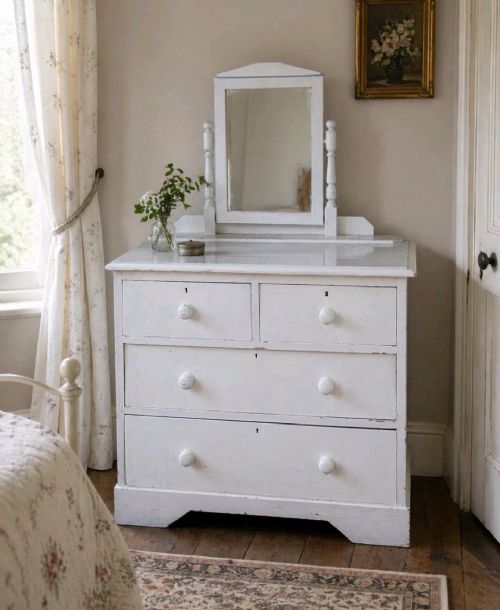
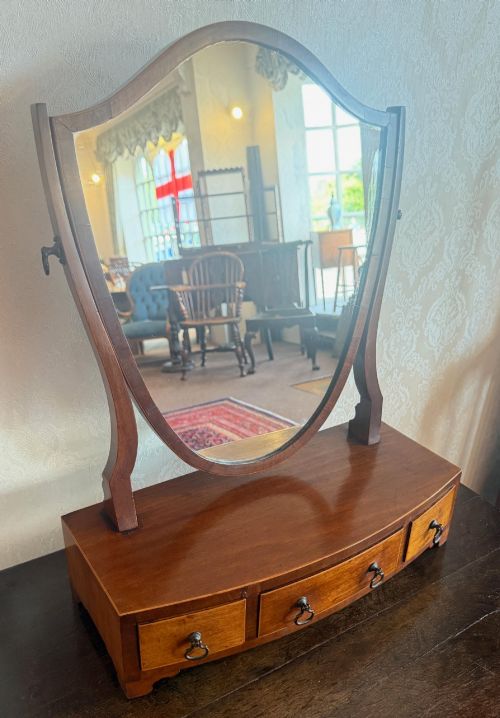
When you search for antique toilet mirror drawers, you encounter compact table pieces designed to sit upon a chest or dressing table. The form typically pairs a pivoting glass plate with a small box base containing one, two or three small drawers. Georgian and Victorian examples dominate, often taking rectangular or shield shapes mounted on upright scroll supports.
Makers constructed these mirrors to serve personal hygiene and cosmetic needs before full-length floor mirrors became common in bedrooms. The base allowed users to secure small valuables, cosmetics or shaving gear close at hand while adjusting the glass angle for light. Surviving versions show regional variations in proportions and drawer arrangements, reflecting the furniture fashions of their respective decades.
Quality and Proportion
Quality rests primarily in the choice of timber grain, the crispness of the cabinet joinery and the original retention of brass fittings. Finer examples display carefully matched veneers and subtle crossbanding that frame the glass plate with precision. The balance between the weight of the mirror frame and the sturdiness of the drawer base determines how well the piece functions in daily use.
Subtle details separate standard workshop pieces from master craftsmanship, such as hand-cut dovetails on the internal drawers and well-turned support arms. The clarity of the mirror glass and whether the glass plate is original or a later replacement also influence the character of the piece. Overall harmony of scale between the swinging plate and the storage box remains the ultimate measure of the design.
Listings feature eighteenth and nineteenth-century periods, utilising materials such as mahogany, walnut, brass, bone, and giltwood.
Heal & Sons
The Antique Toilet Mirror Drawers Glossary
- Shield mirror
- A dressing glass cut into the curved shape of a heraldic shield, popular during the eighteenth century. This silhouette softens the linear geometry of the supporting drawer base.
- Swing mirror
- A glass plate hung on pivots between two vertical upright posts. This arrangement allows the user to tilt the reflection up or down.
- Crossbanding
- A narrow strip of veneer laid across the grain of the primary timber panel. It frames the drawer fronts of better quality toilet mirrors.
- Marquetry
- Decorative patterns formed by inlaying different coloured wood veneers into a prepared ground. Dutch examples often display floral and bird motifs.
- Bracket foot
- A simple foot supporting the corners of the box base, shaped like a bracket and raised slightly off the surface.
Antique Toilet Mirror Drawers: Frequently Asked Questions
Where were toilet mirrors placed?
These mirrors sat atop chests of drawers, dedicated dressing tables or low sideboards in bedrooms and dressing rooms. Their elevated position brought the glass to a comfortable height for seated grooming.
Because they were portable rather than fixed furniture, users could shift them around the room to catch the best morning light from windows.
How do I date a toilet mirror?
Dating relies on timber choices, leg styles, and the shape of the mirror frame. Eighteenth-century pieces frequently feature walnut or mahogany with ogee bracket feet and serpentine drawer fronts, whilst Victorian versions tend to show heavier proportions and simpler mouldings.
The construction of the drawer linings and the type of brass hardware also offer clues to the decade of manufacture.
Are the mirror plates usually original?
Many surviving pieces have replacement glass because original mirrors degraded, silvering flaked away or accidents occurred over the centuries. Modern replacement glass often looks noticeably brighter and lacks the subtle distortions or foxing found in antique plates.
Collectors generally accept replacement glass provided the surrounding frame and drawer base remain undisturbed and period-correct.
What were the drawers used for?
The small compartments held personal items such as hairpins, cosmetics, rings, keys and shaving equipment. Keeping these items in the base kept dressing surfaces tidy and secure.
Some refined variants included small secret compartments or bureau fitments inside the drawer stack for storing confidential letters or currency.