



Antique Timber Tea Box
These antique timber tea boxes are timber containers built to hold precious tea leaves, offering rich grain and period craftsmanship.
Antique Timber Tea Box
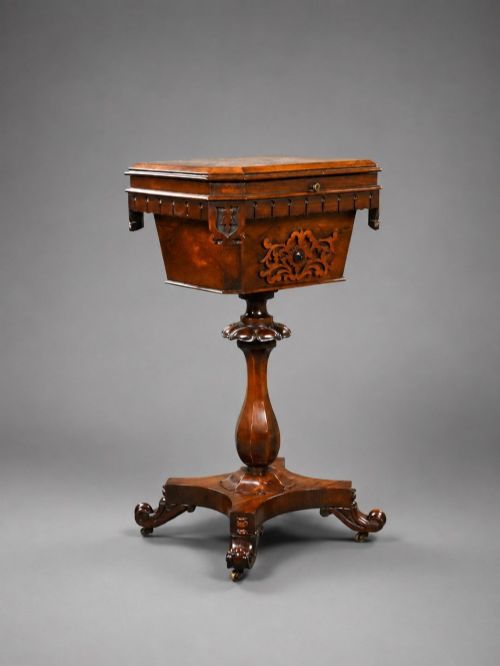
An antique timber tea box is a container built to protect and store valuable tea leaves during eras when tea was a luxury. These pieces take forms such as tea caddies and tea poys, alongside related boxes.
The versions most commonly met on this page span the 18th century, the Georgian period, the Regency era, and the Victorian epoch. Makers constructed these containers in various timber species to suit the fashionable drawing rooms of their day.
Buyers also encounter related items such as keepsake boxes, jewellery boxes, and stationery cases built with similar attention to fine cabinet work. Each piece reflects the changing domestic habits and interior tastes of British households over the centuries.
How they were made
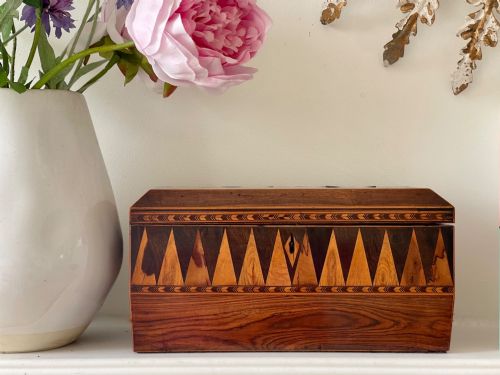
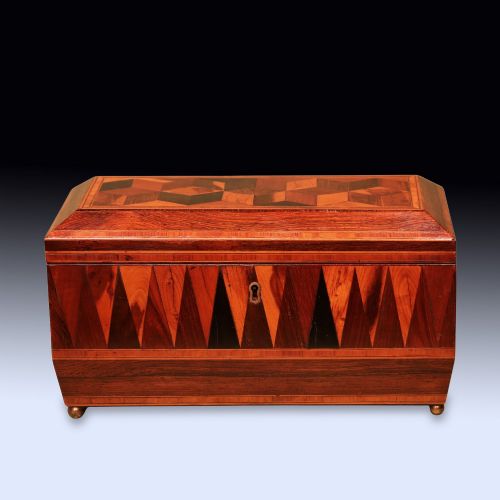
Cabinet makers utilised a variety of dense hardwoods and exotic timbers including mahogany, rosewood, walnut, partridge wood, coromandel, and burr yew. Surfaces frequently display intricate decorative treatments such as parquetry, Tunbridge Ware, shell inlays, satinwood banding, and amboyna veneer.
Internal arrangements often included fitted compartments with bone or metal elements, sometimes retaining small mixing bowls or foil-lined storage zones. Hardware such as brass escutcheons and locks completed the construction, securing the expensive contents within.
Listings feature boxes built from diverse timbers including mahogany, rosewood, partridge wood, burr yew, and coromandel.
What varies in quality
The distinction between standard examples and superior pieces rests on the choice of timber and the precision of the cabinet work. Finer items exhibit choice grain selection, such as figured mahogany or striking partridge wood, combined with complex geometric parquetry or specialist Tunbridge Ware mosaics.
Quality also shows in the survival of original fitted interiors and working locks with keys. Expert execution of delicate stringing, shell inlays, and stable joints separates the work of master workshops from simpler commercial production.
Henry Hollamby
The Antique Timber Tea Box Glossary
- Tea caddy
- A small box designed to store tea leaves securely under lock and key. These containers often featured internal compartments to separate different varieties of tea.
- Tea poy
- A larger stand or table supported on a pillar or legs, housing tea storage compartments. These pieces often doubled as small work tables in Regency and William IV drawing rooms.
- Tunbridge Ware
- A specialised form of woodwork originating in Kent, featuring tiny mosaic tiles assembled from different coloured natural timbers to form pictorial or geometric scenes.
- Parquetry
- A geometric mosaic pattern of wood pieces used for surface decoration on boxes and furniture. This technique showcases contrasting timber tones in repeating grid or diagonal designs.
- Sarcophagus-shaped
- A box design featuring a sloping, pedestal-like form resembling a classical stone coffin, popular during the Regency and William IV periods.
Antique Timber Tea Box: Frequently Asked Questions
What is an antique timber tea box?
An antique timber tea box is a lidded container originally built to store loose tea leaves when tea was a costly commodity. These pieces range from simple mahogany caddies to elaborate Tunbridge Ware and parquetry boxes.
Craftsmen constructed them in various timber species, often incorporating internal compartments and small locks to protect the valuable contents from domestic servants or damp air.
How were tea caddies used historically?
Historically, homeowners kept tea locked away in the parlor or dining room, and the lady of the house personally doled out the leaves for each pot. The dual compartments allowed different tea varieties to be stored side by side.
Some boxes featured a central mixing bowl where black and green teas could be blended together before brewing.
How do I identify a Georgian tea box?
Georgian tea boxes typically display classic proportions, straightforward mahogany or walnut construction, and restrained brass hardware. Later Georgian examples incorporate delicate shell inlays and satinwood stringing.
Makers of this period focused on clean architectural lines and high-quality timber selection rather than the dense surface mosaics seen in later Victorian pieces.
How should I care for a wooden tea box?
Wooden tea boxes require stable room conditions away from direct sunlight and rapid humidity changes to prevent timber warping or veneer lifting. Occasional light dusting and minimal waxing help preserve the historic polish.
Avoid placing damp items inside the compartments, and handle original brass locks and hinges with care.