


Burr Wood Storage Box
A burr wood storage box brings rich timber figuring and Georgian or Regency proportion straight to your desk.
Burr Wood Storage Box
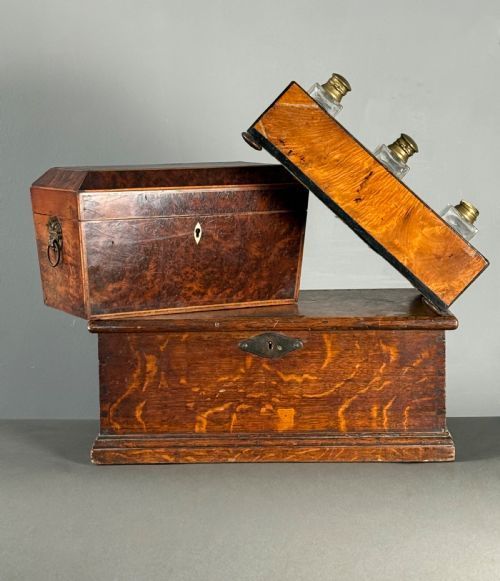
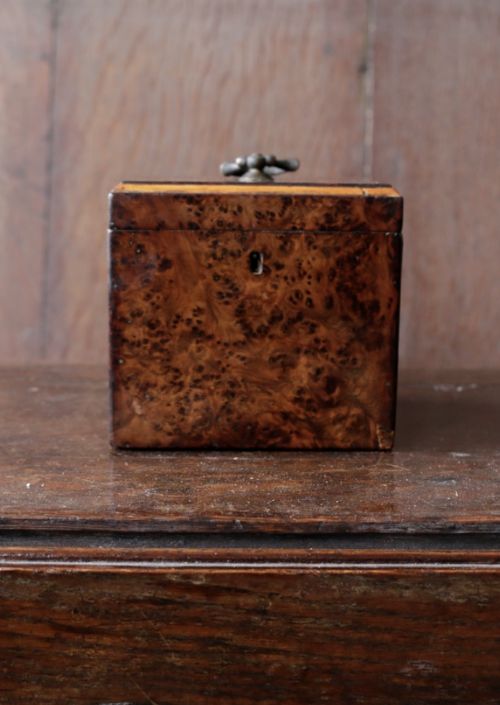
A burr wood storage box gathers small, precious items inside distinct timber grains sourced from excrescences on trees like yew, elm, birch, and walnut. These containers serve various domestic roles, appearing as tea caddies, humidors, jewellery boxes, and small work tables across the eighteenth and nineteenth centuries.
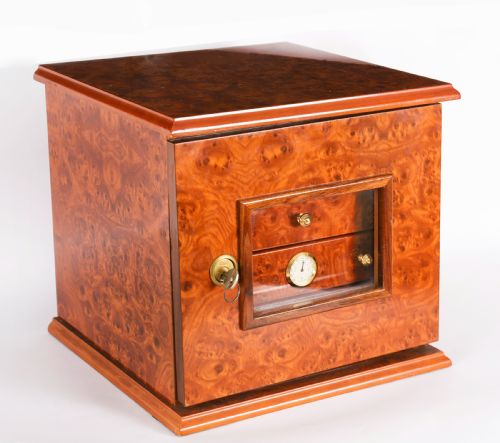
The pieces on this page span the 18th century, Regency period, and Victorian era, showing regional varieties including Scandinavian and English craftsmanship. Forms range from simple cubic caddies to larger cellarettes and multi-drawer cigar cabinets.
Buyers seeking a burr wood storage box will encounter surfaces adorned with intricate veneers, alongside occasional contrasting details in brass, bone, mother of pearl, ebony, and satinwood.
Materials and construction
Cabinetmakers constructed these boxes using dense timbers such as burr yew, burr elm, burr birch, and walnut, often applying thin veneers over a stable core wood. This method allowed artisans to display the swirling, knotty patterns characteristic of growth excrescences across the exterior surfaces.
Metal and organic details frequently accompanied the timber work, with brass hinges, locks, and handles fitted alongside inlaid motifs in mother of pearl and bone. Some examples incorporate glass components or interior divisions suited to holding tea canisters or personal valuables.
Some eighteenth-century boxes required tiny, easily misplaced keys so the household staff could tightly guard the luxury tea leaves inside.
Distinctions in quality
Quality in these pieces rests upon the density and placement of the timber figuring, where carefully matched veneers create a continuous, balanced pattern across the lid and sides. Superior examples display thoughtful grain selection that follows the contours of the box without interruption.
The integration of secondary materials also separates standard items from finer works, visible in the precision of brass hardware fittings and the delicacy of inlay work. Original interior fittings, such as mixing bowls or lidded compartments, preserve the structural integrity and intended function of the piece.
Waring & Gillow
The Burr Wood Storage Box Glossary
- Burr wood
- Timber taken from a tree growth where the grain has grown in a deformed, swirling manner. This produces highly decorative patterns prized by cabinetmakers.
- Tea caddy
- A box or container originally manufactured to store dry tea leaves. Eighteenth and nineteenth-century examples often feature interior compartments and secure locks.
- Cellarette
- A lockable container or cabinet used for storing bottles of wine or spirits. Regency and later iterations frequently utilise substantial timbers like burr elm.
- Humidor
- A specialised storage box designed to maintain proper humidity for cigars. Twentieth-century variants sometimes incorporate multiple internal drawers.
- Teapoy
- A small stand or table fitted with a top container for holding tea. These pieces often stand on a single pillar or decorative legs.
Burr Wood Storage Box: Frequently Asked Questions
What were burr wood storage boxes used for?
These boxes served domestic roles for holding valuable commodities like tea, tobacco, cigars, and jewellery. Their secure lids and compartmentalized interiors protected delicate items from moisture and light.
Over time, they transitioned from utilitarian pantry or parlour items into decorative desk and table accessories displayed in principal rooms.
How do I identify a Regency box?
Regency pieces often display classical proportions, symmetrical veneering, and precise brass mounts that reflect early nineteenth-century design tastes. The choice of burr yew or elm combined with sharp architectural lines points directly to this era.
Examining the interior construction and lock mechanisms helps confirm the manufacturing period alongside the exterior stylistic cues.
Where should I place a storage box?
These boxes suit placement on sideboards, desks, console tables, or chests of drawers where their figured wood surfaces remain visible. Keeping them away from direct sunlight and strong heat sources protects the old veneers and timber.
Interior compartments also make them practical for organising modern trinkets, small stationery, or keepsakes on daily furniture.