


Yew Wood Tea Box
A yew wood tea box brings richly figured timber and refined form to any room.
Yew Wood Tea Box
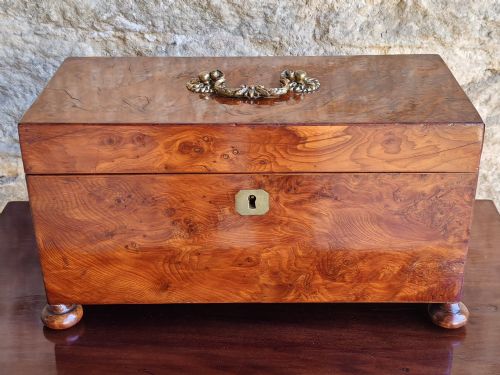
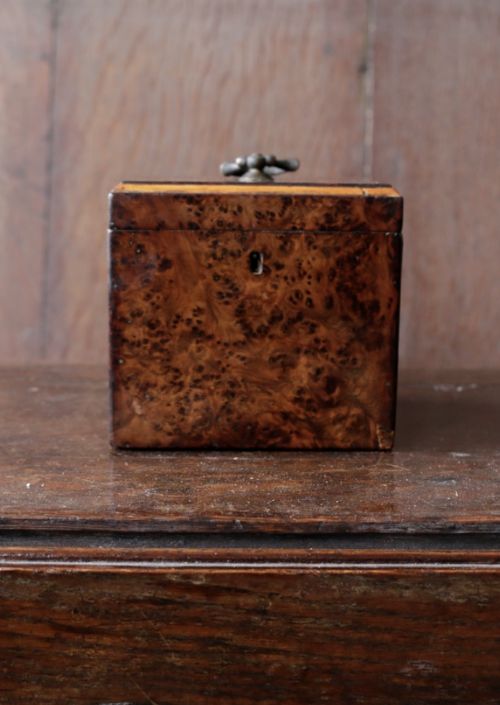
When you search for a yew wood tea box, you encounter items designed for storing tea leaves during the eighteenth and nineteenth centuries. These pieces take forms such as tea caddies, tea chests, and teapoys, originating from periods including the Georgian and Regency eras.
The versions most commonly met on this page are the Georgian and Regency caddies, often constructed with geometric shapes like cubes or hexagons. They serve as functional decorative boxes that demonstrate the period skill in woodworking.
How they were made
These items rely primarily on timber, specifically yew wood and burr yew, chosen for its distinctive grain patterns. Cabinetmakers shaped the timber into various boxes and caskets, often adding stringing in contrasting woods.
Hardware such as brass fittings provides hinges, escutcheons, and handles. Additional detailing includes inlay and marquetry, alongside small bone elements.
Listings include items spanning the eighteenth century through to eighteen sixty, featuring Georgian and Regency styles.
What varies in quality
The distinction between ordinary and superior examples lies in the selection of the timber and the complexity of the form. Highly figured burr yew and intricate marquetry indicate a finer piece made by a skilled hand.
Unusual shapes, such as semi-circular or hexagonal bodies, separate standard rectangular caddies from more ambitious cabinet work. The precision of the inlay and the completeness of the original fittings further distinguish the best examples.
The Yew Wood Tea Box Glossary
- Teapoy
- A small stand or large caddy designed to hold tea, often featuring a fitted interior for canisters. These pieces stand on a single pillar or rest on legs.
- Stringing
- A narrow inlay of contrasting wood used to outline the edges and panels of a box. This technique provides a crisp border to the burr timber.
- Escutcheon
- A small plate surrounding the keyhole of a box to protect the wood from wear. They are commonly made of brass on these pieces.
- Marquetry
- The art of applying pieces of veneer to a structure to form decorative patterns. Georgian examples utilise this to create pictorial or geometric designs on the lid.
Yew Wood Tea Box: Frequently Asked Questions
What is a yew wood tea box?
A yew wood tea box is a lidded container historically used to store expensive tea leaves in the home. Makers utilised figured timber to create decorative caskets that sat in the parlour.
These pieces range from simple rectangular boxes to elaborate inlaid tea chests and freestanding teapoys. They reflect the high status of tea as a commodity in past centuries.
How do I date a tea box?
Dating a tea box involves examining the overall style, construction methods, and materials used by the maker. Pieces from the Georgian and Regency periods exhibit specific geometric forms and decorative stringing.
Changes in hardware, such as brass hinges and escutcheons, also offer clues to the decade of manufacture. Comparing the silhouette to documented examples helps narrow down the era.
How were these boxes used?
These boxes held precious tea leaves under lock and key to prevent servants or guests from taking them. The host kept the key and measured out the leaves for each pot.
Inside, the boxes often featured compartments or internal canisters to separate different types of tea. They lived on side tables in the principal rooms of the house.
How do I care for burr yew?
Burr yew requires gentle maintenance to keep the timber stable and the polished surface intact. Keep the box away from direct sunlight and sudden changes in temperature to prevent the wood from splitting.
An occasional application of appropriate furniture wax helps nourish the grain. Avoid excessive moisture and harsh chemical cleaners on the antique surface.