


Antique Timber Lowboy
An antique timber lowboy is a small side table or dressing table designed for storage and display, offering compact elegance for traditional interiors.
Antique Timber Lowboy
An antique timber lowboy functions as a compact side table or dressing table, typically featuring a small tabletop above one or more rows of drawers. These diminutive tables served domestic purposes in bedchambers and parlours across past centuries.
The pieces on this page span the eighteenth and nineteenth centuries, capturing vernacular country pieces alongside formal urban examples. You will frequently encounter Georgian designs alongside English country variants and occasional colonial American pieces.
Forms range from dedicated lowboys and side tables to small chests of drawers and lamp tables. Oak, mahogany, fruitwood, and burr elm dominate the structural identities of these surviving examples.
How they were made
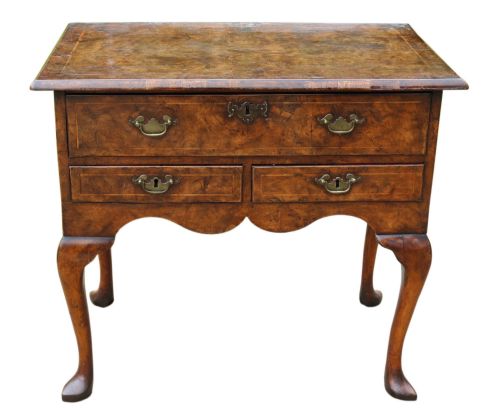
Cabinetmakers utilised native and imported timbers, shaping solid planks of oak, mahogany, cherrywood, and fruitwood for frames and tabletops. Burr elm veneer also appears on select George II period examples, adding rich figuring to the primary surface.
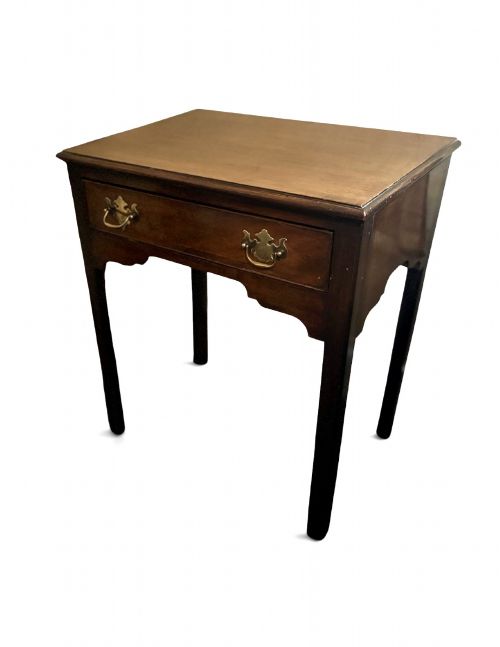
Hardware typically consists of brass drop handles and drawer pulls secured to timber panel construction. Painted wood finishes also feature on regional vernacular pieces from the eighteenth and nineteenth centuries.
Listings feature eighteenth and nineteenth-century pieces constructed from mahogany, oak, fruitwood, cherrywood, and burr elm.
What varies in quality
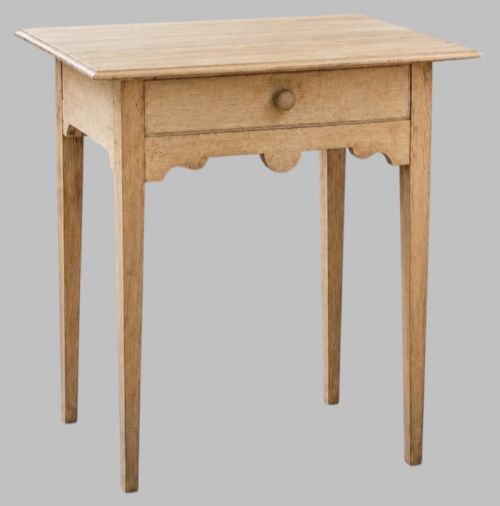
The refinement of timber selection separates simpler country furniture from high-status urban cabinet work. Finely figured burr elm or rich mahogany demonstrates superior material choice compared to utilitarian painted or bleached oak variants.
Proportion and execution of joinery define the upper tier of these tables. Slender cabriole legs, crisp mouldings, and original brass hardware elevate an antique lowboy beyond basic domestic utility.
The Antique Timber Lowboy Glossary
- Lowboy
- A small low table with drawers, commonly used as a dressing table or side table during the eighteenth century.
- Burr elm
- A timber harvested from tree growths that produces swirling, highly decorative grain patterns highly prized by period cabinetmakers.
- George II period
- The era spanning from seventeen twenty-seven to seventeen sixty, characterised by robust proportions and the development of the cabriole leg.
- Fruitwood
- Dense timber derived from fruit-bearing trees such as pear or apple, utilised extensively by regional makers for vernacular furniture.
Antique Timber Lowboy: Frequently Asked Questions
What is an antique timber lowboy?
An antique timber lowboy is a small, freestanding table featuring one or more drawers beneath the work surface. These compact pieces were originally designed for personal grooming or domestic storage.
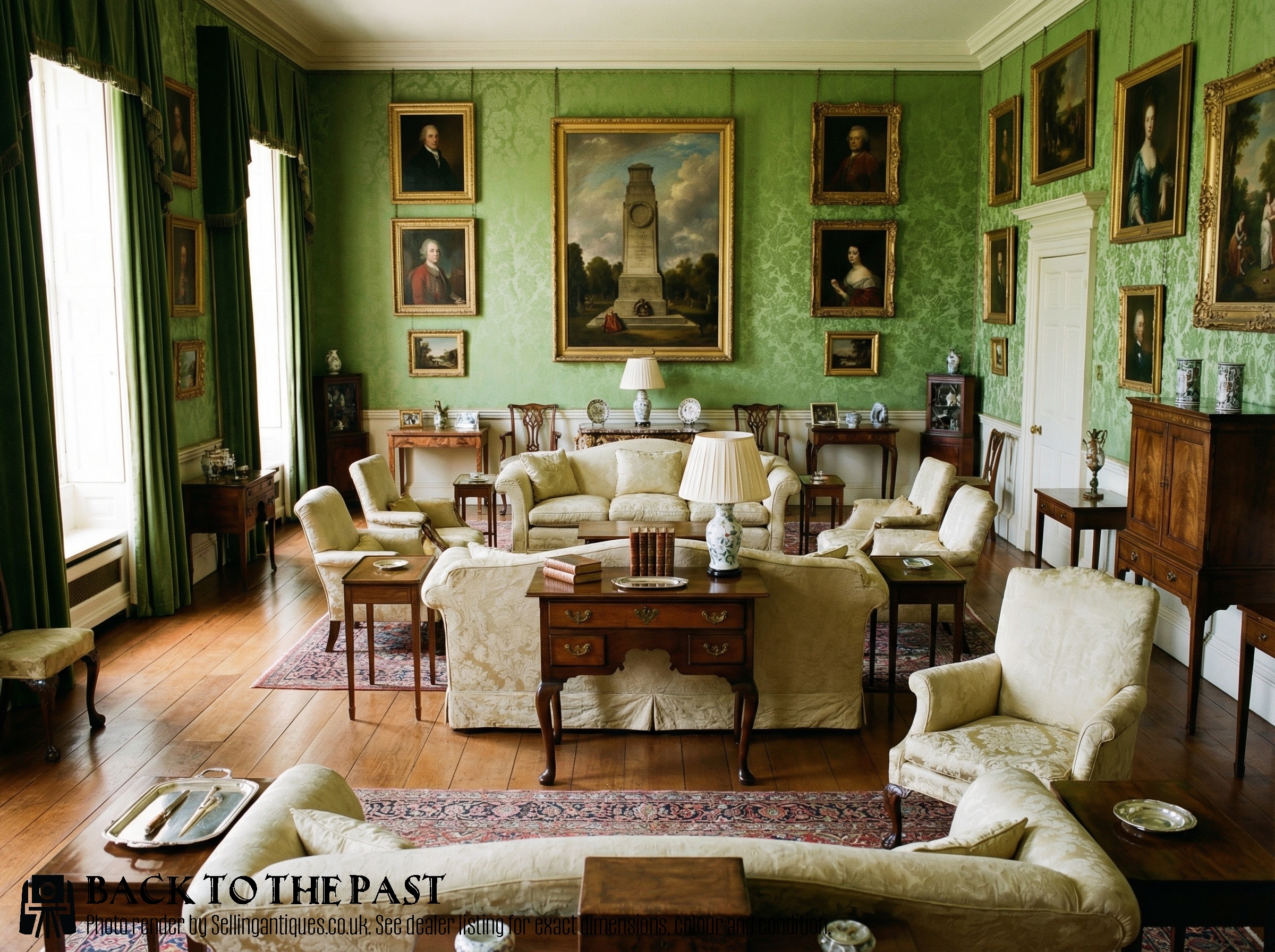
They function easily today as lamp tables, hallway surfaces, or accent tables in sitting rooms. Their modest scale allows them to fit into tight spaces where larger case furniture cannot go.
How were lowboys used historically?
Historical lowboys served primarily in bedchambers as dressing tables for holding cosmetics, brushes, and personal valuables. They also appeared in reception rooms and parlours for writing or serving tea.
Over time, their versatile height and drawer space made them useful auxiliary surfaces throughout the home. They bridge the gap between a chest of drawers and a simple side table.
How do I date an antique lowboy?
Dating relies on examining the timber species, construction methods, and stylistic cues present in the piece. Eighteenth-century examples often display pegged joinery, hand-cut dovetails, and period-specific leg shapes like the cabriole.
Later nineteenth-century pieces may show machine assistance or simpler vernacular forms. Comparing the secondary woods inside the drawer construction further clarifies the period of manufacture.
Where should I place a lowboy?
A lowboy suits placement against a hallway wall, beside a sofa, or beneath a mirror in a bedroom. Its shallow depth prevents it from blocking walkways.
The small drawer configuration provides convenient storage for keys, stationery, or small household items. Placing one in a study or landing adds period character alongside practical surface area.