

Antique Tiered Whatnot
An antique tiered whatnot is an open-shelved display piece that brings vertical storage and elegance to a room.
Antique Tiered Whatnot
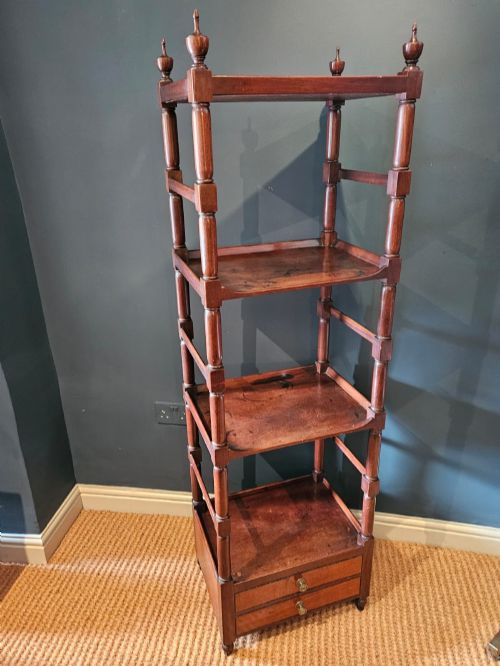
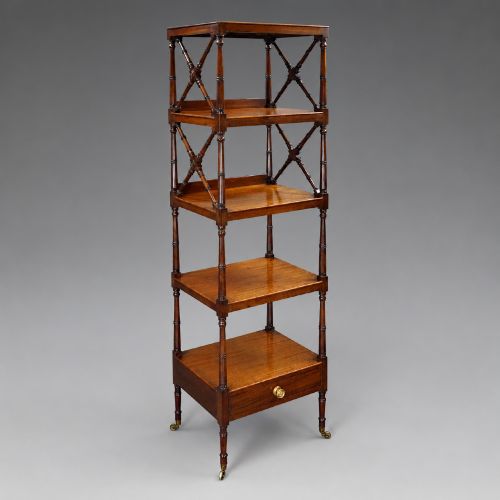
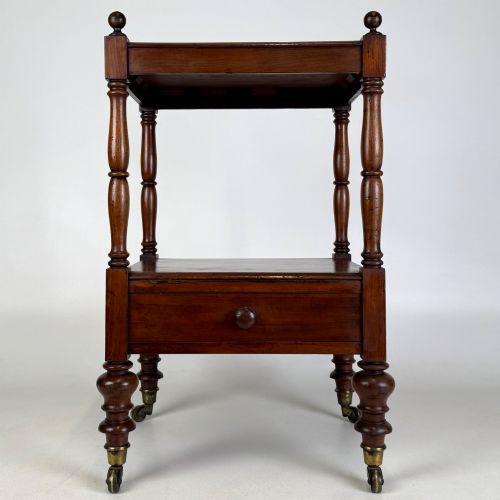
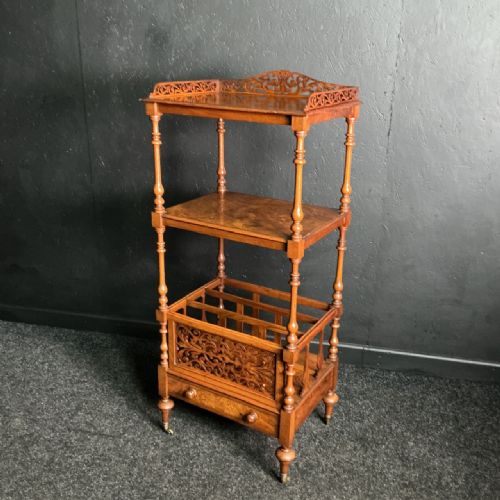
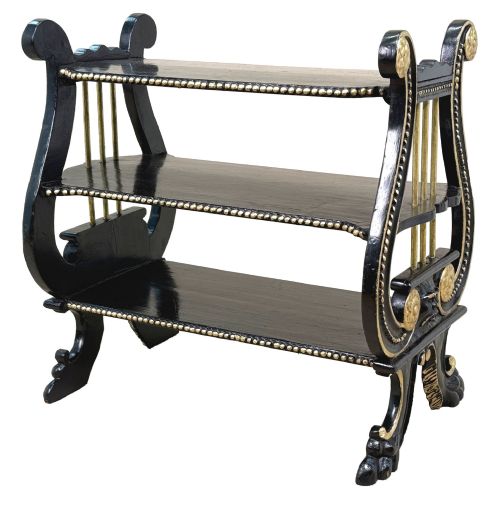
An antique tiered whatnot is an open shelving unit designed to display ornaments, books, and small decorative objects across multiple horizontal levels. You encounter Victorian and Regency examples most frequently on this page, taking both freestanding and corner forms.
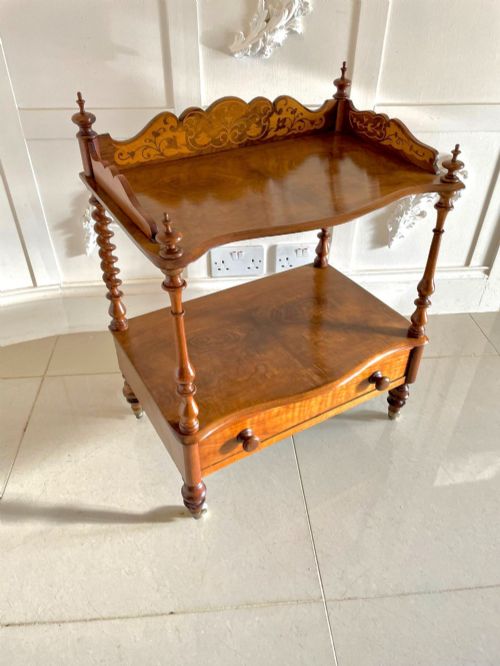
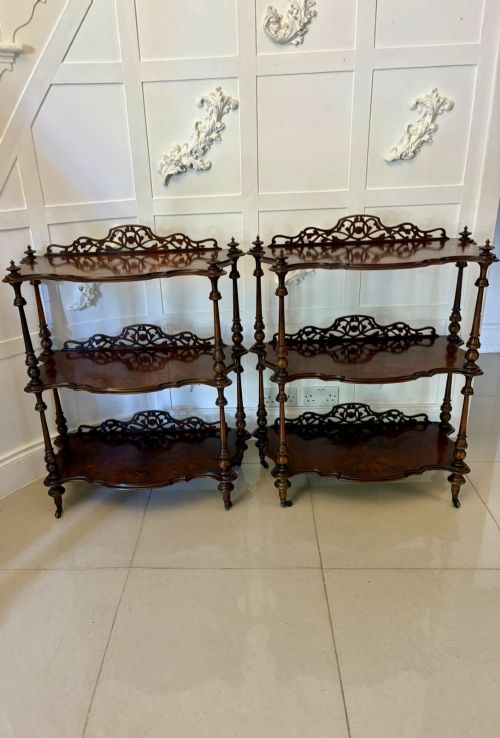
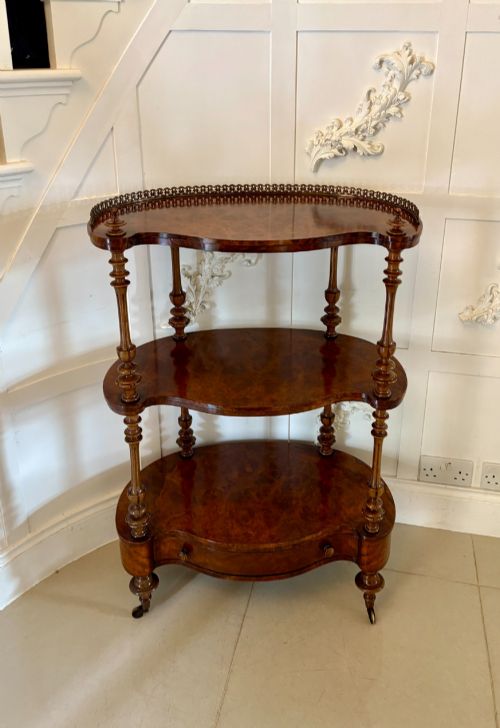
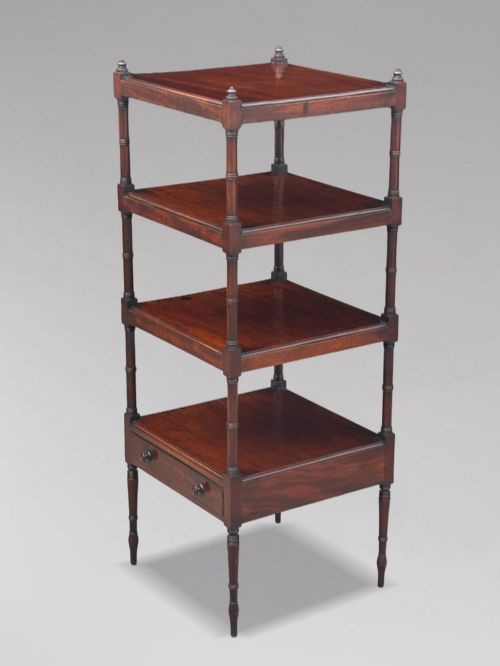
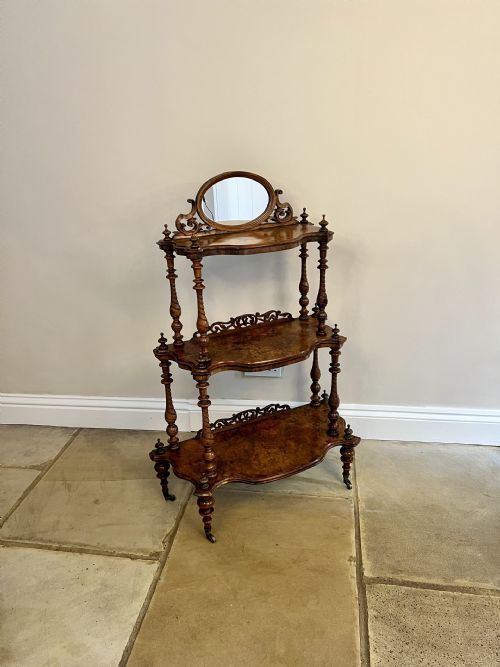
Makers constructed these pieces to utilise corner spaces or stand free against walls, often incorporating drawers or lower cabinets into the design. The forms range from simple four-tier mahogany bookcases to elaborate serpentine burr walnut and rosewood étagères.
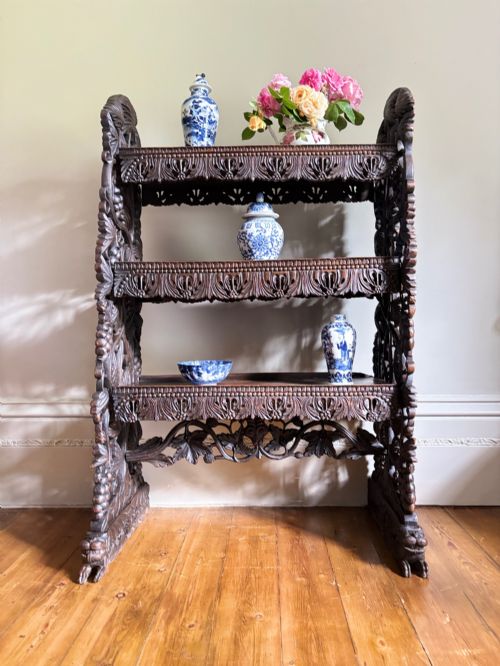
Regional variations and revival styles appear across the inventory, including Anglo-Indian padauk shelves and French Napoleon III designs. Buyers select these items to organise display items vertically without darkening a corner of the room.
How they were made
Cabinet makers built antique tiered whatnots predominantly in timber such as mahogany, walnut, burr walnut, and rosewood. Sections of ebonised wood, brass fittings, and ormolu mounts frequently provide structural contrast and detail.
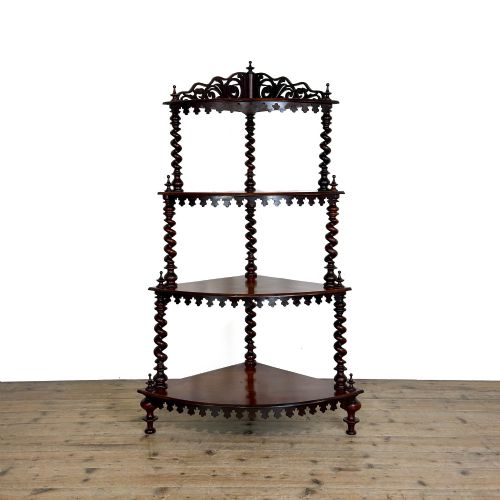
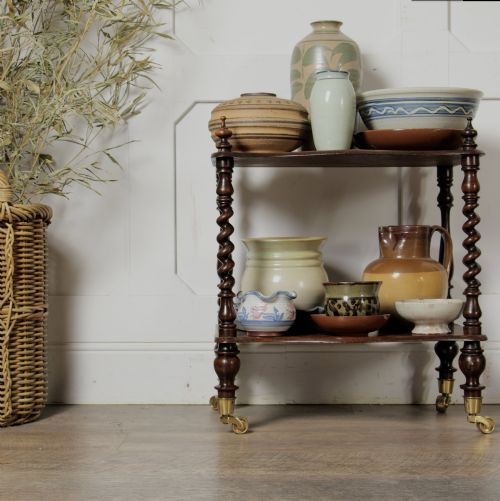
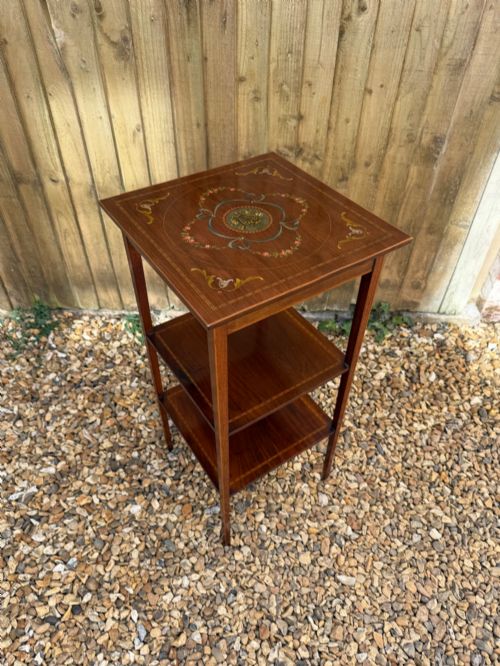
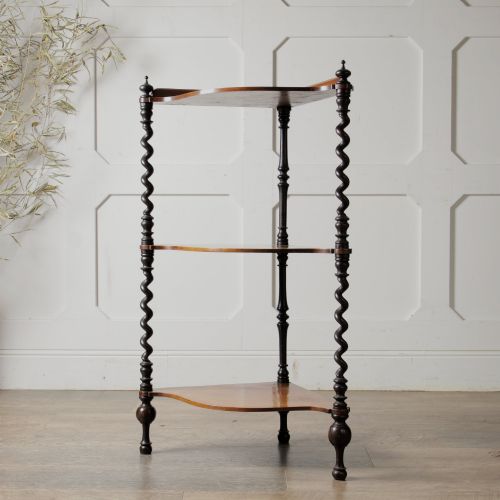
Surface decoration relies upon boxwood inlay, parquetry, marquetry, and parcel gilding rather than heavy mouldings. Turned supports, including barley twist columns, hold the graduated tiers together securely.
The inventory spans the Georgian, Regency, William IV, and Victorian periods, extending into early 20th-century revival pieces.
What varies in quality
The choice of timber veneer sets the baseline for visual impact, with figured burr walnut and rosewood sitting above plain mahogany. Grain matching across multiple tiers demonstrates the care taken in the original workshop.
Joinery execution around the shelf supports and drawer joints determines the structural rigidity of the piece. Subtle details such as serpentine shaping, brass ormolu mounts, and fine boxwood inlay separate standard utility pieces from exhibition items.
Gillows
The Antique Tiered Whatnot Glossary
- Whatnot
- An open set of shelves used for displaying ornaments or books, developed in the late 18th century. It stands on multiple tiers held by vertical columns or uprights.
- Étagère
- A French piece of furniture consisting of a set of open shelves for displaying small articles. The term often interchanges with whatnot in 19th-century cabinet making.
- Barley twist
- A type of turned wooden column resembling the spiral shape of barley sugar. Craftsmen used this decorative turning extensively on Victorian supports.
- Ormolu
- Gilded bronze used for decorative mounts and feet on high-status furniture. It adds a metallic highlight against dark timbers like rosewood and ebonised wood.
- Marquetry
- The art of applying pieces of veneer to a structure to form decorative patterns and pictures. Makers utilised floral and geometric motifs on cabinet doors and tabletops.
Antique Tiered Whatnot: Frequently Asked Questions
What is an antique tiered whatnot used for?
An antique tiered whatnot serves as an open shelving unit for displaying porcelain, silver, books, and decorative objects. The graduated tiers allow smaller items to sit on top while heavier volumes or boxes rest below.
Historically, households utilised these stands in drawing rooms and parlours to keep everyday reading matter and ornaments accessible. Today, they function well in living spaces and hallways for vertical display without bulk.
How do I tell a Victorian whatnot from a Regency one?
Regency whatnots, dating from the early 19th century, typically feature clean architectural lines, brass gallery rails, and dense mahogany or rosewood. They reflect a classical influence in their turning and proportions.
Victorian examples from the mid-to-late 19th century often display exuberant figured burr walnut, barley twist uprights, ebonised finishes, and inlaid marquetry. The later pieces embrace varied revival styles and more complex serpentine shelf shapes.
Are corner whatnots stable?
Corner whatnots utilise two adjacent walls to anchor their triangular footprint, making them remarkably stable when placed correctly. The design distributes weight evenly back toward the corner angle.
Fixing heavier items on the lowest shelf helps maintain a low centre of gravity. Most antique corner units sit flush against skirting boards when positioned properly.
Can I put books on a tiered whatnot?
Many tiered whatnots incorporate book storage, particularly the lower sections reinforced with panelled cabinets or raised sides. Lighter volumes fit comfortably across all open tiers.
Heavy folio editions suit the lowest, strongest shelf rather than the upper tiers. Checking the thickness of the shelf boards and the rigidity of the uprights guides how many books to place on display.