


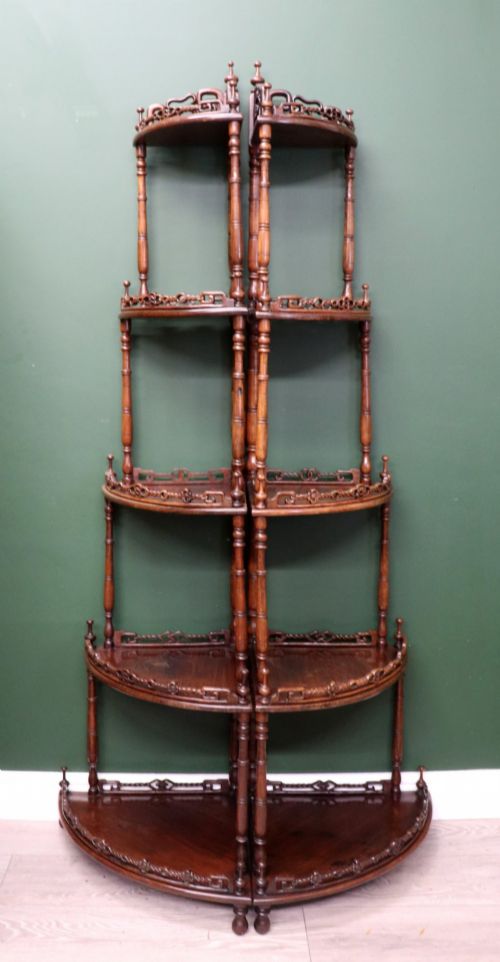
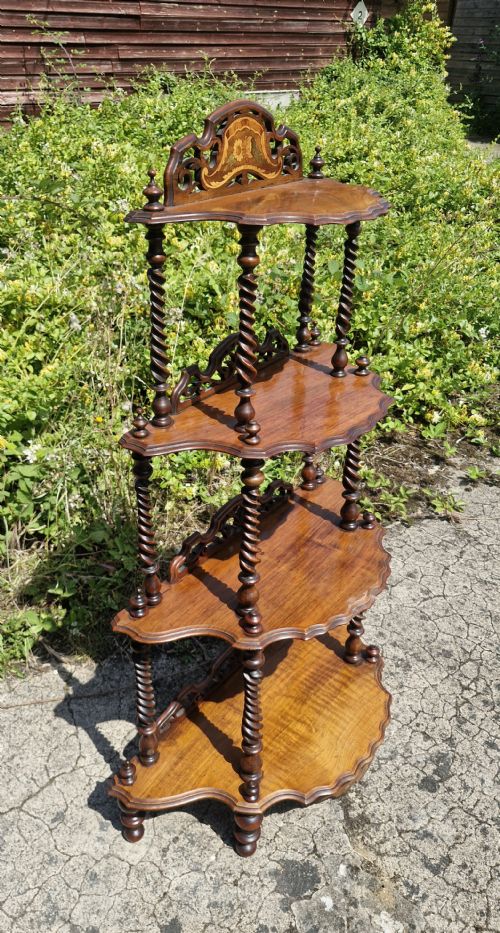
Carved Walnut Display Shelf
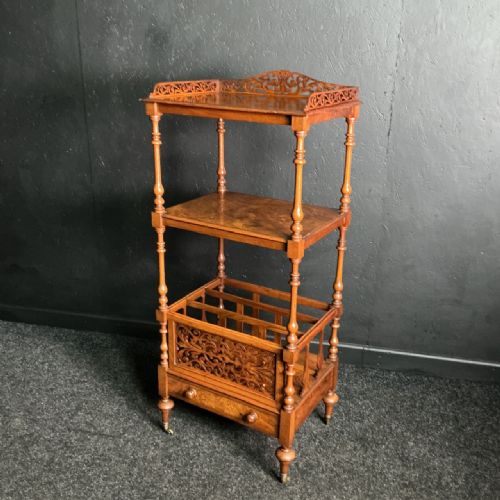
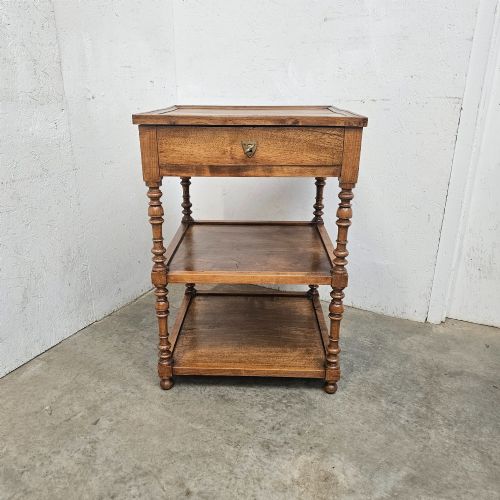
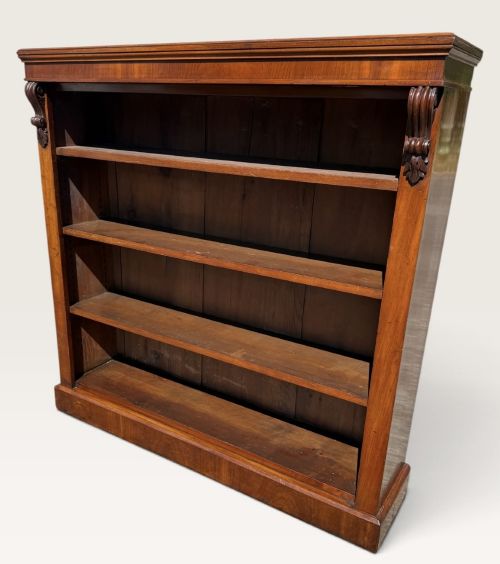
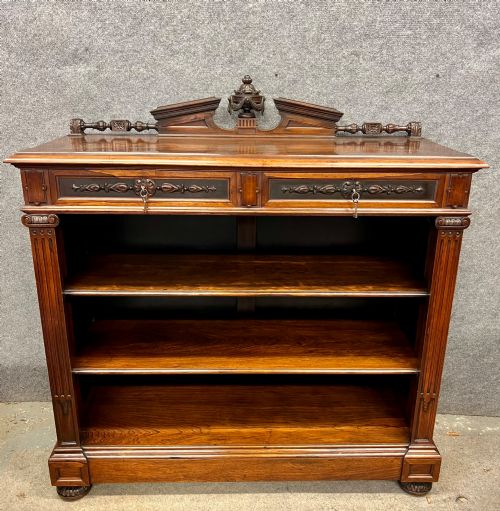
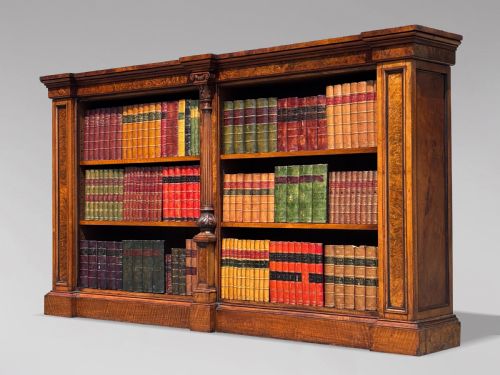
A carved walnut display shelf brings rich timber grain and tiered staging to a room, offering practical display space for small collections.
Carved Walnut Display Shelf
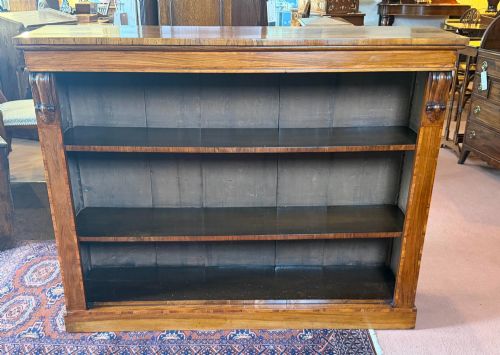
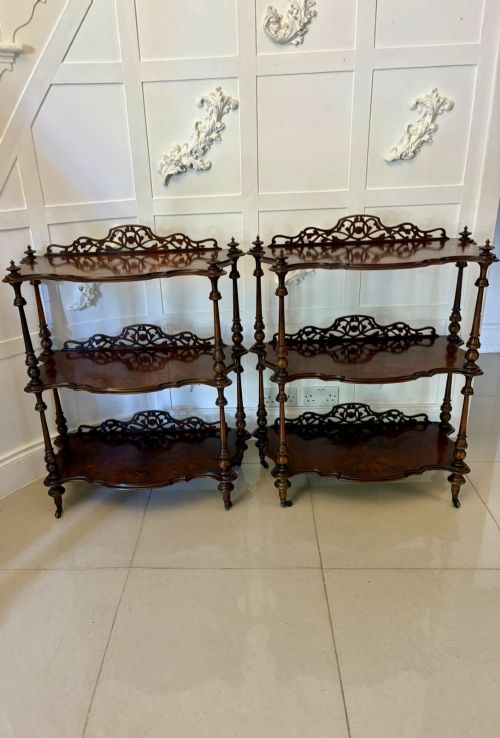
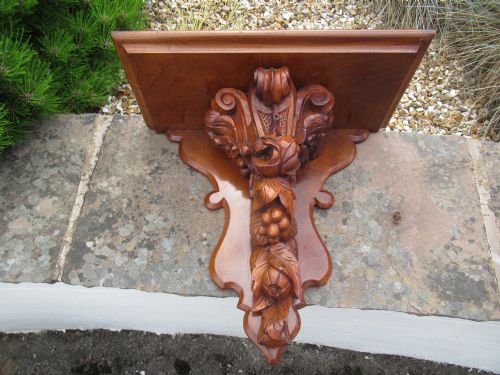
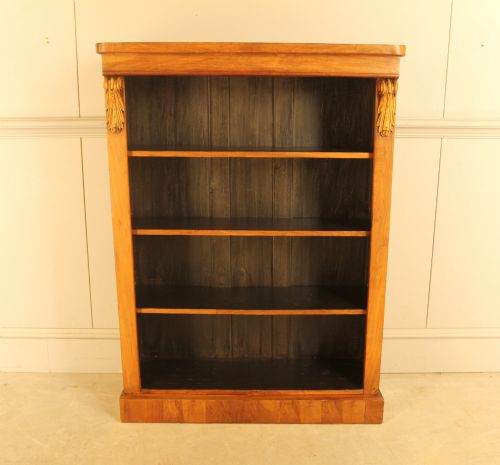
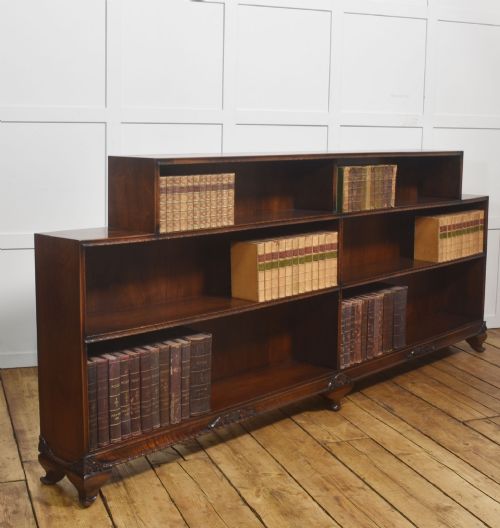
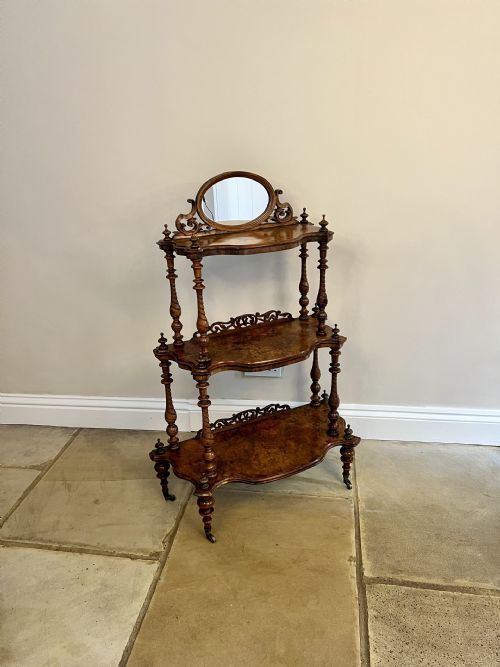
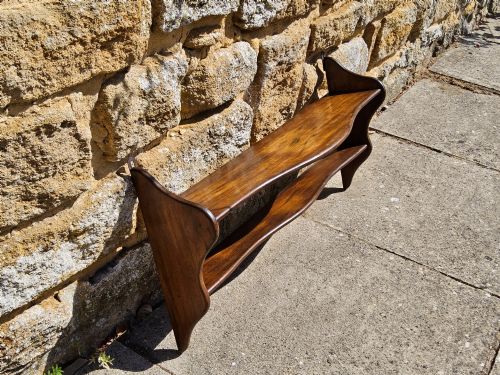
A carved walnut display shelf encompasses multi-tiered whatnots, wall brackets, open bookcases, and corner units designed to exhibit decorative objects. When you search for a carved walnut display shelf, you encounter pieces primarily from the nineteenth century and the Victorian era, alongside French and English regional variations.
Materials and construction methods
Cabinetmakers utilised solid walnut and burr walnut veneer applied to secondary woods such as pine and mahogany to construct these tiers, bookcases, and wall brackets. The distinctive grain patterns of burr walnut provide the primary decorative surface, complemented by contrasting marquetry inlay and turned wooden supports.
Structural elements frequently incorporate brass fittings for hinges or mounts, while glass doors appear on cabinet variants. Carving is applied to crests, supports, and brackets to give depth and texture to the dense timber.
Listings feature nineteenth-century and Victorian pieces constructed primarily from walnut, burr walnut, and mahogany, spanning whatnots, bookcases, and wall brackets.
Distinctions in craftsmanship and materials
The quality of a carved walnut display shelf rests upon the selection of the timber grain, particularly the depth and figuration of the burr walnut veneer used across the tiers. Superior examples display meticulous matching of the veneer panels and crisp, hand-carved detailing on the wooden supports rather than moulded composition ornament.
Joinery standards further divide the range, with exhibition-quality pieces demonstrating precise dovetailing, robust tier construction, and well-fitted brass hardware that integrates cleanly into the walnut structure.
Gabriel Viardot·Gillows
The Carved Walnut Display Shelf Glossary
- Burr walnut
- Timber taken from a tree growth or burr, yielding a swirling, highly figured grain pattern prized for veneering high-end Victorian furniture.
- Etagere
- A French term for a piece of furniture consisting of a set of open shelves for displaying small objects or bric-a-brac. These often appear with turned legs and delicate framing.
- Marquetry inlay
- Decorative patterns formed by fitting contrasting pieces of wood veneer into a prepared surface. This technique adds geometric or floral motifs to shelves and cabinets.
Carved Walnut Display Shelf: Frequently Asked Questions
Where should I place a walnut whatnot?
These tiered units suit corners, hallway landings, or living spaces where they can hold books, ceramics, or small ornaments without dominating the floor area.
Freestanding and corner variants adapt well to empty wall spaces that require vertical interest and display capacity.
How do I identify a Victorian piece?
Victorian examples typically rely on rich burr walnut veneers, turned supports, and darker finishes that reflect nineteenth-century cabinetmaking preferences.
Construction details such as hand-cut dovetails and traditional timber fixings help confirm the period of manufacture.
What is the difference between an etagere and a whatnot?
The terms are often used interchangeably to describe multi-tiered display furniture, though etagere traditionally suggests a lighter French influence.
Both forms serve the same function of holding decorative collections across several open levels.
How do I care for walnut display furniture?
Keep the timber away from direct sunlight and steady heat sources to prevent the burr walnut veneer from drying out or splitting.
Regular dusting with a dry cloth maintains the finish without building up unwanted residues on the carved surfaces.