


Antique Display Shelf Stand
An antique display shelf stand organises cherished objects and books across tiered tiers, bringing practical elegance to any room.
Antique Display Shelf Stand
An antique display shelf stand serves as a versatile home for books, ceramics and decorative objects. When you search this phrase, you encounter forms ranging from compact corner units to multi-tiered open bookcases.
The pieces listed here span several distinct periods, with Victorian and Edwardian examples appearing frequently alongside Georgian and Regency designs. Makers constructed these stands primarily to exhibit possessions rather than store them out of sight.
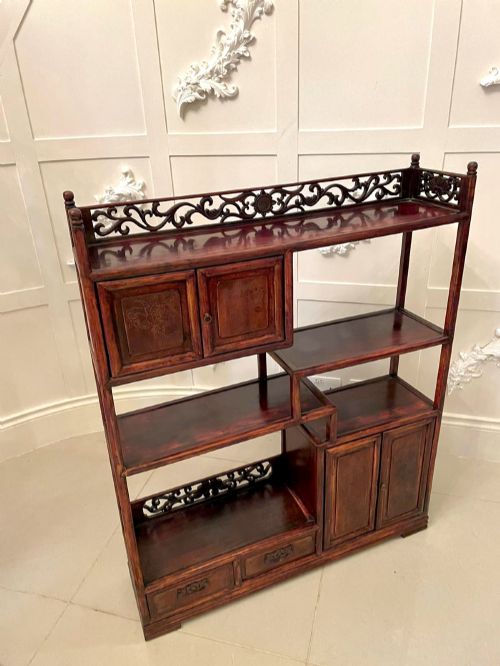
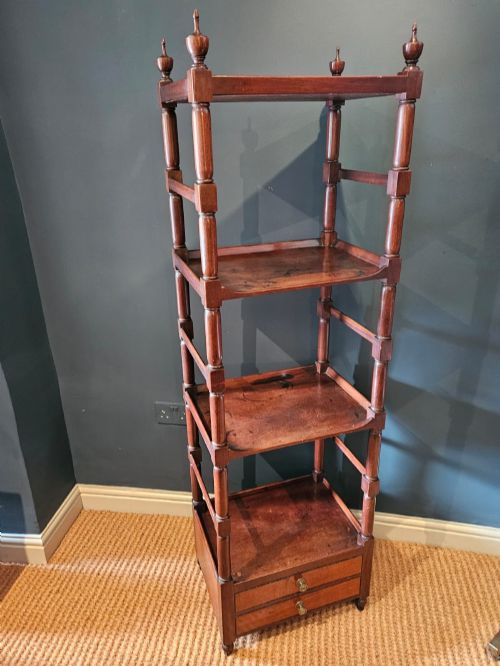
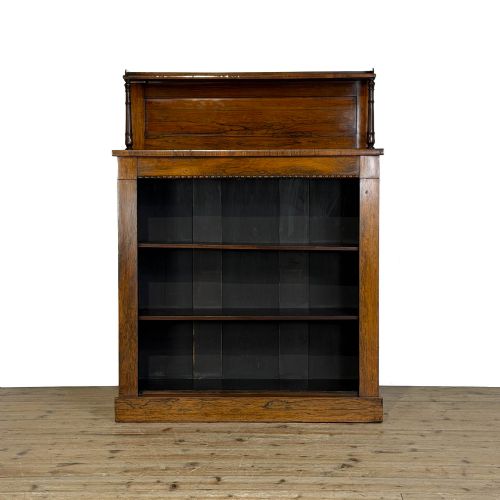
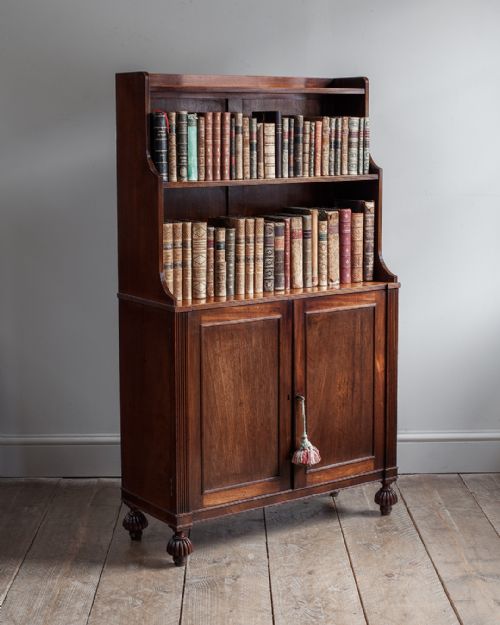
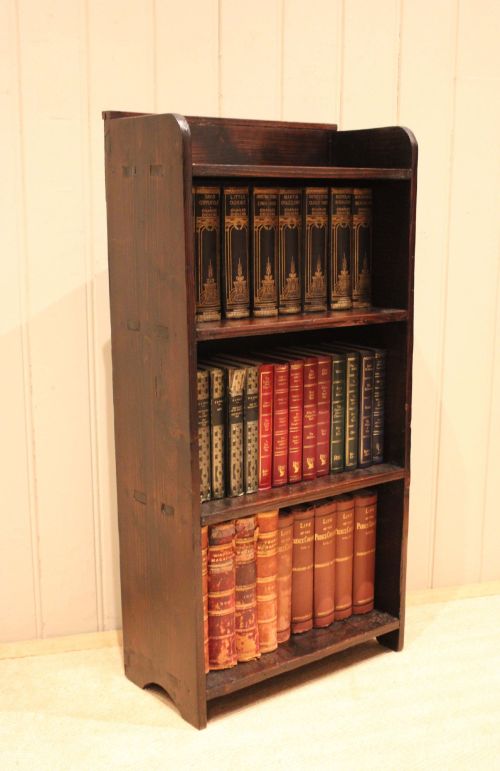
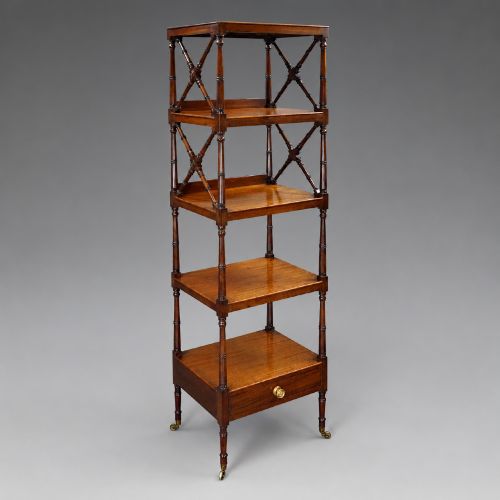
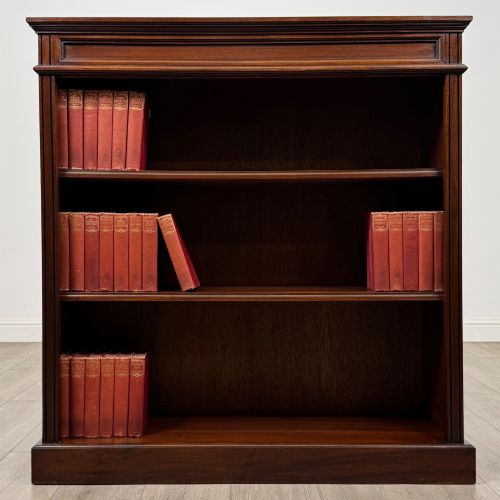
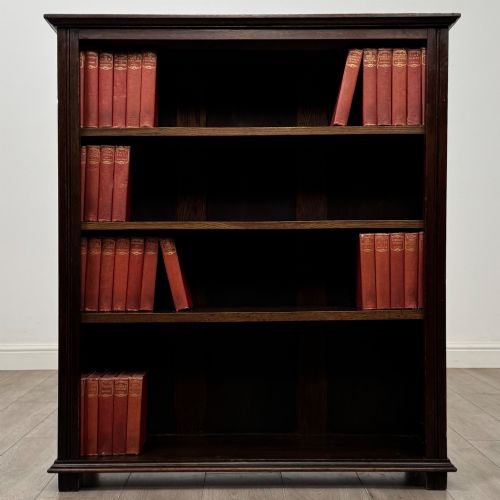
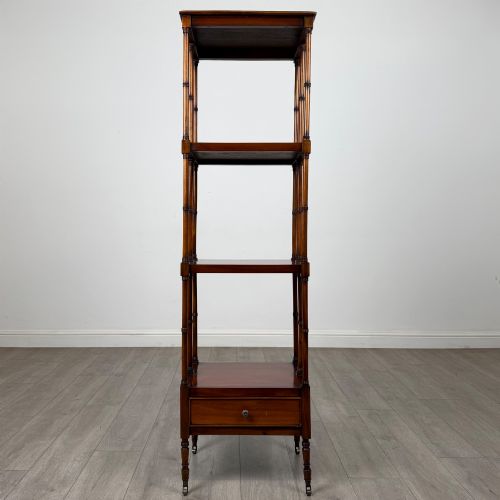
Common object types include whatnots, etageres and open bookcases, each offering tiered platforms for display. These items originate from British and international workshops, incorporating woods like mahogany, oak and walnut.
Materials and construction methods
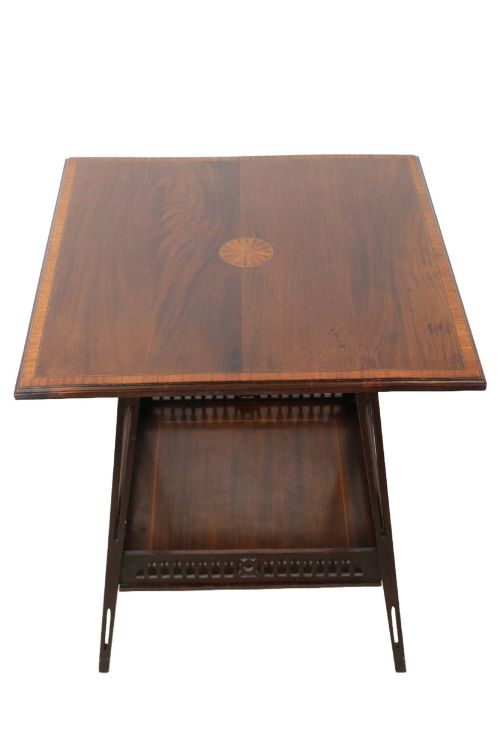
Cabinetmakers relied heavily on dense hardwoods such as mahogany, rosewood and oak to ensure structural integrity across multiple tiers. Burr walnut and satinwood veneers frequently feature on decorative surfaces, providing rich grain patterns and visual depth.
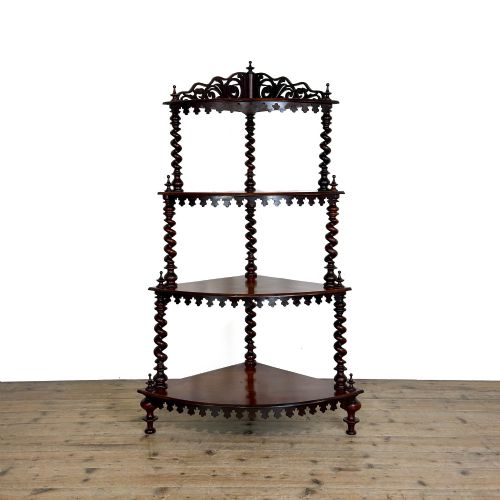
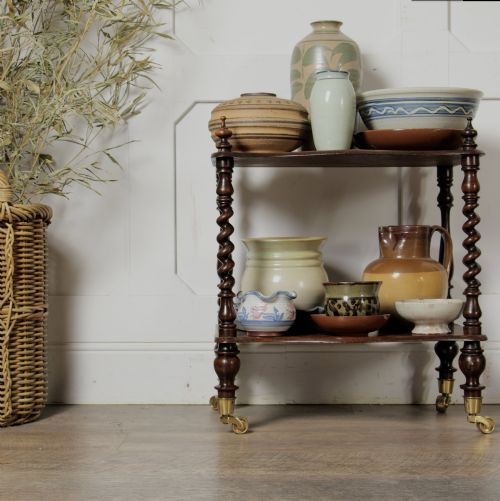
Joinery methods varied according to the period and form, utilising mortise and tenon joints alongside clever turning for barley twist supports. Brass castors and subtle inlay work often complete these pieces, balancing mobility with refined detail.
Some Victorian stands feature turning so enthusiastic it could hypnotize a cat.
What separates the finest examples
Quality rests primarily in the selection of timber and the precision of the joinery connecting each tier. Pieces featuring figured burr walnut or inlaid satinwood demand greater skill from the maker than simpler utility shelves.
Proportion and decorative restraint dictate the upper tier of the market. Refined carving, well-turned columns and original brass hardware elevate a stand from a functional item to a masterwork of cabinetmaking.
Trevor Page And Co·Gabriel Viardot·Gillows
The Antique Display Shelf Stand Glossary
- Etagere
- A French term for a piece of furniture consisting of a series of open shelves for displaying small objects. These often take ornate or ebonised forms.
- Waterfall bookcase
- A standing set of open shelves where each tier steps back progressively from the bottom to the top. This profile creates a distinctive cascading silhouette.
- Padauk
- A heavy, durable tropical hardwood with a distinct reddish hue. Makers utilised this timber for substantial shelving units and export furniture.
- Barley twist
- A decorative turning technique resembling a twisted rope. This style appears frequently on the upright supports of Victorian whatnots.
Antique Display Shelf Stand: Frequently Asked Questions
What is the difference between a whatnot and an etagere?
A whatnot is traditionally a British tiered shelving unit intended for general display and utility in a room. An etagere originates from French design and often incorporates more decorative flourishes or ebonised finishes for drawing rooms.
Both serve the same primary function of elevating objects, but etageres tend to emphasise ornamental display over heavier storage.
How do I place a corner display stand in a room?
Corner stands make efficient use of unused wall junctions, drawing the eye upward without obstructing floor space. They suit smaller rooms where linear bookcases might overwhelm the layout.
Position them away from direct sunlight to protect aged veneers and polished hardwood surfaces from fading.
Are these shelves sturdy enough for heavy books?
Most antique display pieces are constructed from solid hardwoods like oak or mahogany and are structurally robust. However, multi-tiered whatnots and waterfall bookcases were primarily intended for lighter volumes, decorative plates and ornaments rather than heavy folio sets.
Examine the upright supports and shelf joints to gauge the weight capacity of an individual piece.
How can I tell a Victorian whatnot from a Georgian one?
Georgian examples often exhibit cleaner classical lines, finer timbers like select mahogany, and restrained proportions. Victorian pieces frequently introduce heavier turnings, such as barley twists, or more elaborate carving and burr walnut veneers.
Examining the secondary woods and construction marks helps confirm the manufacturing era.